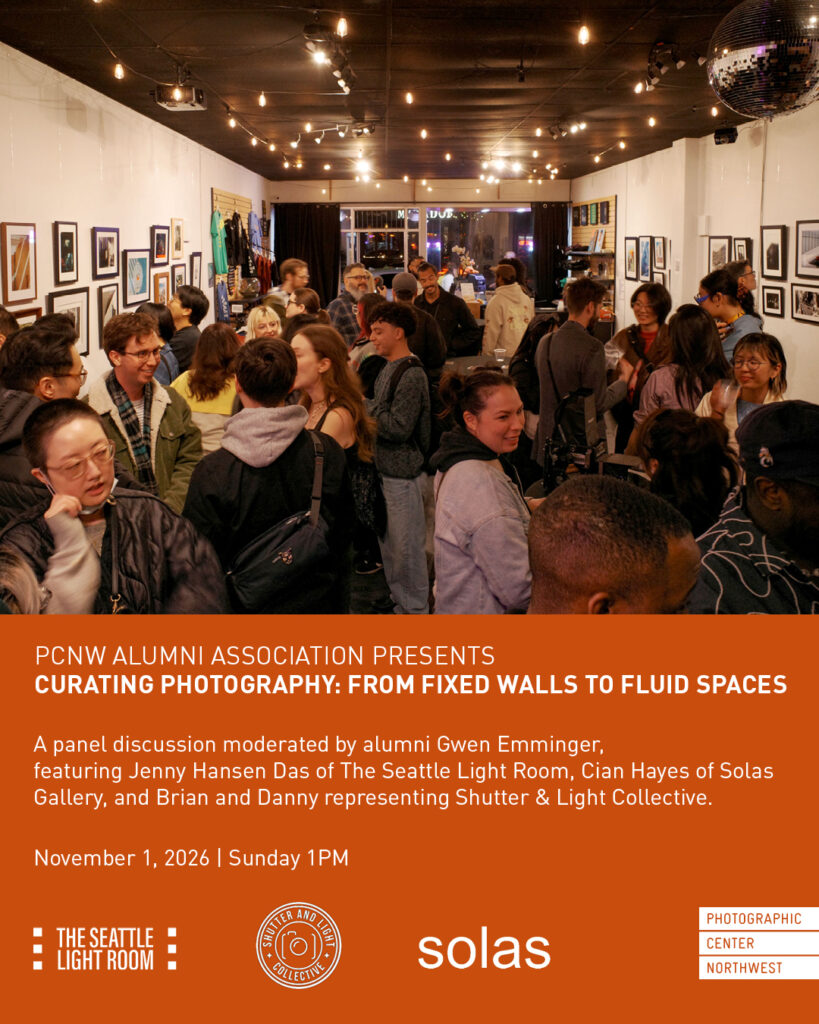
Curating Photography: From Fixed Walls to Fluid Spaces
November 1, 2026 | 1pm at PCNW
FREE with RSVP
by Gwen Emminger, grad. 2022
PCNW’s Alumni Association invites you to “Curating Photography: From Fixed Walls to Fluid Spaces,” a panel discussion moderated by alum Gwen Emminger, featuring Jenny Hansen Das of The Seattle Light Room, Cian Hayes of Solas Gallery, and Brian Cortez with Danny Ortiz of Shutter & Light Collective. Together, they’ll trace what draws them to this work, how they balance established photographers with emerging voices, and how photography shapes, and is shaped by, the spaces where we encounter it, from gallery walls to pop-up rooms and online.
Looking forward to a dynamic conversation about why these four are putting their energy into creating space for photographers and where they see the field heading next. It’s a chance to hear directly from the people deciding what gets shown and why, and to understand the thinking behind the walls, not just the work on them. Come ready with questions and leave with answers from people doing this work in Seattle right now. Whether you’re early in your practice or looking for your next show, this is a conversation worth being part of.
Alumni Highlights
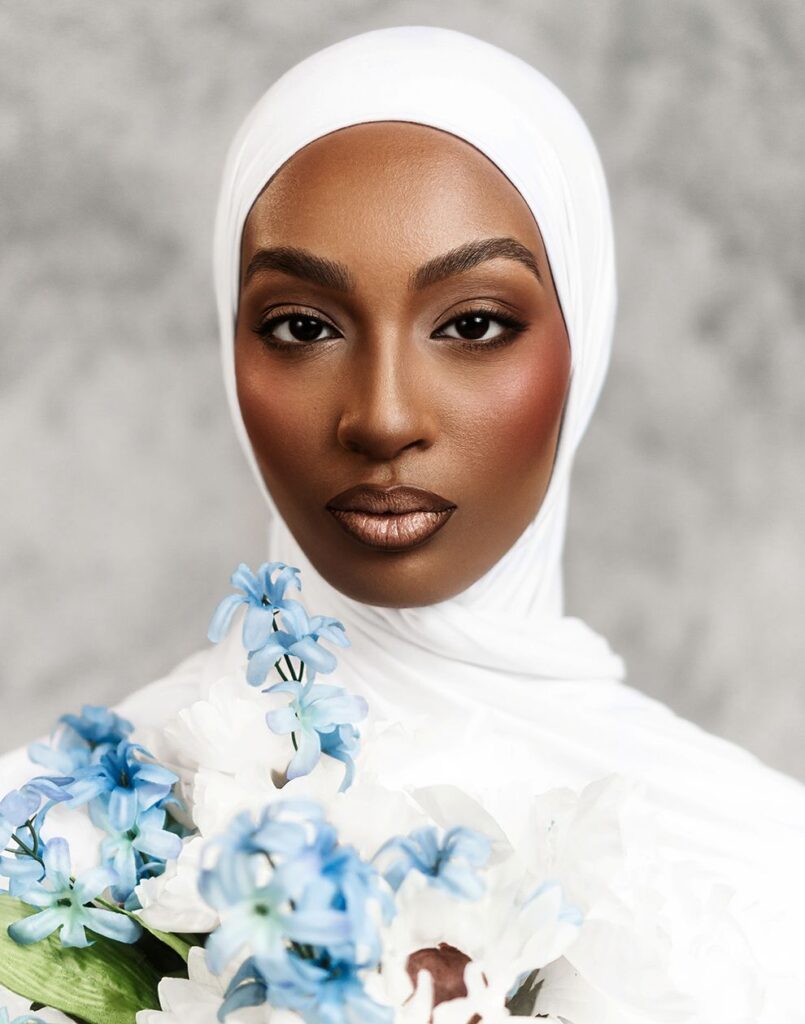
Mia McNeal
graduated Seattle University 2018 (BFA in Photography through SU partnership with PCNW)
interview by Jenn Reidel, grad. 2000
Please start with a brief introduction about you, your photography career, work at PCNW, and your studies at Seattle University.
I knew since high school that I wanted to pursue photography, but at the time, I didn’t necessarily believe I could make a career out of it. My relationship with PCNW actually came first, and it’s part of what led me to choose Seattle University, where I studied Interdisciplinary Arts. That connection between the two really opened the door for me creatively and began a much deeper relationship with the organization.
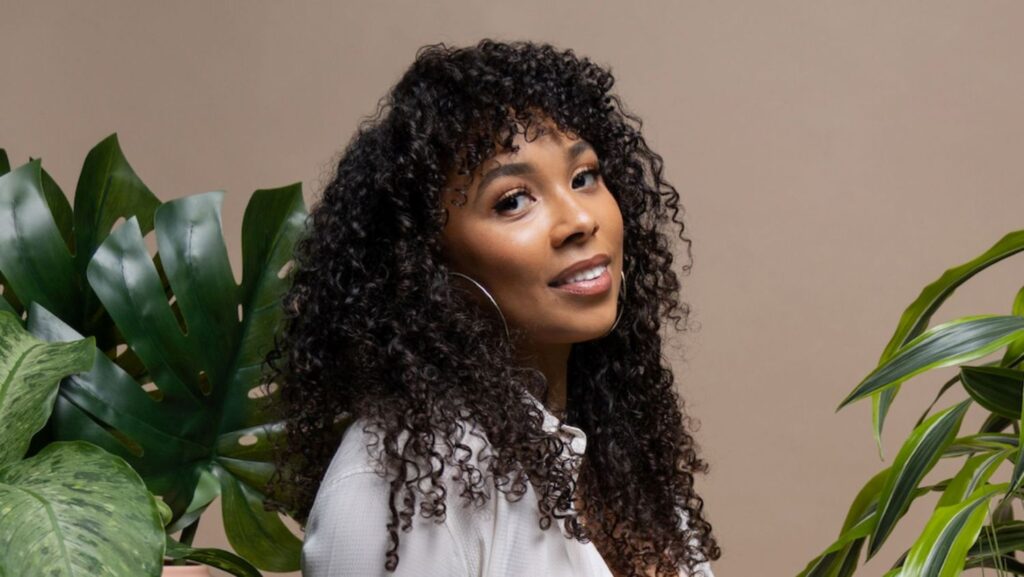
Since then, I’ve experienced PCNW in so many different ways: as a student, Administrative Associate, working and exhibiting artist, teaching artist, and now Development Director. I also spent five years working full-time for myself, building my photography business, while continuing to print my own work in the darkroom and photograph regularly in the studios. In many ways, my relationship with PCNW has grown alongside my own career, and being able to now help sustain a place that has played such an important role in my creative life feels incredibly special to me.
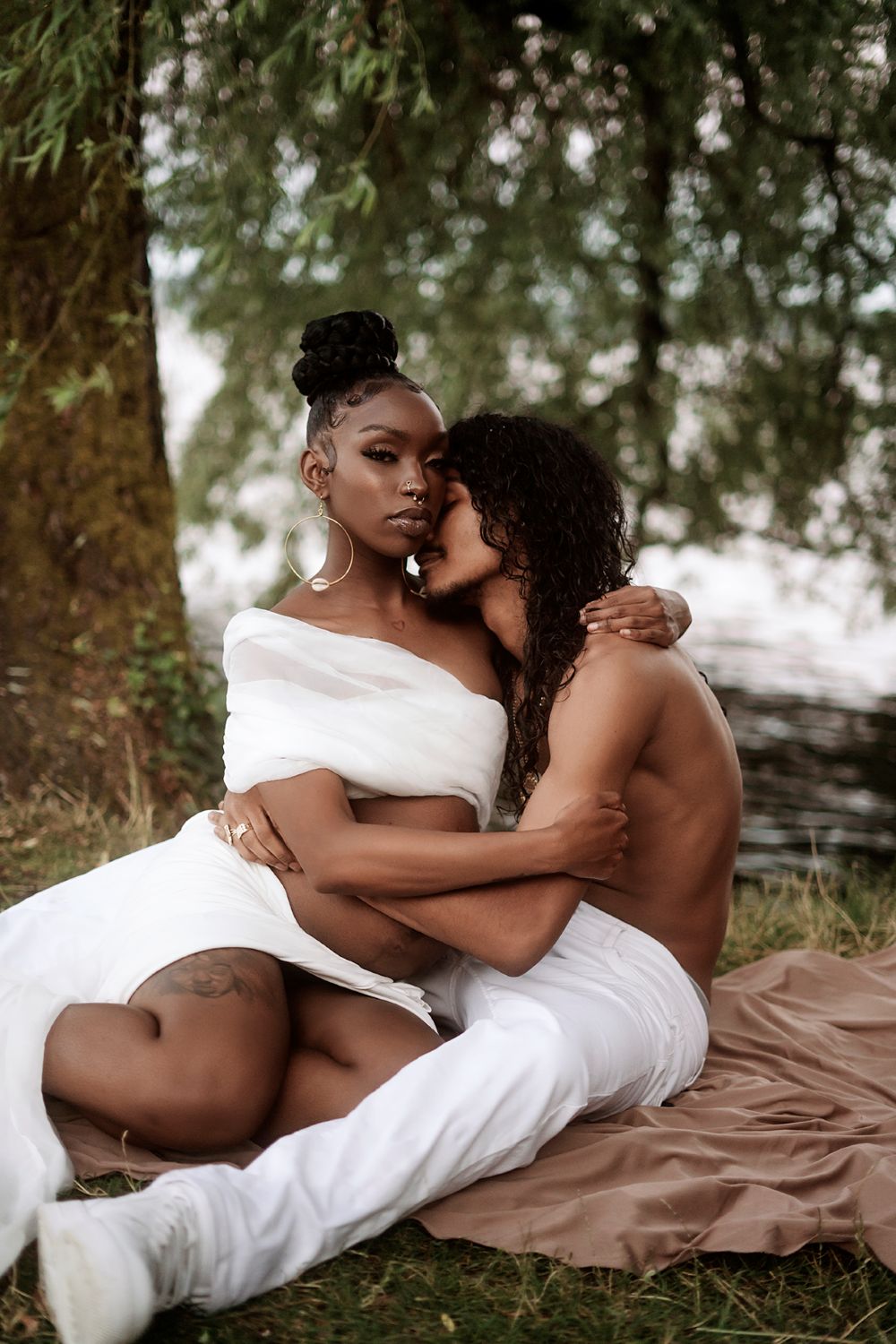
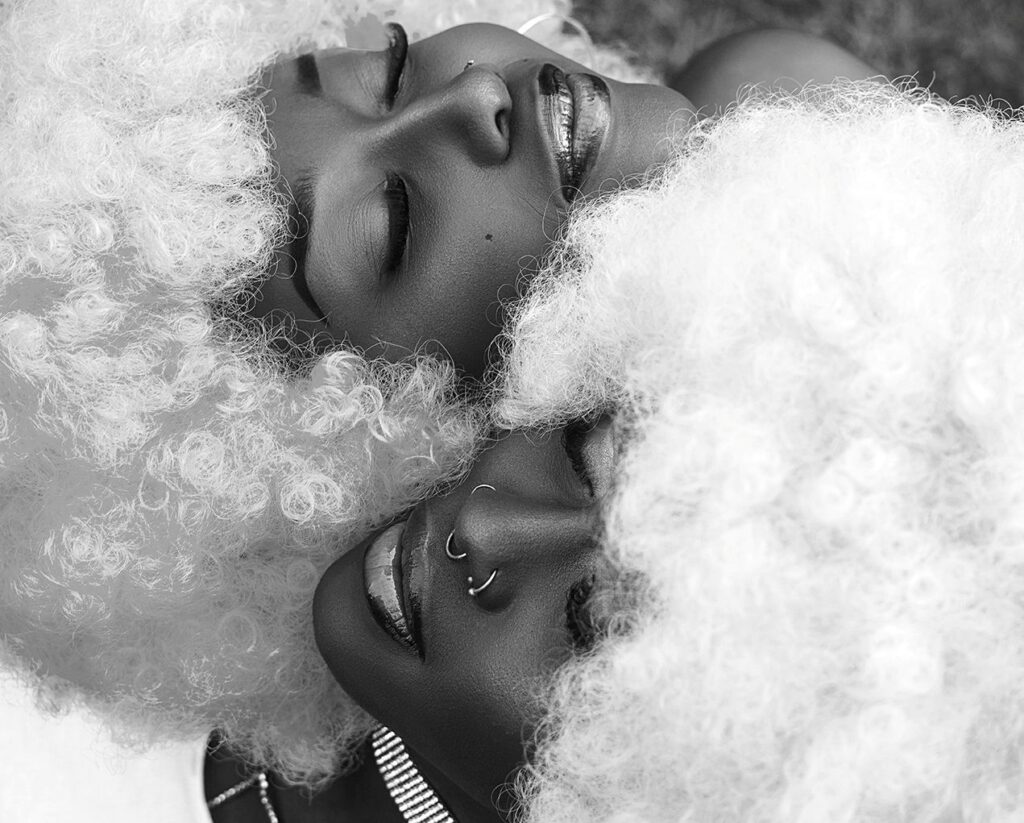
As a photographer, I specialize in elevated portraits and my mission is to create imagery rooted in empowerment, and to uplift the people I have the pleasure of working with. In my spare time, I’m passionate about personal projects that explore identity, memory, belonging, and connection.
What drew you to photographing people specifically, as opposed to landscapes or still life? Has your view of portraiture evolved since you graduated from Seattle University?
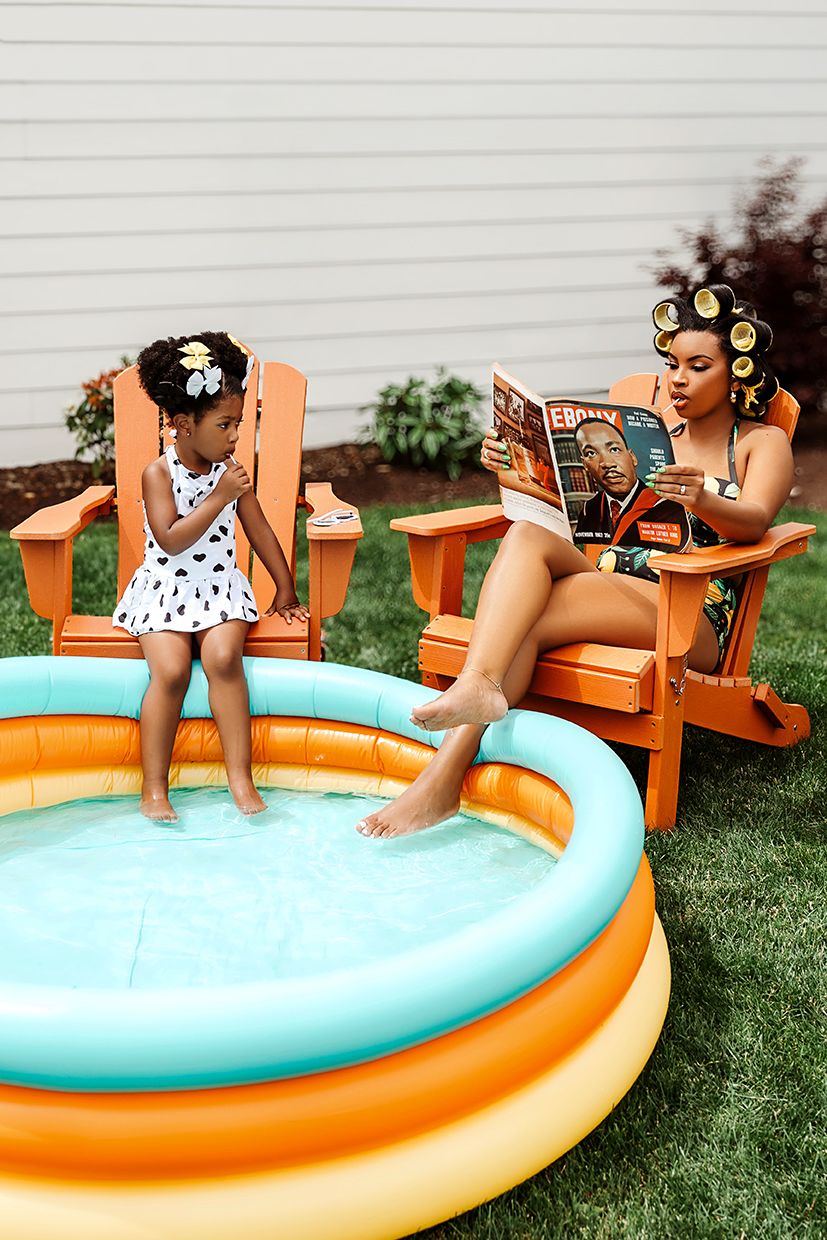
I’ve been drawn to portraits for as long as I can remember. When I was a little girl, I would collect issues of Jet and Ebony magazines from thrift stores. I was fascinated by the photographs of models, artists, and public figures. There was something about the way they were photographed, so vividly, that really stayed with me. Especially considering the time period of the Jim Crow era and the many challenges Black people were facing, those images felt like a celebration of beauty, power, resistance, and possibility. I think that was one of my earliest experiences of understanding how important photography is.
I’ve always been an observant person who loves symbolism, and I think that’s led me to pay closer attention to small details. That instinct has shaped how I approach people and portraiture. A photograph of a person can hold so much that isn’t immediately visible: personality, history, relationships, confidence, vulnerability, even the way someone wants to be seen. I quickly learned that there’s also something really special about the relationship that happens between the photographer and the person being photographed. You have to build trust quickly, especially when you’re asking someone to let their guard down in front of a camera. I want the people I photograph to feel like active participants in creating the image, rather than simply subjects in front of my lens. In that way, I think my work has come back to some of what first drew me to those photographs as a child: the power of seeing people represented beautifully, intentionally, and as their fullest selves.
How do you balance your own artistic voice with the client’s vision for their portrait?
My clients come to me because they trust my creative eye, so I want to bring my own perspective and expertise to the work. At the same time, they’re bringing their own identity, ideas, and expectations into the process. I usually start by listening: understanding what they want to feel when they see the photographs, how they want to be represented, and what they’re drawn to visually. From there, I bring my own approach to lighting, posing, composition, styling, and direction. Sometimes my role is helping someone articulate a vision they already have, and sometimes it’s helping them imagine something they wouldn’t have thought to ask for. I don’t see those things as competing; they work together.
Can you walk me through your post-processing philosophy? How much of your final look is created in-camera versus in editing?
Post-processing is another part of my creative process, not a way to fix an image that didn’t work in-camera. I put a lot of intention into the pose, set design, props, lighting, composition, so I have a strong foundation to work from. Props and set design in particular are often where I build in symbolism, small visual choices that speak to who someone is or the story I’m trying to tell, so by the time I get to post-processing, that meaning is already embedded in the image.
Then in Photoshop, I really get to enhance the image and bring my vision together. I’m heavily influenced by fashion portraiture, and I love creamy, warm tones, so color grading is a big part of my final look. I also LOVE manipulating colors when editing and probably spend way too much time playing around with hues. For me, the editing is part of creating that elevated, intentional feeling while still making sure the person feels like themselves.
Who is your favorite portrait photographer, and why do their images stand out to you?
I have so many favorite portrait photographers that I find myself looking through their work often, especially when I’m feeling stuck. Carrie Mae Weems, Adrienne Raquel, Cara Romero, Zanele Muholi, and Dana Scruggs are all photographers I admire. I’m drawn to their different approaches to portraiture and how each creates a unique visual story, whether exploring identity, culture, trauma, beauty, fashion, or conceptual ideas.
Historical pioneers like Florestine Perrault Collins, Vera Jackson, and Gordon Parks were creating powerful images of Black life at a time when those representations were incredibly important. One thing all of these photographers have in common is that their photographs are just stunning visually, but there’s always something deeper happening underneath the image.
How does your personal photography passion align with the daily work you do at PCNW?
My personal photography practice and my work at PCNW are deeply connected. Photography is the reason I came to PCNW in the first place, and it’s also what keeps me invested in the work I do here today. As an artist, I understand how important it is to have a safe place where you can experiment, learn, make mistakes, find community, and have access to resources you might not otherwise be able to afford. I still remember my first time watching a print come up in the developer in the darkroom; that feeling of seeing an image slowly appear out of nothing is something I’ll never forget. Having access to studio space that would otherwise cost $100 an hour or more elsewhere made just as much of a difference. This place gave me the room, education, and resources to experiment and grow.
Now, as Development Director, my role is different, but I’m still working toward the same thing: making sure people have access to the kind of opportunities that helped me develop as an artist. I’m not just fundraising for an organization I happen to work for. I’m helping sustain a place that has been part of my own artistic life for years, and hopefully making it possible for someone else to have that same experience years from now.
As PCNW’s Development Director, what excites you most about the future of PCNW if resources weren’t an issue?
I’m very excited to see PCNW continue to expand opportunities for artists and students. We’re working towards increasing scholarships, creating more access for people who may not traditionally see themselves reflected in the arts, and finding more ways for students to continue developing their work after they’ve taken a class. If resources allow one day, one shared staff dream is to facilitate even more pathways for artists to build sustainable creative careers, by expanding our professional development workshops and starting residency programs, artist grants, and more.
Photography is an expensive medium, and supporting artists and students means thinking beyond just the making of the work. That’s why we’re already focused on connecting creatives with the resources, connections, and knowledge they need to keep making it. Seeing and personally feeling that support in action is part of what has been so wonderful about watching the PCNW community grow over the last 10 years. I love that this is a place where people from all backgrounds don’t just learn how to make photographs, but can feel like they belong in the photographic world. It’s truly an exciting time to keep building on our mission and find more ways to make all of this possible.
For more about Mia McNeal:
Instagram @mia.k.visuals
www.miakvisuals.com
Selena Kearney
graduated 2019
interview by Joan Dinkelspiel, grad. 2017
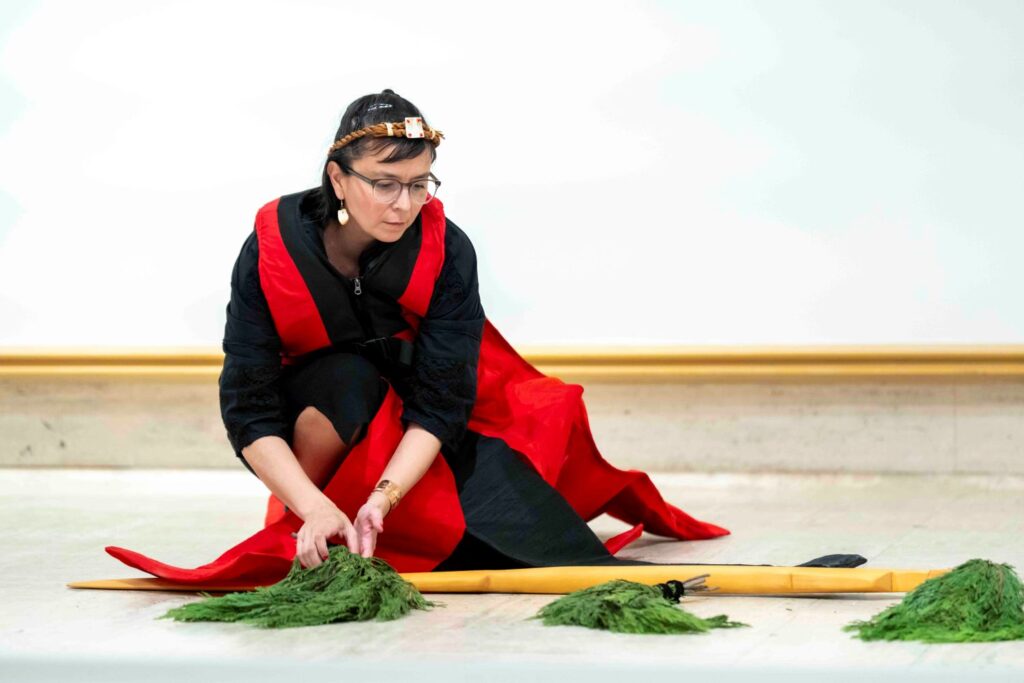
PCNW alum Joan spoke with Selena Kearney about her upcoming winter course and what she’s been working on, from historical photographs to performance.
What have you been working on lately?
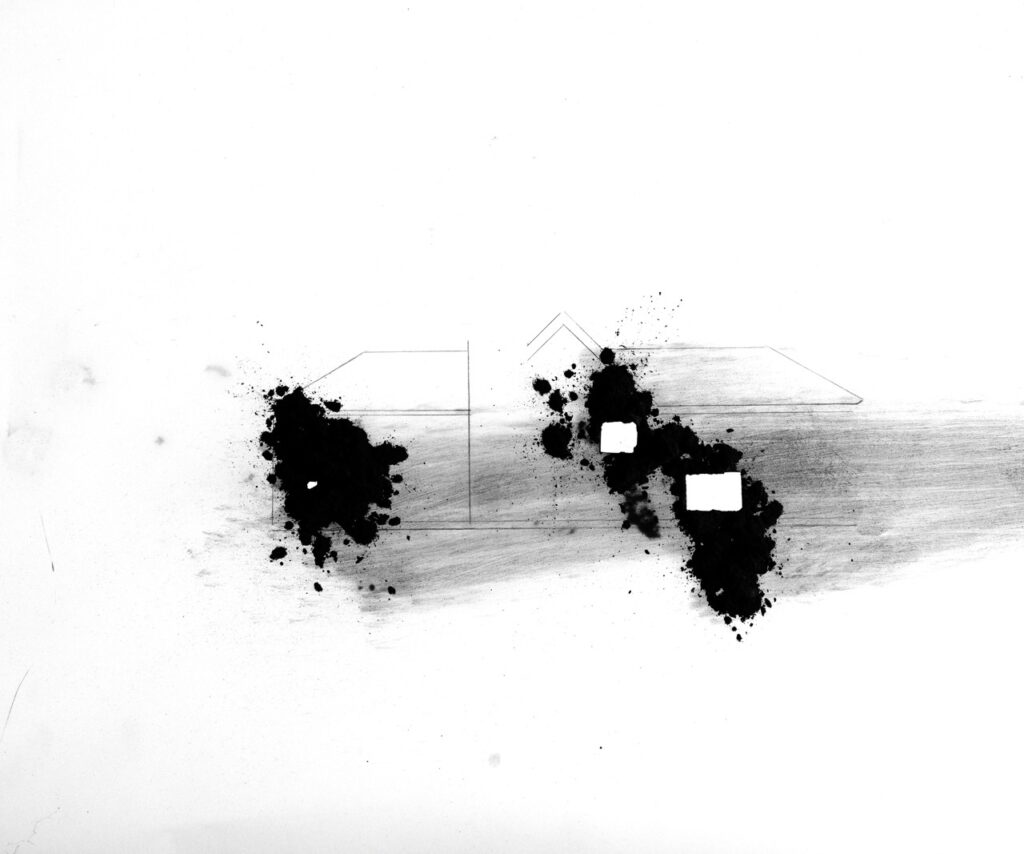
In spring 2024, I inherited Rod Slemmons’s collection of historical photographs of Native people, including work by Edward Curtis and Frank Matsura. I’m working with it from my own perspective. Two images drew me toward boarding school histories. I used charcoal gathered from a Suquamish beach to veil them, holding the tension of assimilation while giving the people pictured some privacy. These questions also enter Living Archives, the course I’m teaching at PCNW this fall.
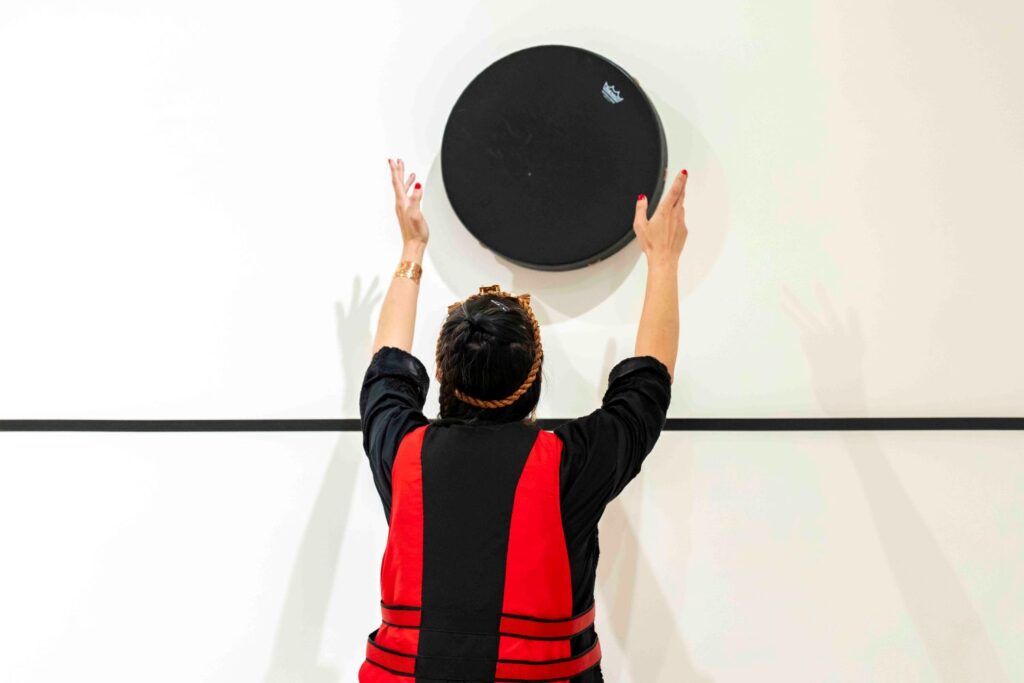
What was it like to perform in Apartment House 1776?
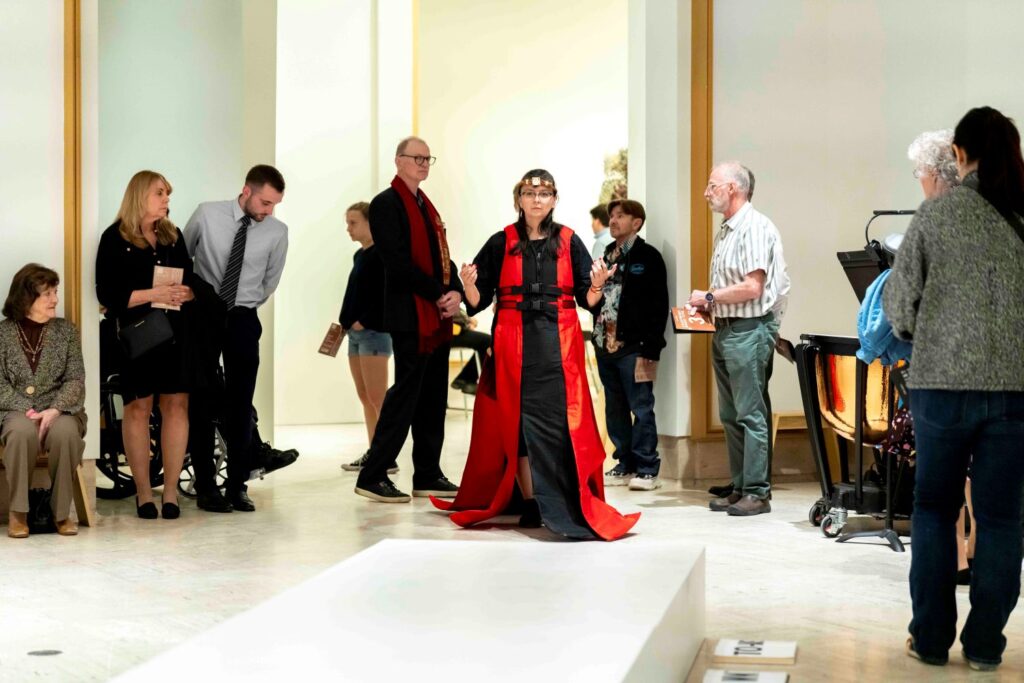
I sang with three other vocalists at Cranbrook Art Museum. We spent months talking with the creative team about where song comes from for me, my Coast Salish background, and the songs we sang during Canoe Journey. My experience as skipper of Spirit of the Raven prepared me for this production. It shaped how I offered song and approached the collaboration.
I was able to define how I was represented and how I moved through the production. They were looking for someone working between contemporary art and Indigenous song, and I could bring both parts of my practice into the work.
We performed 18 times over four days. The four vocalists moved through separate galleries, and each performance was different. It was a very emotional experience, and it has inspired me to do more performance. I’ve since reconnected with the director and dramaturg to reflect on the work, and I’m contributing writing about our process.
How does this connect with your collaboration with Camille Casemier?
Speak to the House, Speak to the Object, my collaboration with Camille Casemier, brings photography, a performative essay, and singing together through my research with the Field Museum’s Coast Salish collections. I’ll be at Ragdale this coming spring, where I hope to develop more performance work.
What does returning to PCNW mean to you?
PCNW introduced me to an arts education. I went on to earn my undergraduate and graduate degrees, but this was foundational. I value that people can begin here without already having a degree or coming from a family where people went to college. I’m grateful to return and teach.
What will students explore in your winter course?
I’m teaching Photography in the Artist Studio: Material Interventions & Image Transformation. The course is about bringing the human hand into the photographic process. We’ll draw on photographs, cut them apart, layer and obscure them, and see how working with an image physically changes what it says. A print can be the beginning of a new piece. Something you discover while working with it might send you back to the camera.
I want the classroom to feel like a studio, with room to try things and follow what happens. We’ll use expressive drawing as a way of looking and responding, so no drawing experience is needed. Students can bring existing photographs, make new ones, or do both. We’ll look at artists working across media and build a collection of experiments. My hope is that people leave with new possibilities for their photographs and a practice they want to keep returning to.
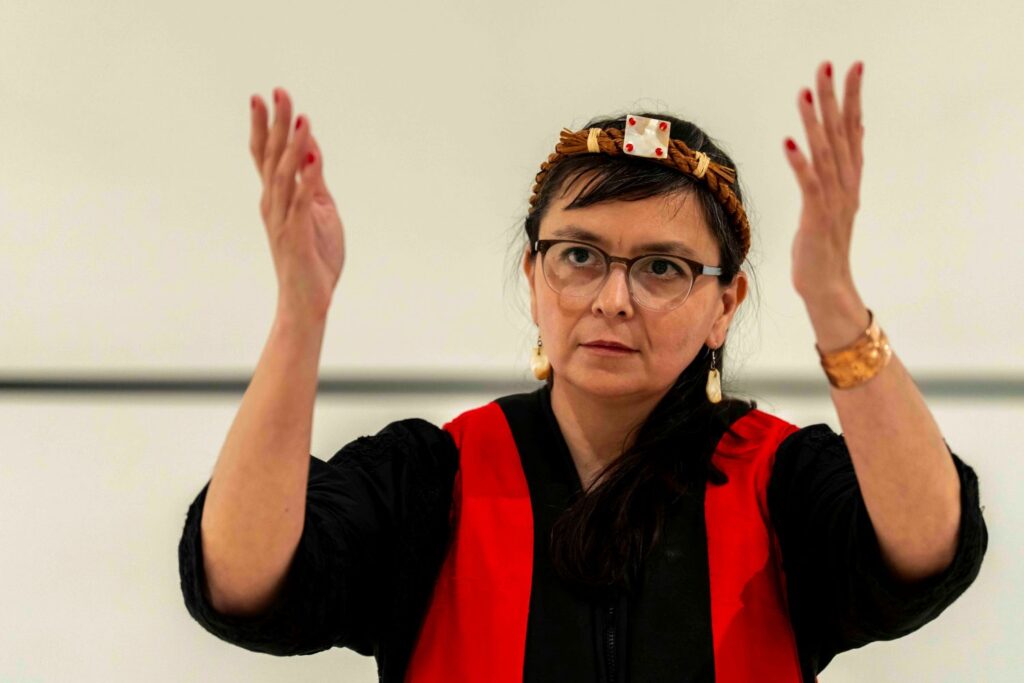
Articles about Apartment House 1776
An unlikely opera for America’s birthday summons dissonance and harmony [Preview coverage]
May 21, 2026 11:51 AM ET
Heard on All Things Considered
Neda Ulaby
John Cage’s Everything Considered Everywhere All at Once America Returns [Preview article]
“Apartment House 1776,” written for the United States’ bicentennial, is getting an immersive new production with a skeptical twist.
By Hannah Edgar
Photographs and Video by Nick Hagen
Reporting from Detroit and Bloomfield Hills, Mich. May 20, 2026
For more about Selena Kearney:
Instagram @latchselena
www.selenakearney.com
Alumni Updates / News / Exhibitions
CURRENTS Exhibition
presented by Shutter & Light Collective in partnership with PCNW
on view November 2 – December 13, 2026
Artist Reception: November 12th at 6pm
Includes work by alumni: Martin Dorn (grad 2025), Gwen Emminger (grad 2022), Harini Krishnamurthy (grad 2017), and Jake Nelson (SU grad 2023)
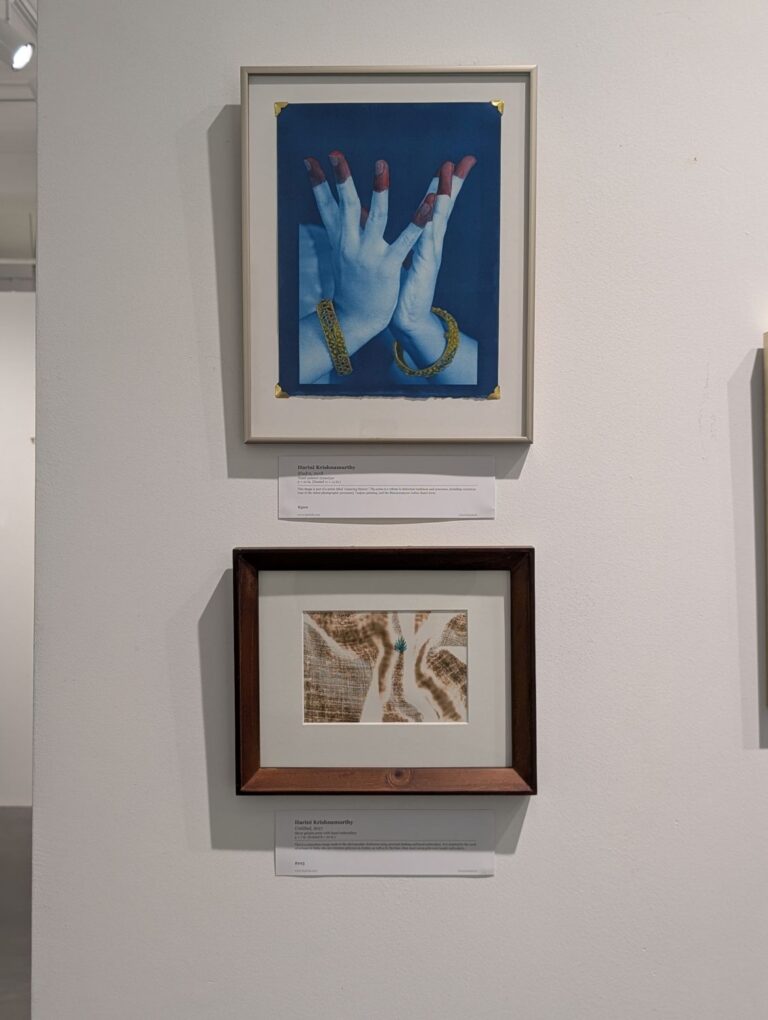
Harini Krishnamurthy
graduated 2017
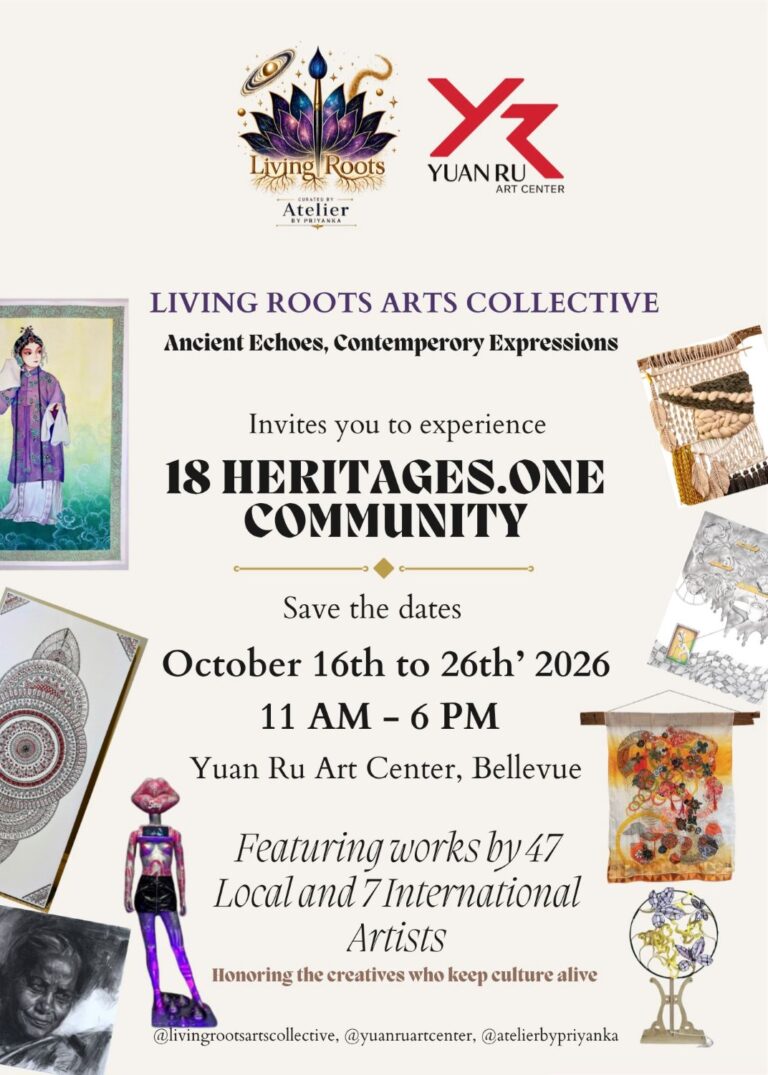
Exhibiting Ancient Echos, Contemporary Expressions organized by the Living Roots Arts Collective at the Yuan Ru Art Center in Bellevue, WA. On view through October 26, 2026.
Also, Winter Small Works Show at Parklane Gallery in Kirkland, WA on view November 4, 2026 – January 2, 2027; reception on November 14 from 5-7pm.

Elisabeth Vasquez Hein Kikuchi
writer and photographic artist, graduated 2019
Elisabeth’s essay, “To a Beloved Child,” is out in the new anthology Mixed Roots: Writers on Multiracial Identity & Both/And Belonging. The collection was curated by her long-time writing teacher and mentor, Anne Liu Kellor, and features a breathtaking range of stories exploring the spaces in-between.
She says “This project is deeply meaningful to me. It represents the extraordinary community of writers Anne has cultivated—a community that has felt like home ever since I began writing a memoir following the loss of my sister and father in 2022. My piece in the anthology is a story of duality told through a young daughter’s eyes as she navigates her origins and searches for belonging in diaspora.”
You can read more in this article for which Elisabeth was interviewed in the Seattle Times.
You can order the book from indie bookstores, or anywhere you buy books.
South Seattle Love Exhibition
on view through November 6, 2026
presented by The Seattle Light Room features work by alumni Joan Dinkelspiel (grad. 2017) and John Wilmot (grad. 2017).
You can still catch South Seattle Love on view at the Mount Baker Windermere Gallery at 4919 Genesee St Seattle, WA 98118 through November 6, 2026.
Filter: PCNW’s 2026 Benefit
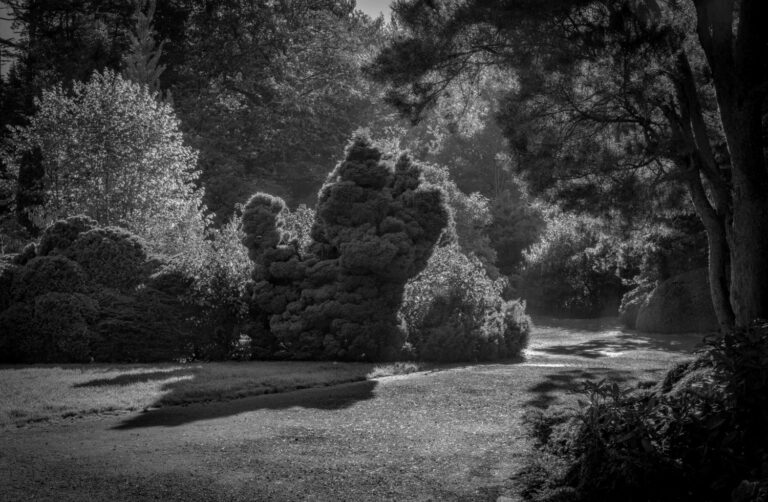
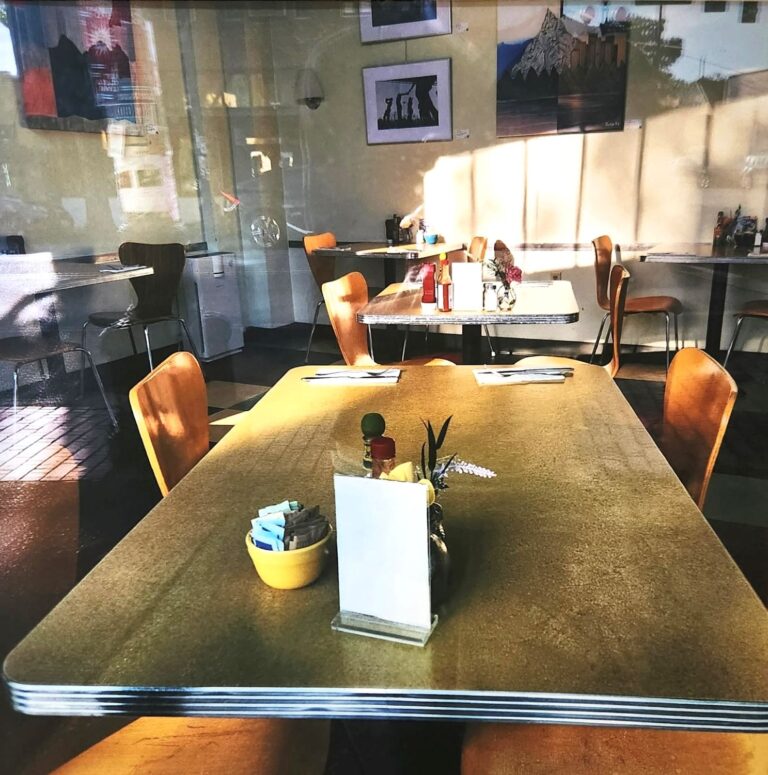
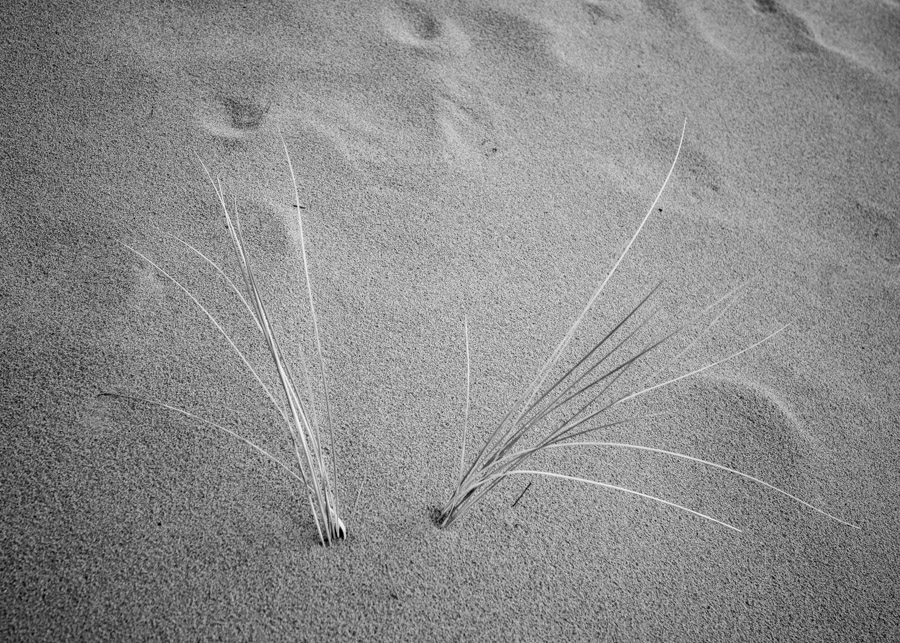
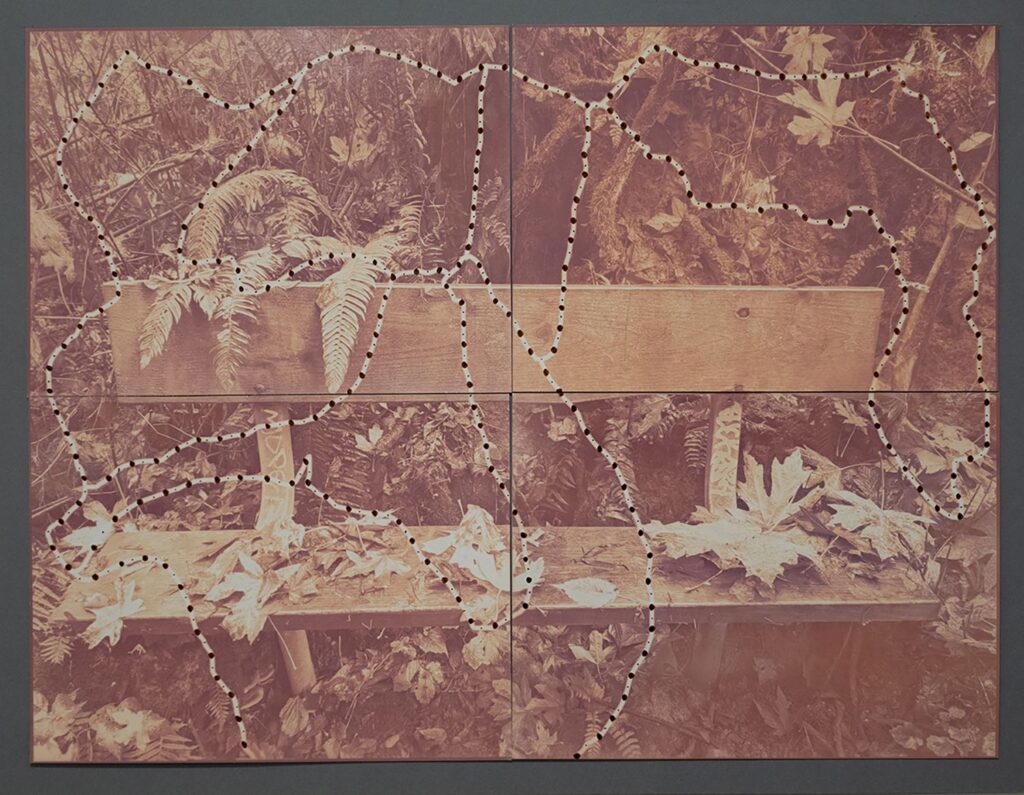
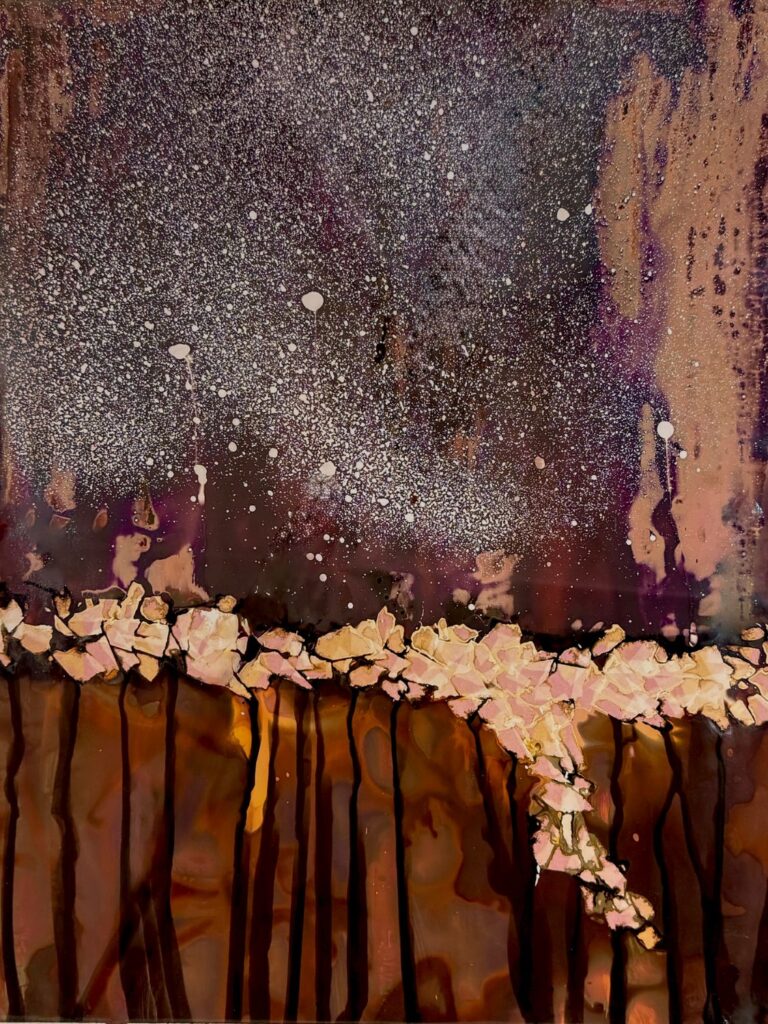
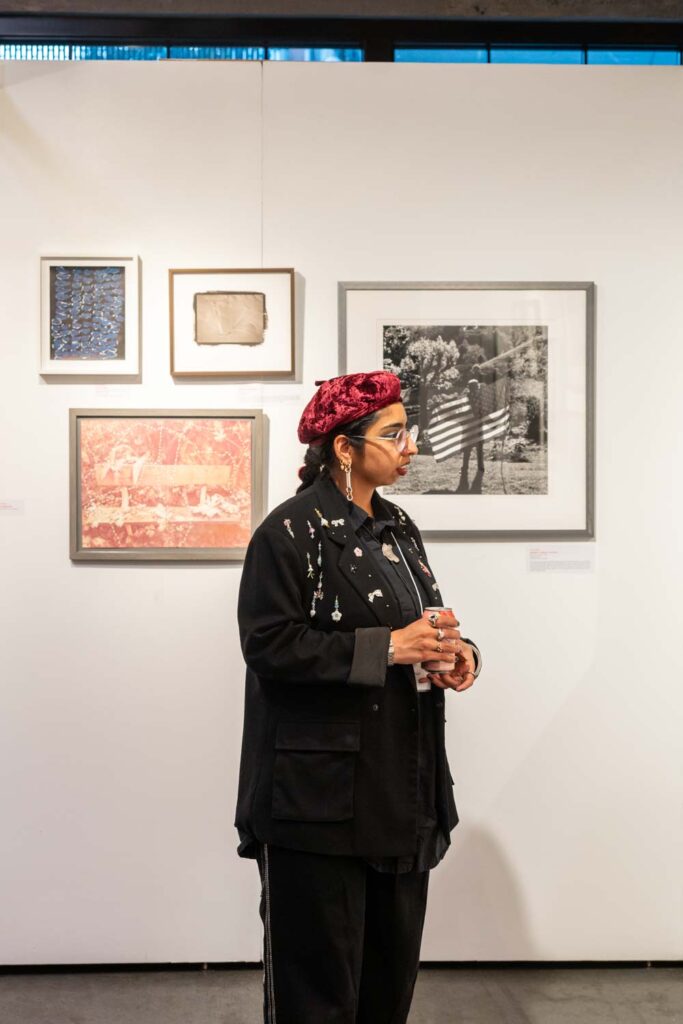
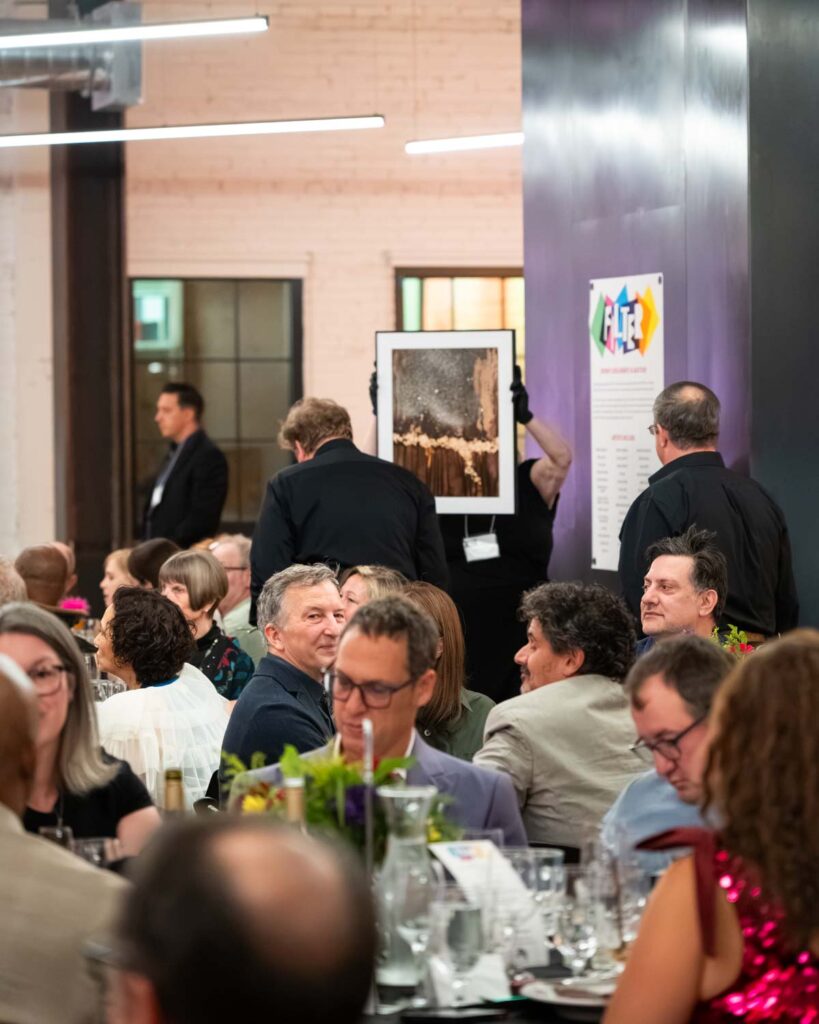
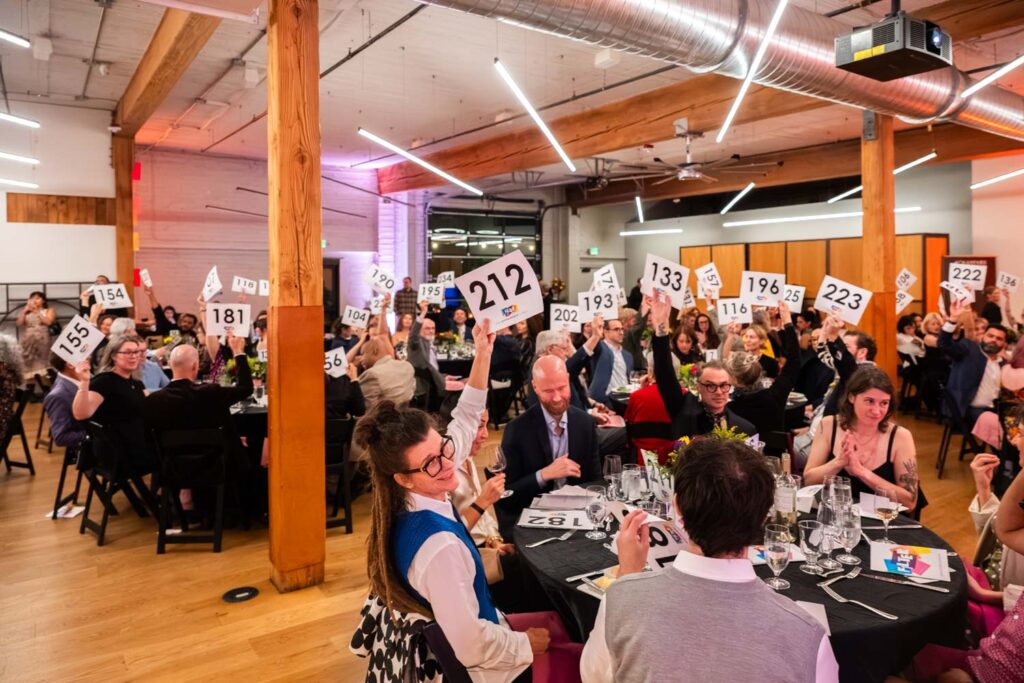
PCNW was fortunate to have works donated to our annual benefit auction by alumni Daniel Gregory (grad. 2009), Harini Krishnamurthy (grad. 2017), and Jenny Hansen Das (grad. 2023).
We are so grateful to be able to continue to showcase and have the support of our wonderful alumni—thank you for championing PCNW and fostering photographic community!
Alumni Critique Group
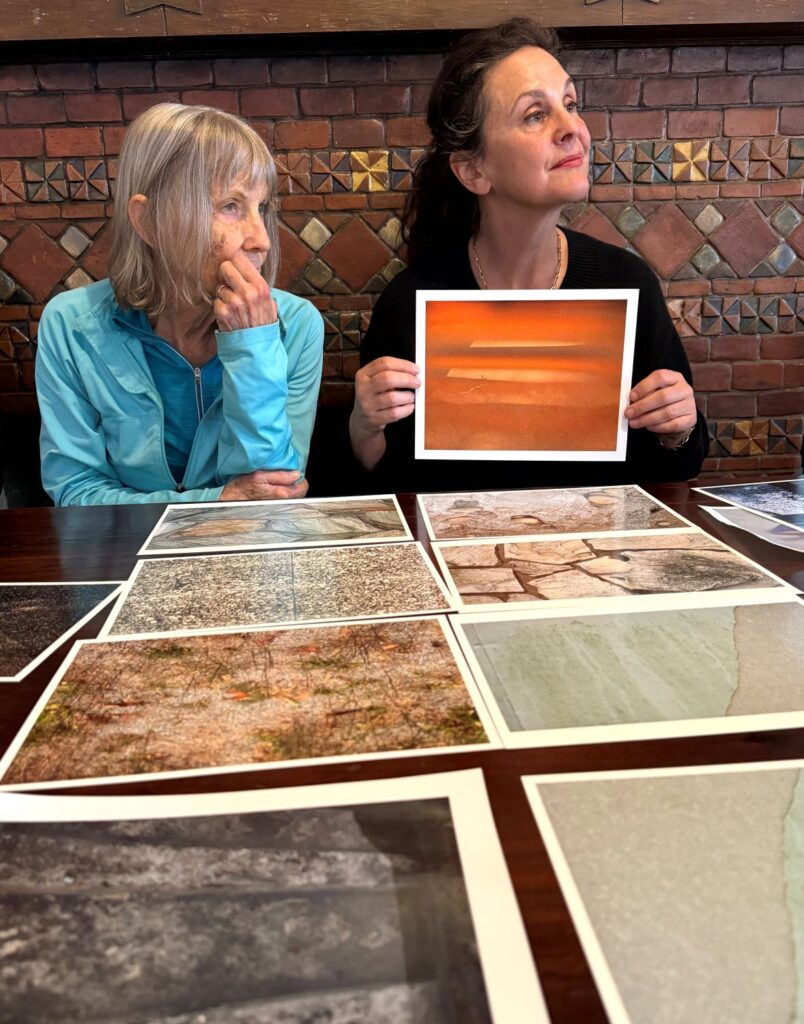
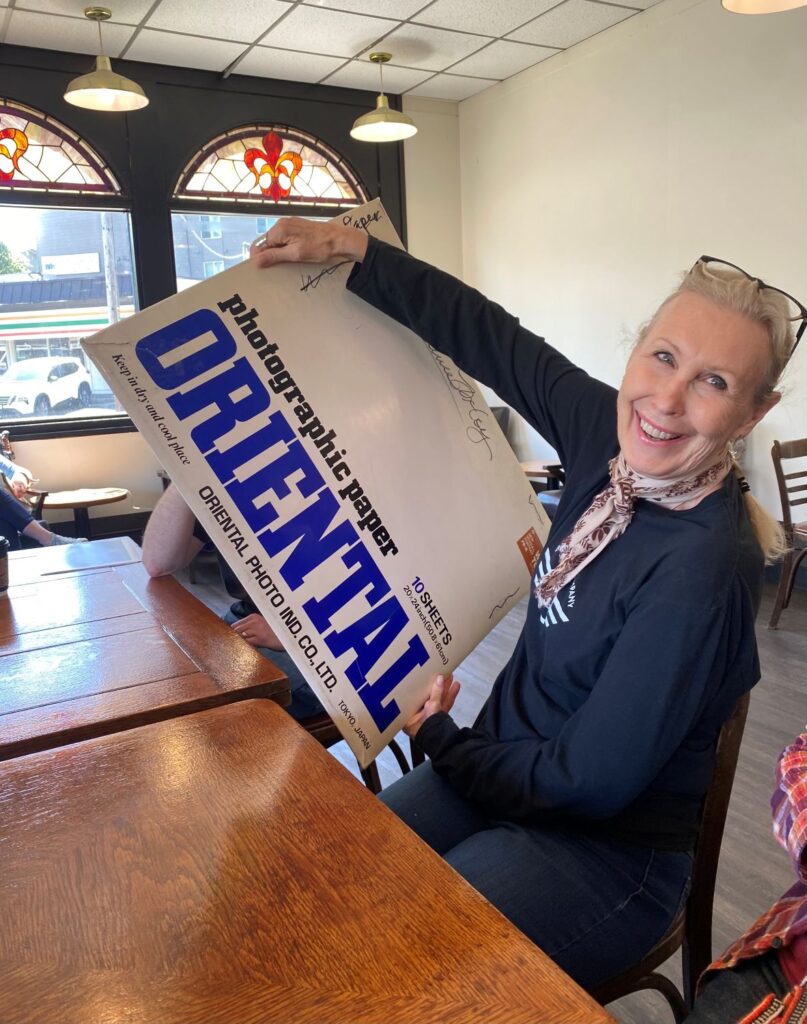
Are you a graduate or current student of PCNW’s Certificate in Fine Art Photography? You’re invited to join us at an Alumni Critique Group! Feel free to join in at any time and bring new work to share.
WEST SEATTLE
Meets Second Wednesday of every month @ 11am – 1pm
Where: West Seattle C & P Coffee, 5612 California Avenue SW, Seattle, WA
Contact Cheryl: cheryl@cedarhollowstudio.com
Alumni Association
What is the Alumni Association and who is a member? The PCNW Alumni Association includes and is for all graduates of the Certificate in Fine Art Photography. We have a volunteer leadership committee that seeks to deepen the connection between Alumni, current Certificate Students, and PCNW, and explore ways in which we can further support, elevate, and celebrate one another.
Are you a graduate who is interested in getting more involved? We intend to renew the committee on a regular basis, with new members, and think this group can lead some great initiatives. Reach out to us at alumni@pcnw.org if you’re interested in joining the leadership committee, have ideas to help foster connection and professional development, or if you’d like to support upcoming initiatives.
Are you an alum with an upcoming exhibition, book launch, lecture, portfolio review, or other
event that you’d like us to feature in a future Alumni Newsletter and/or on the PCNW Alumni
page? Tell us about what you’re up to by completing the Alumni Survey Form or e-mail us at alumni@pcnw.org.
Posting on Instagram? Add another hashtag to your work: #pcnwalumni
Thank you to our current volunteer leadership committee members: Lisa Ahlberg, Gwen Emminger, Holly Pendragon, Janet Politte, and Annie Reierson. Our Chairperson is Gwen Emminger.
Additional thanks to the alumni who contributed to making this issue of the newsletter happen, especially: Lisa Ahlberg, Jennifer Brendicke, Joan Dinkelspiel, Gwen Emminger, and Jenn Reidel.