Alumni Updates / News / Exhibitions
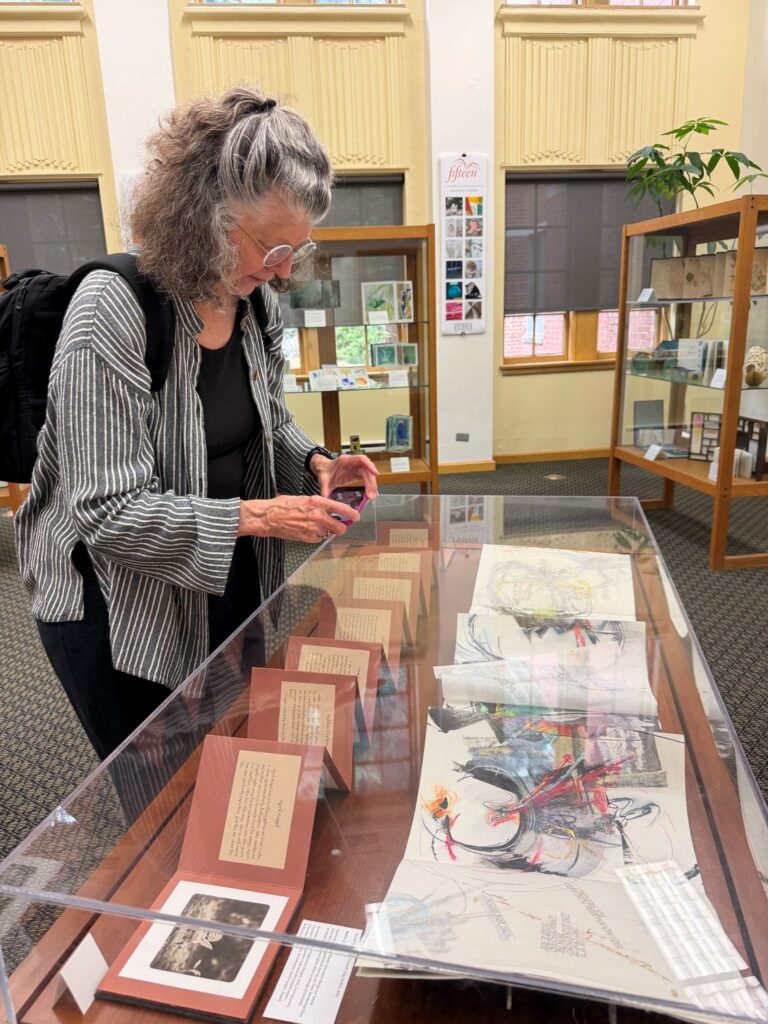
Cheryl Hanna-Truscott at Collins Memorial Library
RELICS on view through July 31, 2026
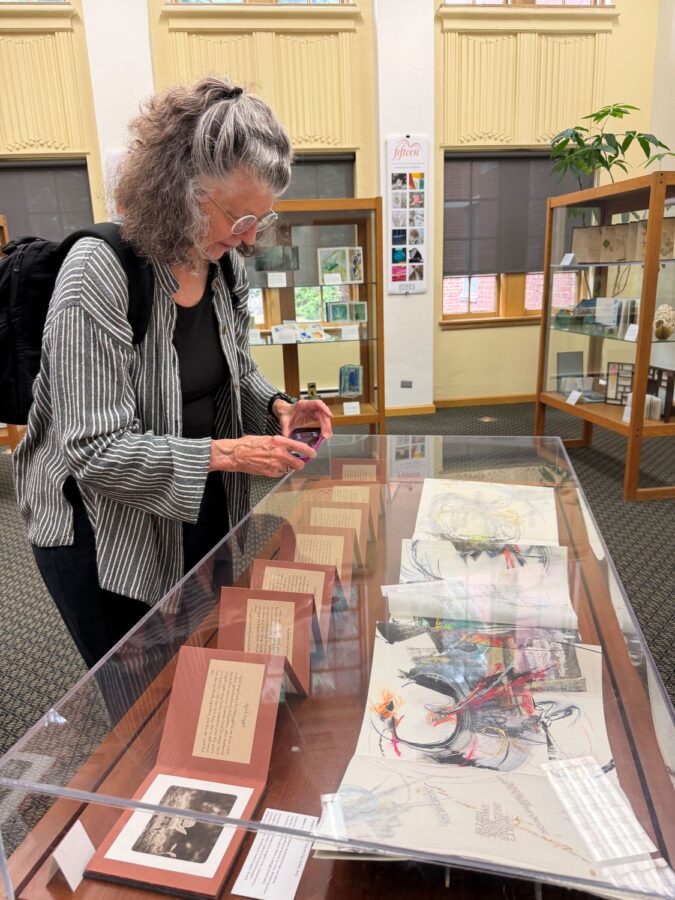
Cheryl Hanna-Truscott, grad 2009, is exhibiting her handmade accordion book, RELICS, as part of Fifteen, 2026 Puget Sound Book Artists Annual Members’ Exhibition
Collins Memorial Library, University of Puget Sound, Tacoma
1500 N Warner St #3
Tacoma, WA 98416
Mothership Photography Collective
The Mothership Photography Collective formed this year and includes two of our PCNW
alums — Anna Ream, grad 2014 and Jenny Hansen Das, grad 2023 — along with several other faculty members and photographers with connections to PCNW.
The Mothership Photography Collective is a community powered by mother artists and curators working in the fine art photography space in Seattle. In connecting, we uplift and create opportunities where mothers have been historically underrepresented or excluded, while actively welcoming collaborations with photographic communities across the country. We’ll deepen relationships within the arts community through exhibitions, curatorial projects, publications, collaborations with other collectives, artist talks, residencies, and portfolio reviews.
Follow along as we build, collaborate, and create space for mother artists to thrive!
Follow on Instagram @mothership.photo
Selena Kearney, grad 2019
Selena Kearney, a Chehalis tribal member, Chicago resident and artist, performed as part of the Detroit Opera’s performance of John Cage’s Apartment House 1776 at Cranbrook Art Museum this past spring.
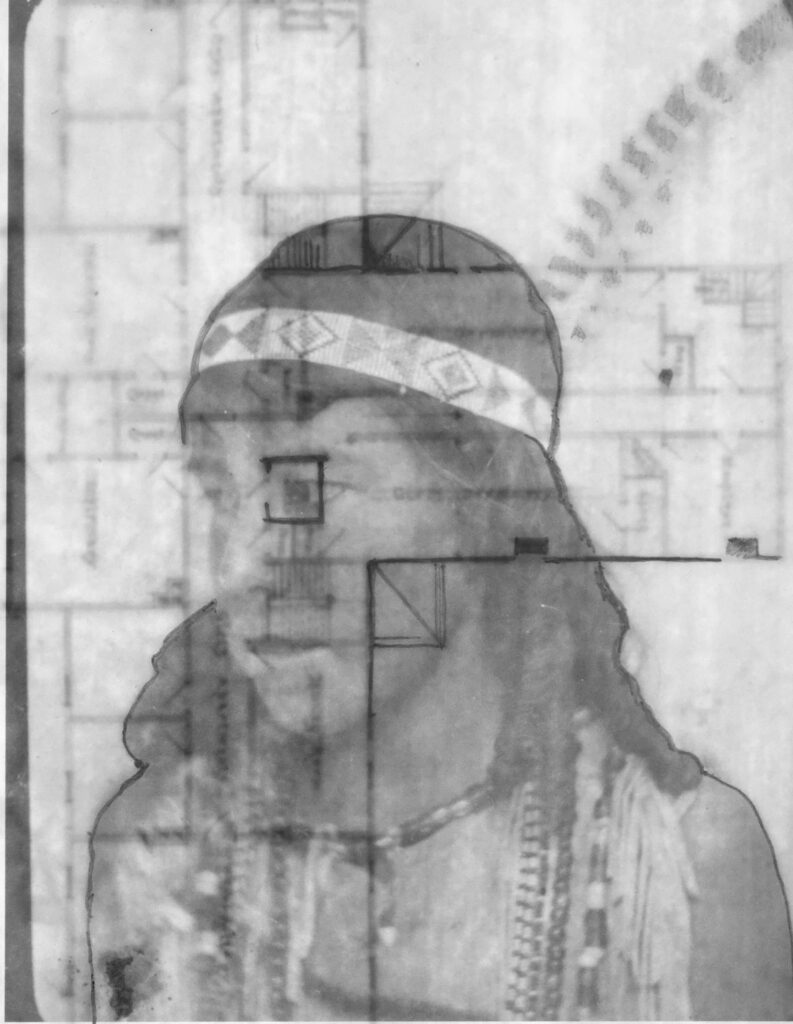
Selena will teach an online class this Fall 2026 with PCNW entitled Living Archives: Photography, Memory and the Right to Look. Excerpt from the course description:
The archive is alive. In this class, we will think about how photographs, objects, family records, institutional collections, and lived memory continue to move through time. Together, we will consider how artists transform historical material into work that speaks to absence, inheritance, survival, and the complicated ways images shape what we know and remember.
Alumni Highlight
John Wilmot
graduated 2017
interview by Lisa Ahlberg, grad. 2005
John, you’ve been photographing awhile. How did you get your start?
I graduated from PCNW’s thesis program in 2017 but by that time I already had a long experience in photography. I’ve photographed on some level since I was first introduced to film and a Canon FT SLR right out of high school in1967.
I developed my first roll of film at night in my parent’s basement, because I had no access to a darkroom. The experience for me seemed like magic — chemicals in…images out.
In 1972 I moved from the east coast to Seattle where I enrolled in a two-year commercial photography program at Seattle Central Community College. All the work was in a 4×5 format, with one exception, a class led by an instructor who had an art school perspective. His mantra was, “I don’t care what format you use, what shutter speed, what F-stop. Does the image actually say something? Does it engage the viewer in some way?” That’s the main lesson I took away from the program. I was never a technical guy. I was always an image guy.
My connection to PCNW is a long one. It began in 1995. I started taking random elective classes but soon switched over to digital color capture. Then I enrolled in the certificate program. I finally graduated in 2017. That might make me the longest tenured student in PCNW history.
Along the way I had many excellent instructors who encouraged me including, Brian Allen, Mateo Zapata, Marianne McCoy, and Patricia Ridenour. PCNW was and is a huge influence on my development as a photographer. The instructors and community foster continued growth and experimentation with the art form.
In 2009, I built a grunge warehouse studio in the SoDo district and shot alternative fashion models. After 4 years I lost my lease and moved on from studio shoots.
Please tell us about the work you are sharing.
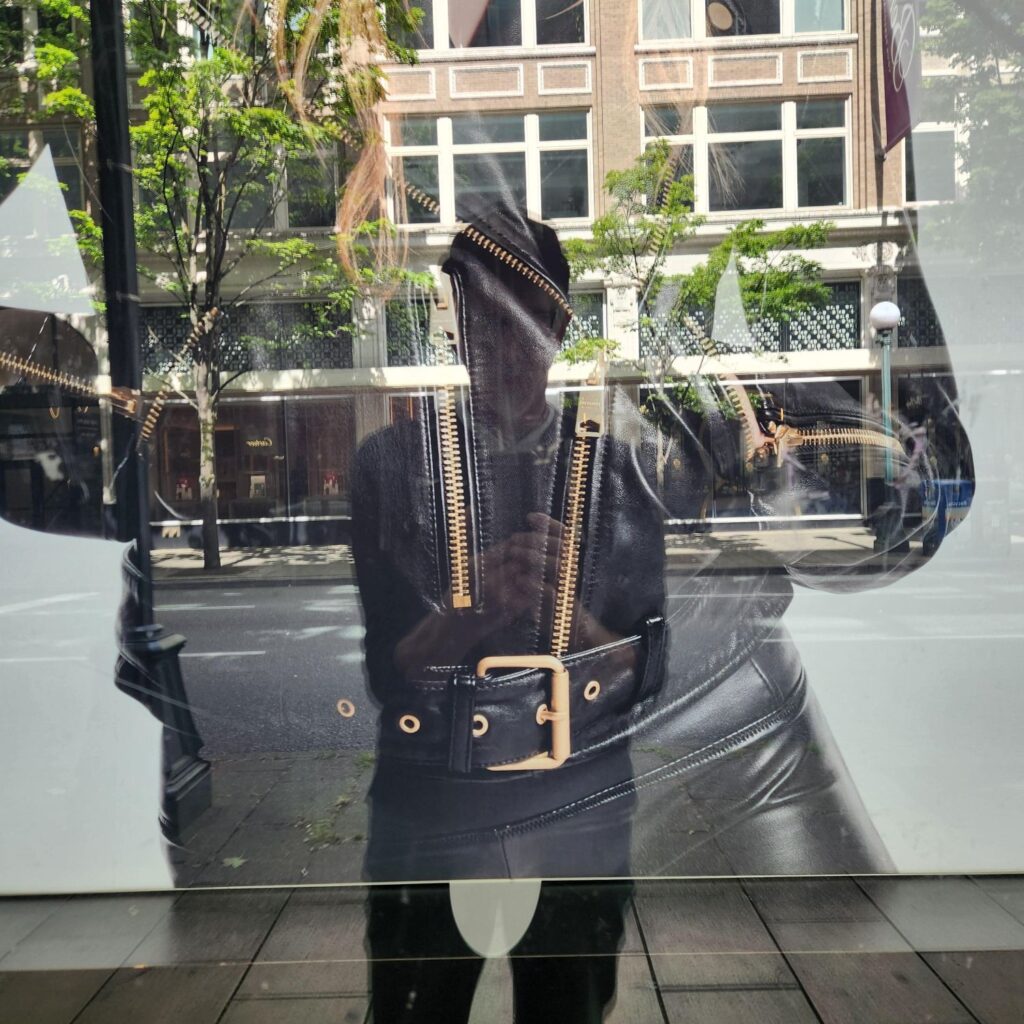
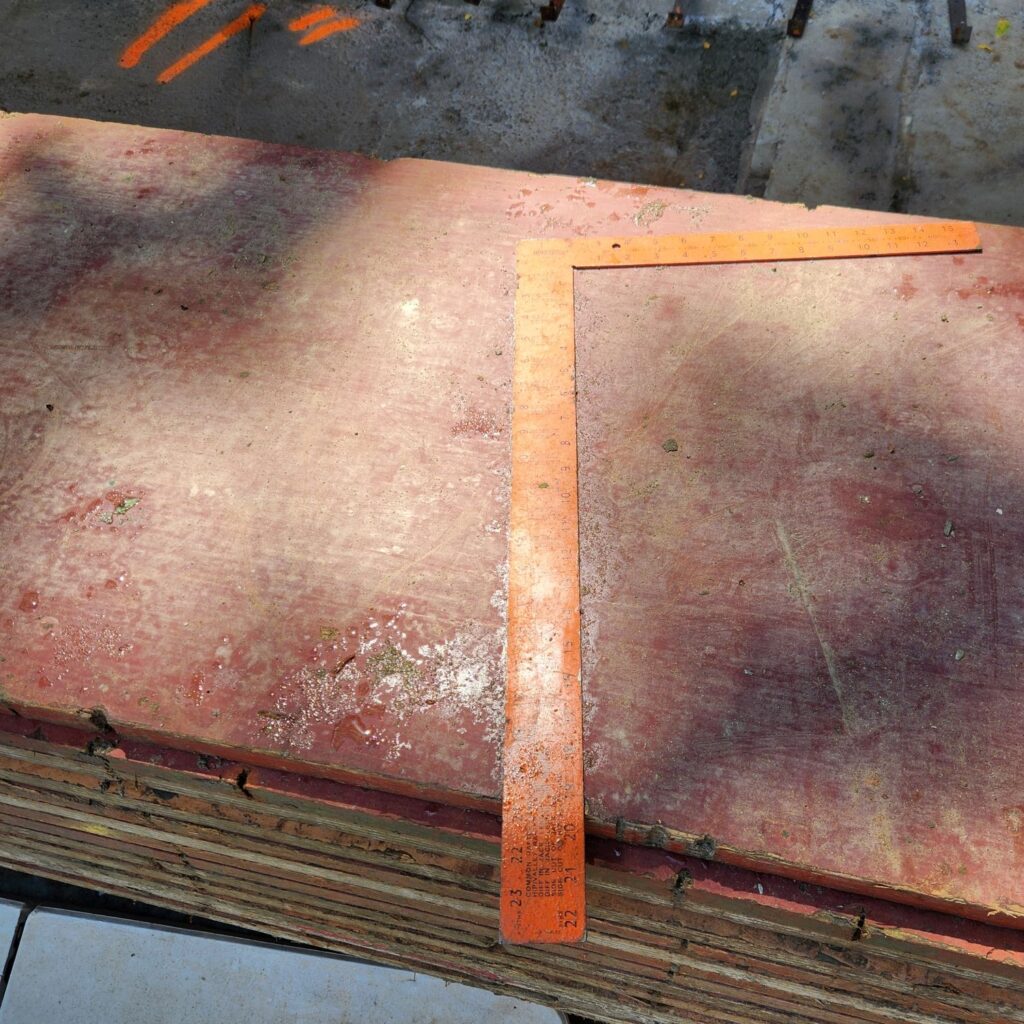
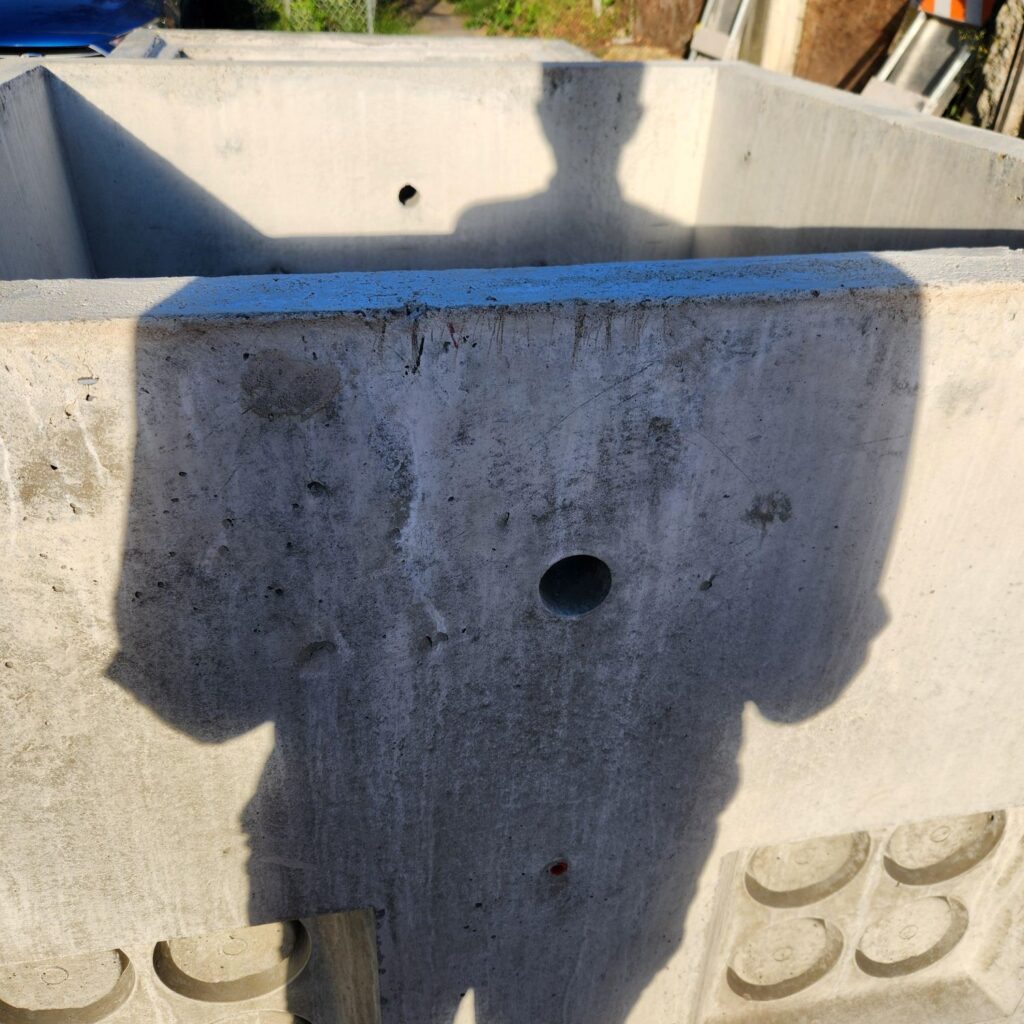
Now, I primarily shoot urban street photography with my cell phone. My focus is color, light and shadow, form, geometry. Most of my work is abstract. Sometimes I used paired images, sometimes stand-alone but I’m attempting to find some continuity, which is elusive at times. I now only shoot square format, a physical constraint I’ve chosen for my image making.
My focus/intent is the work itself; the “finding” of images in the mundane; the quest for something … out of nothing. Like many photographers I’m deeply challenged by the editing process. But I continue to try to find images that “say something” or engage the viewer in some meaningful way.
I think of you as a wanderer of our city—Seattle. You make many images along the way. Is the point to your wandering making photographs? Or is the camera just a small part of what you do when you are out and about?
I have lived/worked in Seattle for over 50 years. I am familiar with (on some level) most all of Seattle’s neighborhoods. On any given day I may have a non-photography reason to be in a neighborhood than my own. I’m often inspired to “document” my experiences in these neighborhoods that I’m aware of, but don’t live in. This gives me more of an “outsider” perspective than my own “lived in” neighborhood.
On the flip side, I’m also drawn to documenting (in a more intimate way) my own neighborhood; one I can see in a more nuanced way; that I can observe (repeatedly) taking note of lighting changes and evolutionary changes.
While both approaches are essentially documentary, I also am attracted to just abstract compositions—color, line, form —encountered in the various divergent neighborhoods of Seattle.
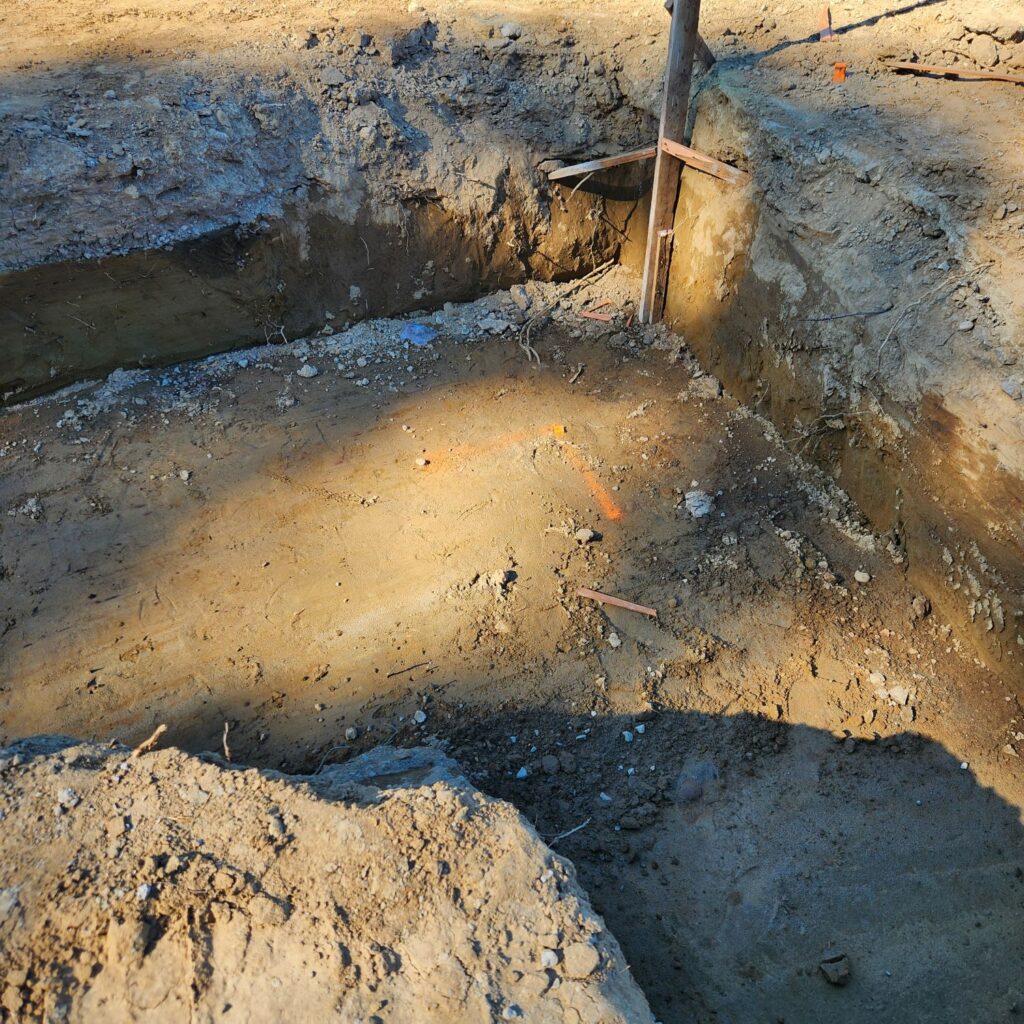
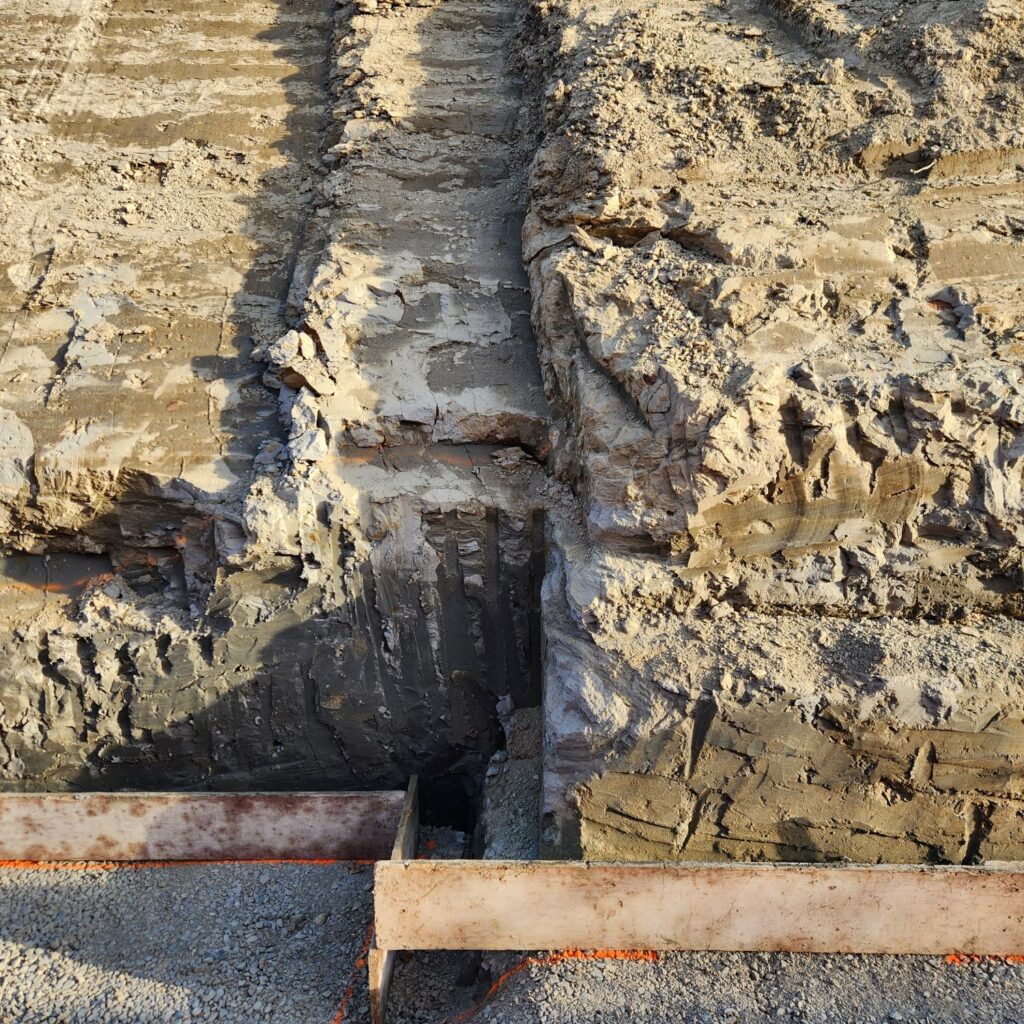
For some time you seemed to be pairing some of your photographs together, why?
The abstract compositions have also led to an interest in pairing images (essentially comparing similar but different images in a complementary way) and also an interest in challenging the spatial/rotational orientation of the image to the viewer. In a pure abstraction the image could be successful in multiple orientations.
For more info about John Wilmot:
Instagram @jpkamera
Alumni at 2026 Photo Zine & Book Fair
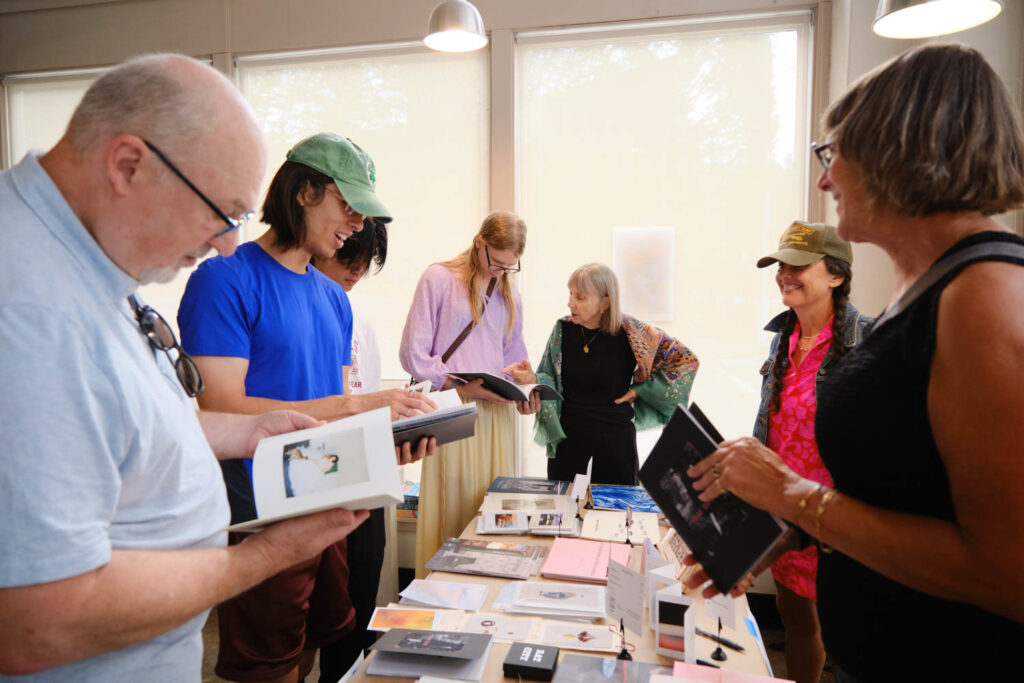
PCNW Photo Zine and Book Fair 2026
by Lisa Ahlberg, grad. 2005
Save the date for August 16, 2026 from 12-5pm for the PCNW Photo Zine and Book Fair. It’s tough to pick a favorite PCNW event, but this might just be it for me. I’ve definitely got the zine making bug myself and look forward to producing something new every year. I love the creativity and spirit of this fair. It’s always jammed packed. The event is a wonderful exchange of ideas of book form and photography. It’s affordable and fun!
Many graduates of PCNW’s Certificate in Fine Art Photography will be together at a table. I asked a few of them to share some thoughts on making books and zines and they are featured below. If you are an alum and want to be an exhibitor with us, please e-mail Lisa at lisaahlberg@mac.com. Join us for this wonderful, high-energy event!
Here’s a partial round-up of the alumni exhibiting at our table:
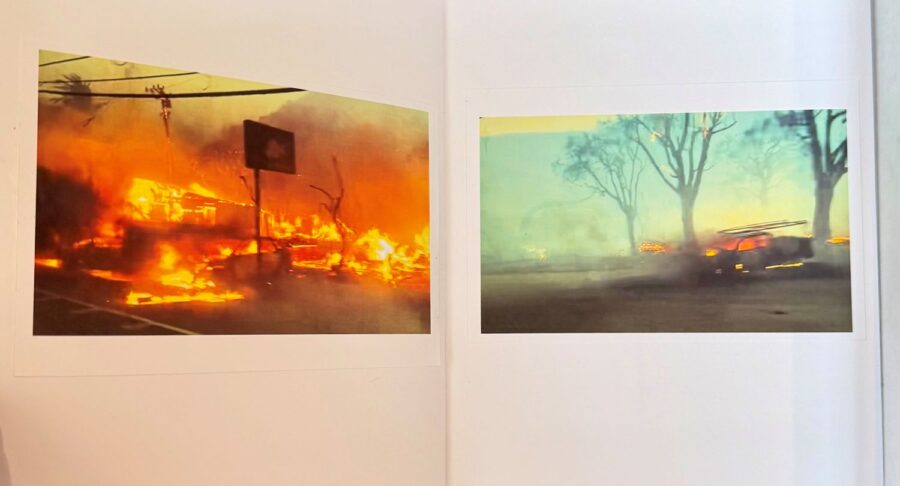
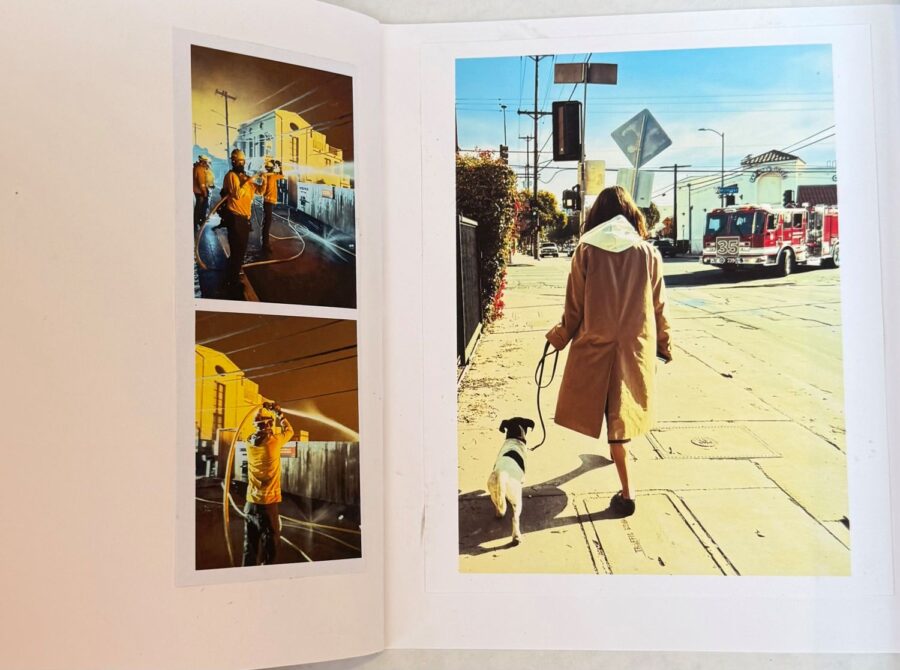
Gwen Emminger, graduated 2022
I can’t wait to see what you are bringing to the zine and book fair. Can you tell us about your history of zine making?
I’m showing up with two new zines and a few maquettes for sale.
My relationship with zines goes back a bit. Before I had access to a Xerox machine, I was putting them together as a kid in lined notebooks. The real initiation came with my first job at Kinko’s working the late shift. I would spend the quiet hours copying, printing, stapling, cranking out black and white copies into the night. Something about that joy of zine making stuck. The DIY simplicity of it, the creative pull of storytelling. You make a thing, you hand it to someone, and the sharing door is opened.
Over the years zines became the way I marked time, one-of a-kind gifts for friends, mailed to family when my kids were small. Single copies sent out into the world with baby footprints pressed inside, images of tiny socks, whatever felt true to that moment. As printing technology caught up and booklets became more affordable, the work evolved into longer photographic stories and color. But I’ve never been able to let go of the handmade part. Most everything I put together still gets layered after printing: adding written text, transparent paper, paint, color, patterns, tape, glue. Whatever I can work in to put my hand directly into the piece gets added and feels more authentic to the craft.
Zine making has always been how I share what I’m seeing and what I’m living. That hasn’t changed.
What are you featuring this year?
This year I’m bringing two new zines. Good Neighbors follows crows and their daily patterns as a metaphor for what it means to coexist with others and to be a good neighbor. The second documents the Los Angeles fires. My family had rented a house in Malibu on the beach for the winter when we were evacuated due to the Palisades Fire. All of the images in this zine were made within the first two weeks of January 2025 and capture both the joy of that time and the intensity.
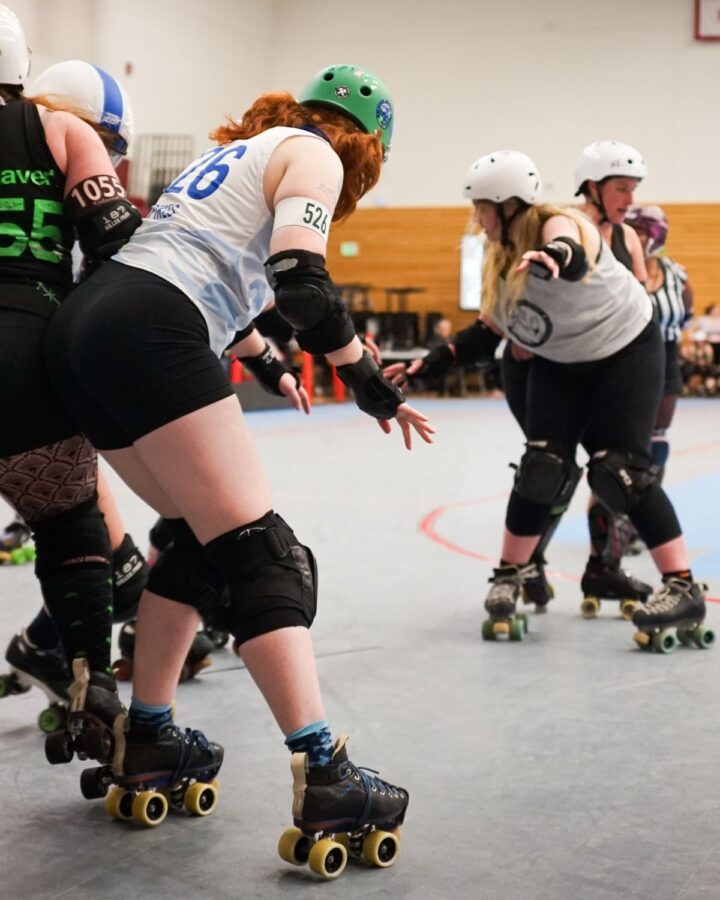
Holly Pendragon, graduated 2025
Holly, you have a new project you are turning into a zine. Tell me about it. How will it be produced?
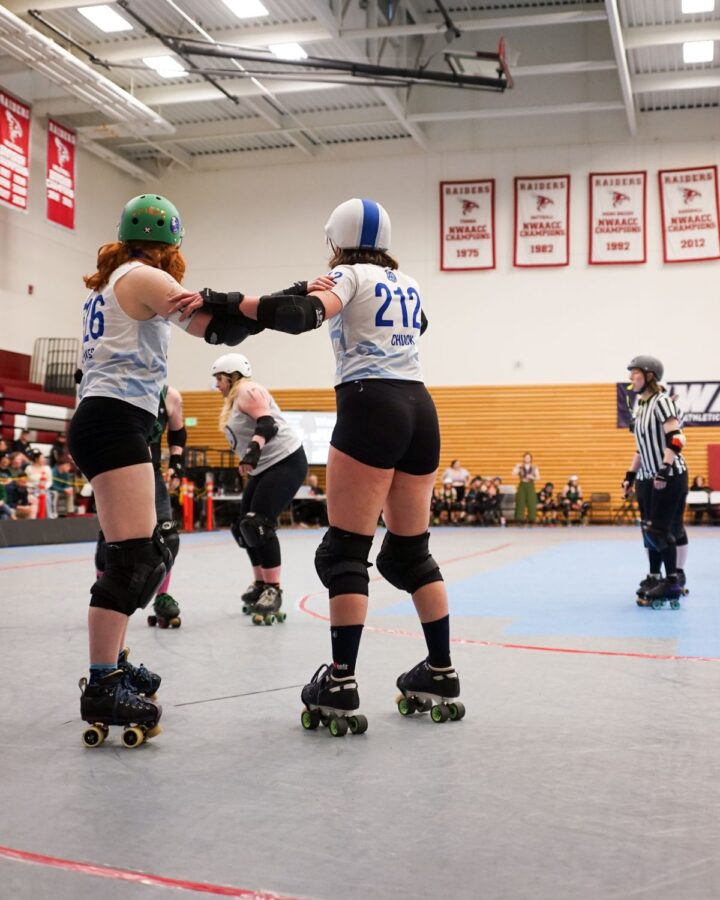
This past winter I started skating with Tacoma’s roller derby league Dockyard Roller Derby after Lilly Everett (PCNW Marketing Director) encouraged me to check it out. She was actually one of the founding members for Seattle’s Rat City Roller Derby, and I had been talking with her about how I wanted to get into something more physical during the winter months when my creativity feels stagnant. I had the opportunity to shoot one of Dockyard’s bouts in March and it was absolutely outside of my wheelhouse. I usually seek quiet, delicate movements in nature for my photographic work, so this was about the absolute opposite. Derby is a loud, fast-paced, full contact sport. It’s so wild to watch and be a part of. It’s also so much fun to shoot.
There’s this element of derby that I’m drawn to that follows my interest in bodily movement and gestures: to move safely and efficiently on the track you need to move your body in these weird, abnormal ways. I’m completely drawn to the strangeness of how you’re needing to arrange and rearrange your body to move so fluid on the track. As I was going through my first set of photos, I kept seeing the same lines and gestures that I like to capture in nature showing up on the track. That’s kind of how we work as photographers, though, we keep finding the elements that we’re in dialogue within different environments. One image in particular that I’m thinking of is one of our Dockyard skaters absolutely destroying her opponents on the track. The moment itself is so rough, but she’s also mid-flight, and there’s a breathiness that makes her feel ethereal. This was where this project started.
Turning my photos of Dockyard into a zine felt like a natural progression to follow that gritty quality that derby has. It’s also a very DIY sport and presenting the work as a zine felt really true to that feeling. The zines I’m producing will be handmade and they’ll be bound by my sewing machine at home. I’m so excited about this and I’m really excited to have this work at the upcoming Photo Zine and Book Fair.
Rachel Demy, graduated 2022
Some of us are at the point of self-publishing. I know from taking a class from you that you love to help others edit and sequence. Can you tell me how you start to edit and sequence for a zine? How do you know when to stop?
I LOVE editing and sequencing, whether it’s for a book, exhibition, website, you name it. Photographs get a whole new life every time they’re seen in a different context, no matter how long it’s been since they were created. Anyone who has taken a class with me, especially in person, knows I light up at the opportunity to help someone edit and sequence their work.
The first thing to know is that editing and sequencing are not mutually exclusive. This is not a linear process, going from one phase to the next. Each part—edit, sequence, layout/design— impacts the others. You will be walking around in circles with your work for as much time as you’re allotted. And if you’re including words with your photographs, well, you’re opening up a whole other can of worms (I like those worms, too).
The best thing to know is that you’re going to revisit every part of this process multiple times and you’re going to make a mess. Once you can accept that, the process becomes much less intimidating or paralyzing.
So, how do I start to edit and sequence for a zine, specifically? At the risk of sounding like a smart ass, I start editing and sequencing by starting. As in, doing. As in, not overthinking it.
The simplest place to start: Print out 20-30 images in a size small enough to fit on a table, but big enough to see. They don’t have to be art prints. A laser printer will do. Live with the photographs. Walk by them every single day. Stand on a chair and look down at all of them. Look at them upside down. See which ones like to be next to each other. Move those ones next to each other. Walk away and leave them be. Do this every day, multiple times a day. Change your mind. Take out your favorite photos. See what’s left. Put them back in. Take out the ones you think “should” be there. (Put those somewhere very far away from the table, because we don’t “should” ourselves in art.) Write down what you see. Write down what certain image pairings make you think of that may not be visible. Maybe listen to music while you do all of this. Have other people look at your photos. Have them make some pairings. Maybe they make an association you hadn’t thought of. Write that down too.
Once the photos begin to have a relationship with each other, begin experimenting with them in book form. Either print out page spreads (at the size you want your zine to be) or tape them inside a blank notebook. See what happens to your photos when you turn the page. What’s the first image you want to see when you open the book? Move forward from there. What’s the last image you want to see? Move backward from there. See what happens when you separate the pairings you’re really attached to. Experiment with running your images over the gutter. See what happens when you leave some blank pages. See what happens when you repeat yourself, by putting in an image more than once. Print a photograph on vellum. Print a photograph on colored paper. A zine is taking shape somewhere in all of that, even if you can’t see it right away.
This is merely a start. The point is, there’s something very intuitive that kicks in when you get out of your head and into your hands. Get off the computer. Waste some paper. Waste some time. (You’ll come to learn that none of it is truly wasted.) Play is the number one tool I use to edit and sequence, and it’s a process I wholly trust.
Lastly, how do I know when I’m finished? I either get sick of walking around in circles and decide to be done, or I have a hard deadline for the zine fair. :)
You teach Untitled: The Interplay Between Text and Image at PCNW and love to write yourself. Can you speak to how you’ve used text in your zines?
In the interest of not giving it all away in this interview, come take my class and I’ll tell you!
Are you working on anything new that you hope to bring to zine or book form?
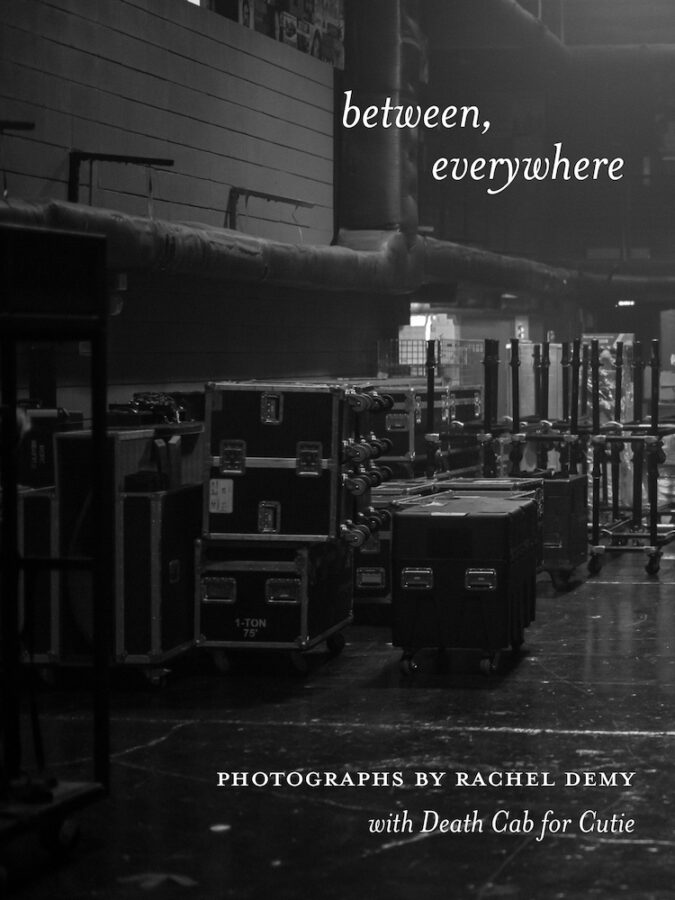
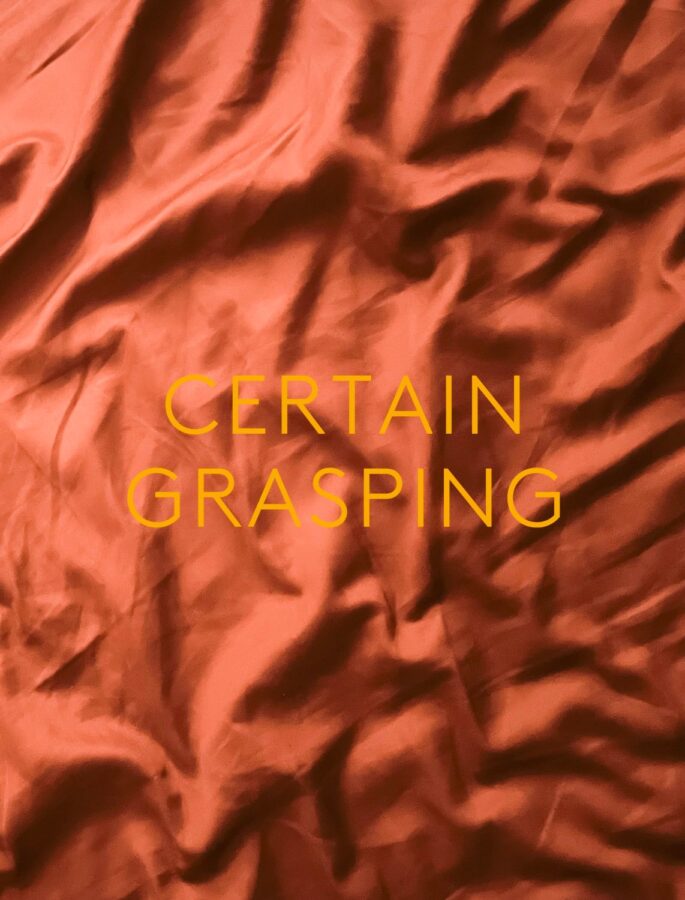
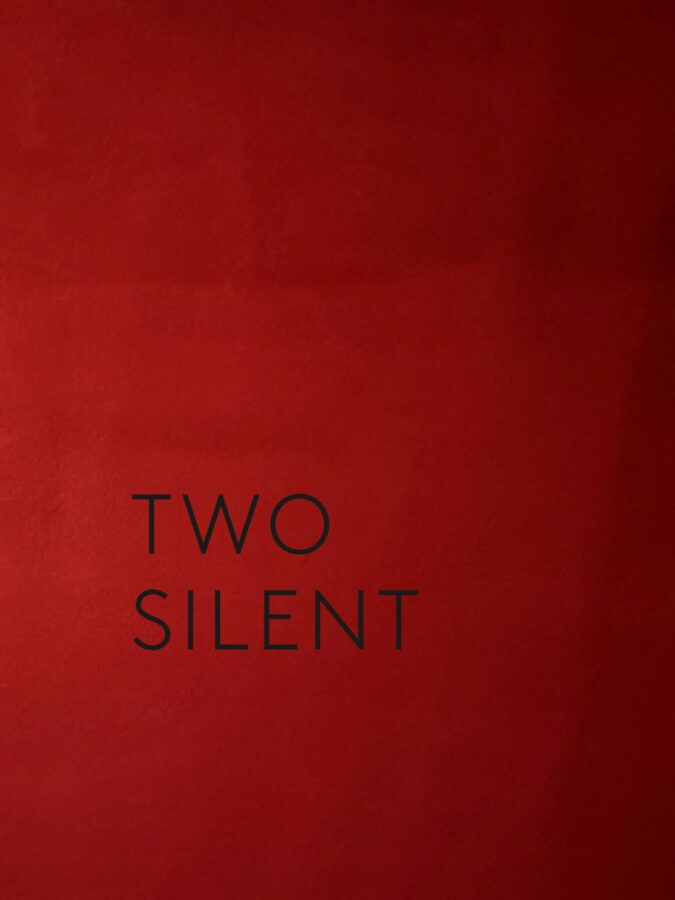
I have a few projects in various stages of percolation, I am also in a period of clearing out my studio, letting go of old work, to make space for something new. This year at the alumni table, I’ll have the four zines in my Revocable Living series, both the special artist editions and the more accessible zine editions. My book, Between, Everywhere, is officially sold out on Minor Matters’ website, so I will have some copies on hand for those who are interested. More than that, I’m just excited for another year of hanging out and gathering around photo books at PCNW. It’s truly one of my favorite events!
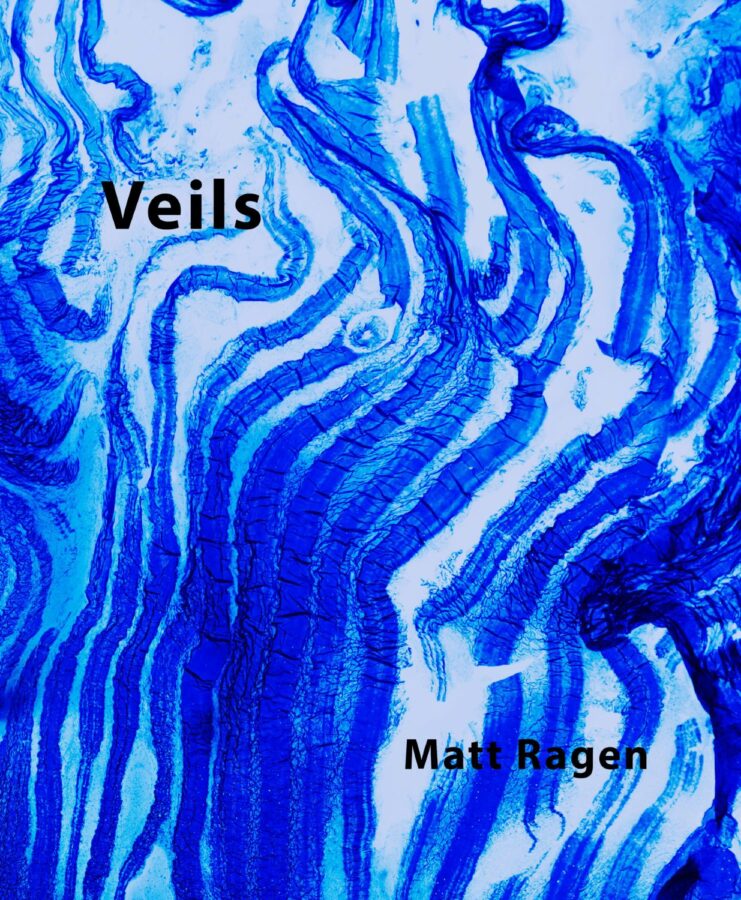
Matt Ragen, graduated 2022
Matt, last year you had an exhibit at the Holocaust Museum in Seattle. Tell me briefly about the exhibit and how your zine fit in?
In 2025, I had a solo show at The Holocaust Center for Humanity in Seattle. In the exhibit, I showed a series of images that are linked to my family history as refugees from Czechoslovakia and as immigrants to the United States. The exhibit started as my thesis project and has continued since then with several new images. To accompany the exhibit, I sequenced a set of over 20 photographs in a book format and then told the story in text that accompanies the photograph.
Are you doing any new work that you expect will end up in some kind of book or zine form?
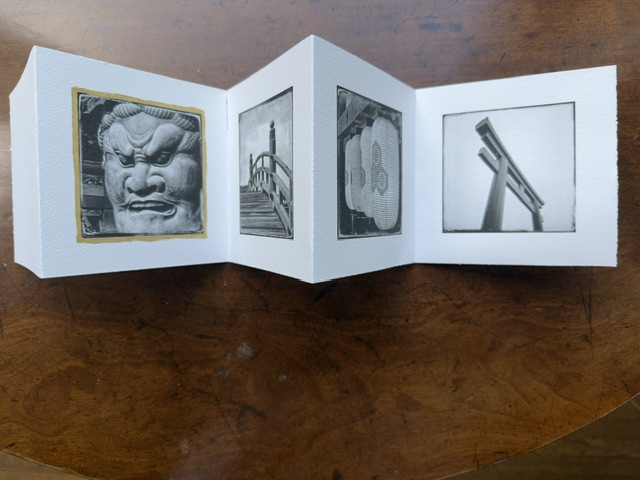
I’ve been inspired by some of the small artist books created by Dayanita Singh (Sent A Letter) that included a series of images. After a long family trip to Japan last year, I realized that I had a set of images that I could work with as well.
I’ve been working on some new books based on my travels in Japan. Not sure that they’re zines – but they are mini-books. I will be producing a set of 5 books, sold in a set or separately. Each is an accordion book with four images. Each book has a different set of images or, at least, a different order so they are all kind of unique. Each image has a hand painted gold border. Kind of fun project but a bit more work (cutting, folding, scoring, painting) than I expected.
Japan: Temples
Japan: Gardens
Japan: People and Figures
Japan: Places
Japan: Hotel Objects
Cheryl Hanna-Truscott, graduated 2009
What will you be bringing this year? How does your continued exploration of photogravure printing fit into bookmaking? How are you learning to make books?
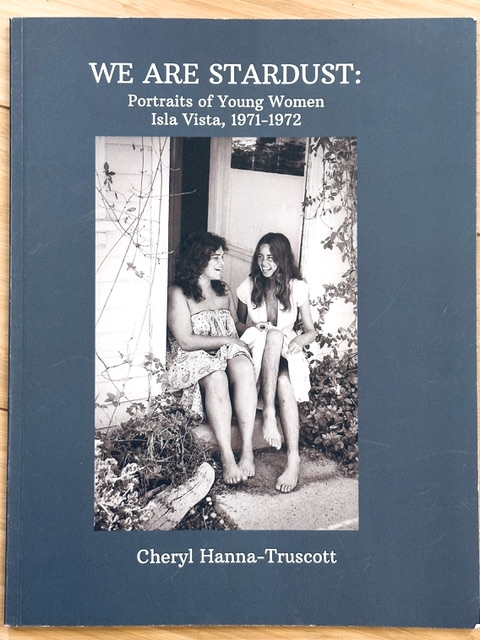
I’m bringing copies of my zine, We Are Stardust: Portraits of Young Women Isla Vista
1971-1972. This is a series of photographs I took the year following graduation from UCSB along with journal excerpts. I was figuring out the next start of my life through portraiture. I saved all my negatives in notebooks and they are still intact. I encourage all photographers using film to take care of their negatives! You might find something incredibly unique and worthwhile fifty years later.
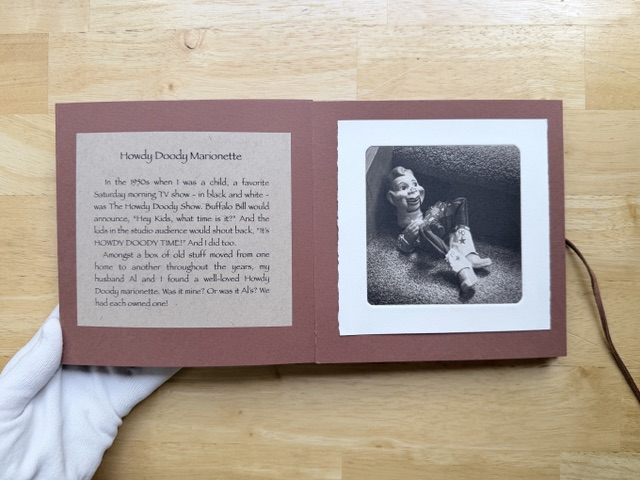
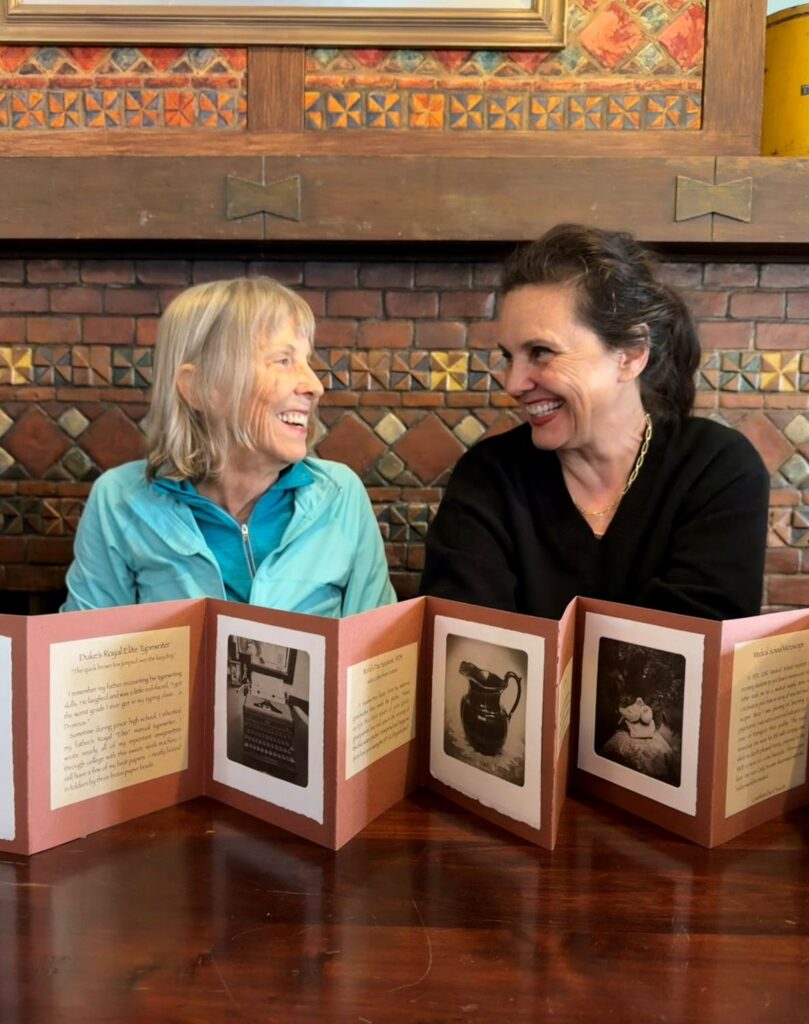
This year, I’m bringing a few handmade books from my RELICS series of photogravures. I’ve been exploring hand-crafted book forms this past year, learning how to make two simple structures so I can get a few of my photos out of a storage box and put them in a book. The structures I have learned are the accordion and the flutter books… simple enough yet still challenging for me. I’ve gotten help from members of a book arts organization, the Puget Sound Book Artists (PSBA). The monthly meetings welcome both newcomers and longtime accomplished book artists and I’m lucky to attend the monthly meetings only 20 minutes from home.
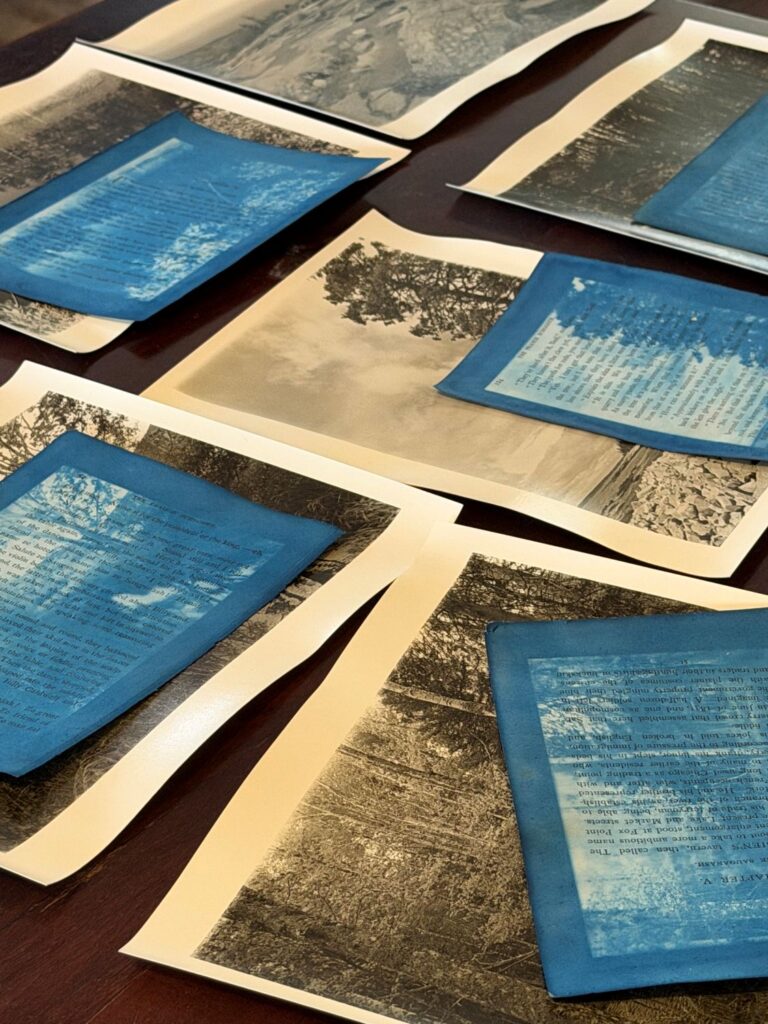
RELICS refers to images I’ve made of cherished objects inherited or acquired during my life. I’ve processed them using a modern photogravure process I learned through PCNW workshops. Photogravure images use ink-coated etched plates and dampened art papers which are sandwiched then rolled together through an etching press. The process began in the 1800s using toxic chemicals but now can be made more safely through non-toxic means. The resulting photogravures compliment the vintage qualities that my old, cherished keepsakes bring to mind.
I will also bring a small collection of stand-alone photogravure prints.
PCNW Alumni wishing to exhibit with us can e-mail Lisa at lisaahlberg@mac.com
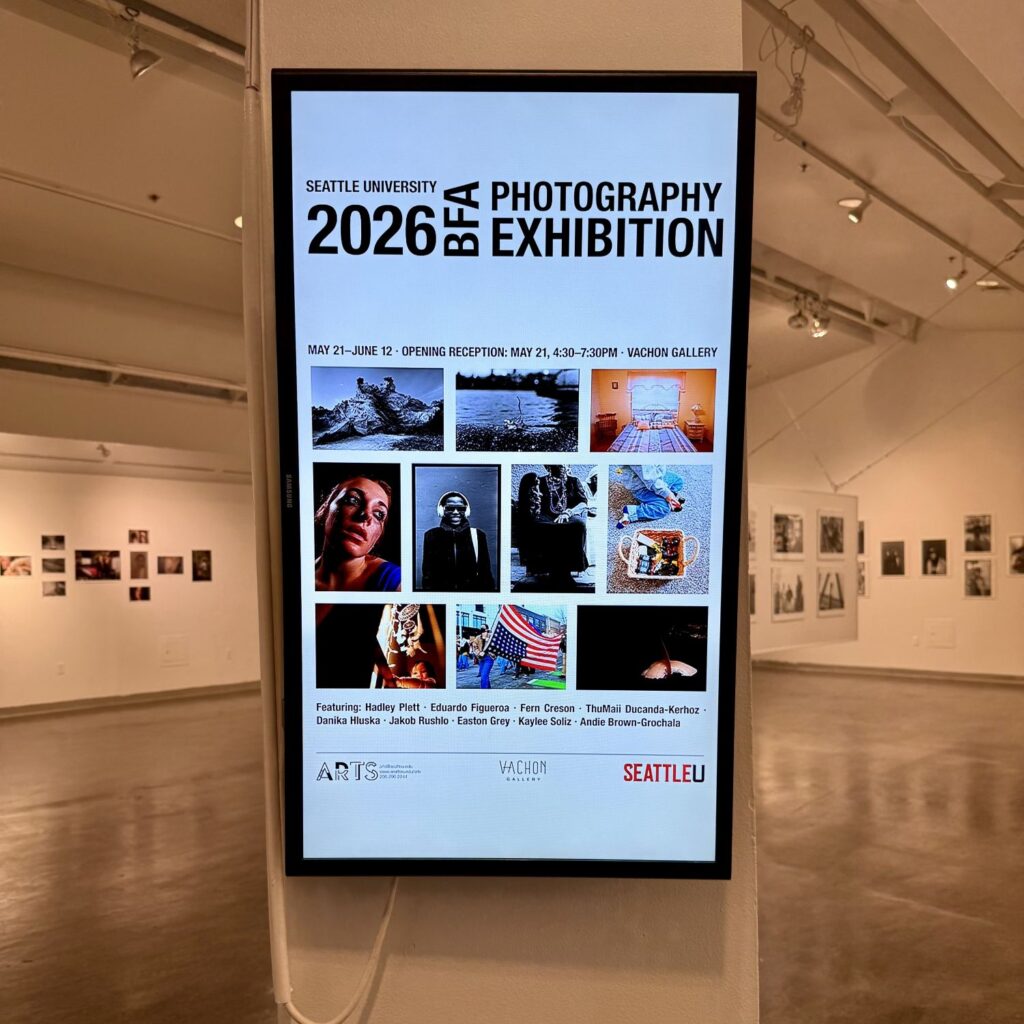
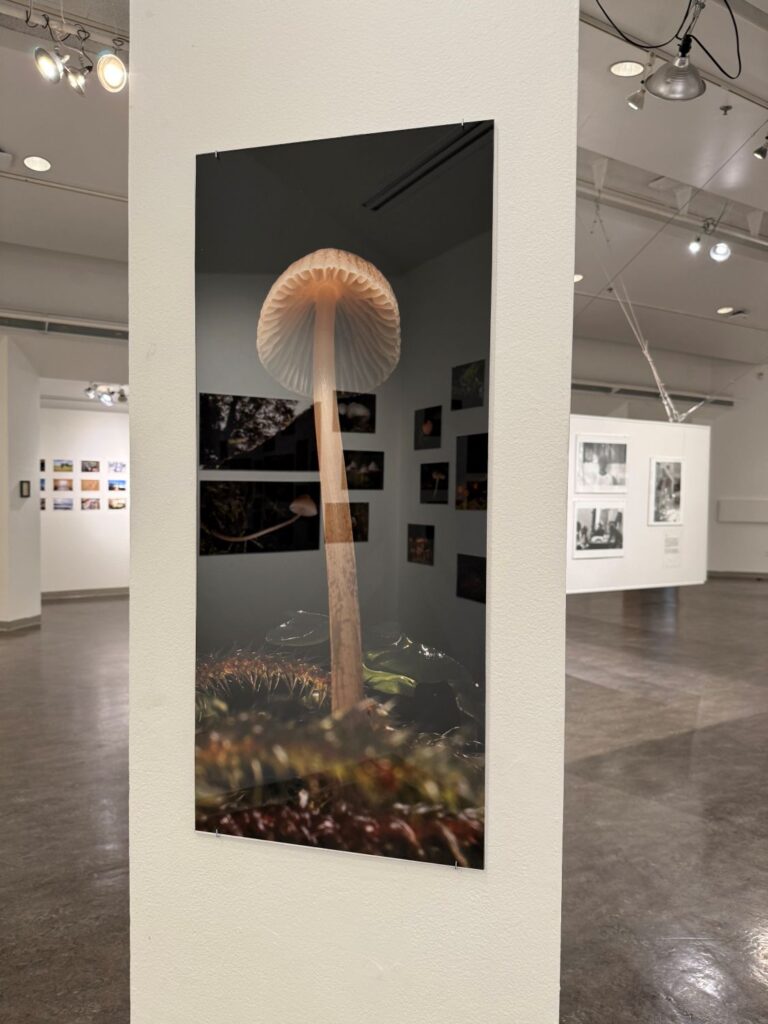
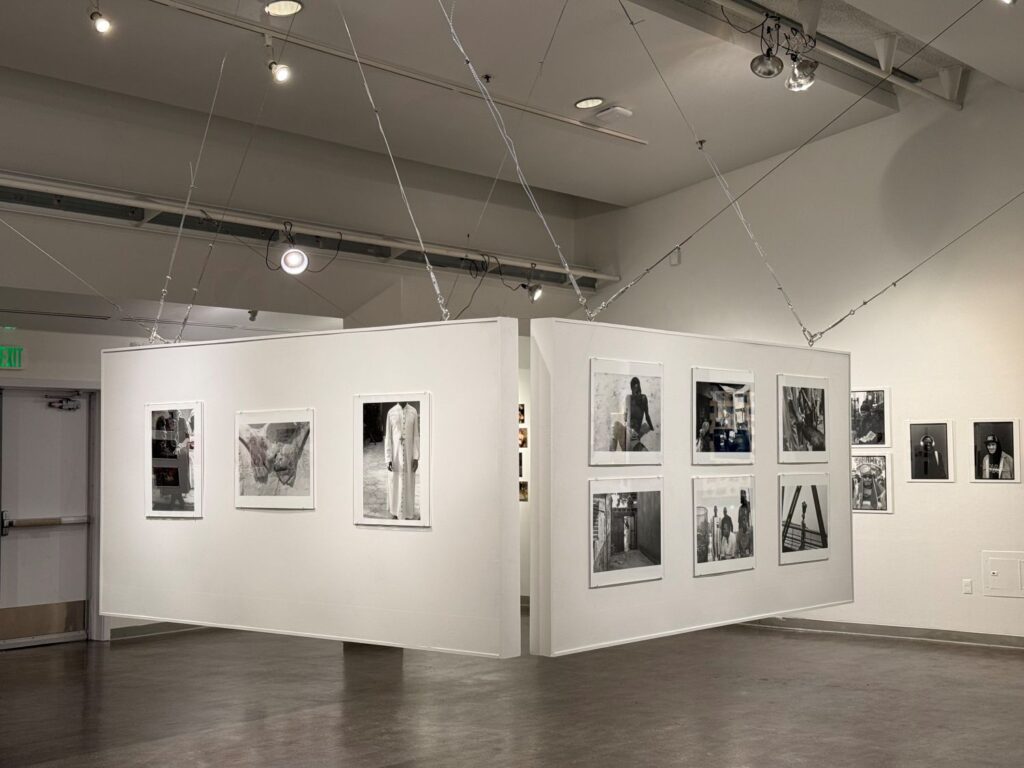
Seattle University 2026 BFA Photography Exhibition
by Gwen Emminger, grad. 2022 from PCNW
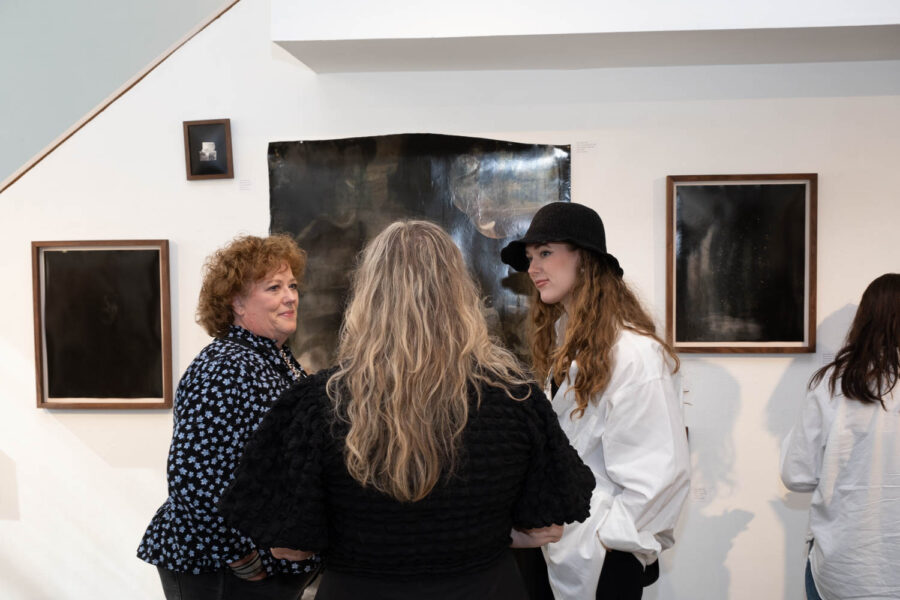
There is something extra special about a student graduation exhibition. It is more than a gallery show; it is the culmination of years of art practice woven together with mentoring, learning, experimenting, questioning, and growing as artists. Walking through the Seattle University 2026 BFA Photography Exhibition at the Vachon Gallery, I was reminded of just how exciting that moment can be.
The exhibition featured work by Hadley Plett, Eduardo Figueroa, Fern Creson, ThuMaii Ducanda-Kerhoz, Danika Hluska, Jakob Rushlo, Easton Rittenhouse, Kaylee Soliz, Andie Brown-Grochala, and Aidan Sales. Ten students, ten distinct creative journeys, all presenting thoughtful and engaging work with a variety of storytelling approaches.
The show felt intimate and thoughtfully arranged, with each artist given room for their work to breathe. Alongside traditional photographic prints were added text-based elements, handmade zines, and three-dimensional components that expanded how stories could be told. Some works revealed themselves slowly and quietly; others made an immediate emotional impact. Together, they created a viewing experience that felt personal, inviting, and genuinely provocative.
What stood out most was the beautiful combination of celebration and possibility. These artists have spent years developing their skills and discovering their voices, and this exhibition feels like both a reflection on that journey and an exciting starting point for whatever comes next.
Congratulations to the SU BFA Photography Class of 2026. I enjoyed the work and am happy to have shared this moment in your creative lives.
Alumni Critique Group
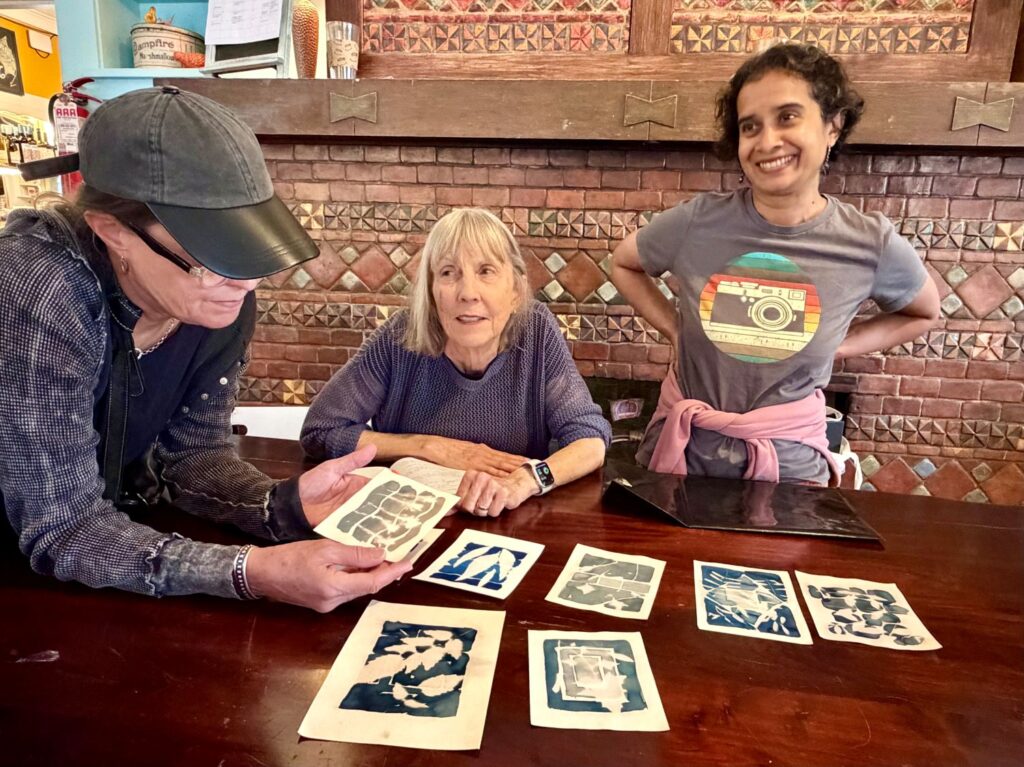
Are you a graduate or current student of PCNW’s Certificate in Fine Art Photography? You’re invited to join us at an Alumni Critique Group! Feel free to join in at any time and bring new work to share.
WEST SEATTLE
Meets Second Wednesday of every month @ 11am – 1pm
Where: West Seattle C & P Coffee, 5612 California Avenue SW, Seattle, WA
Contact Eva: eswesterlind@gmail.com
About the Alumni Association
What is the Alumni Association and who is a member? The PCNW Alumni Association includes and is for all graduates of the Certificate in Fine Art Photography. We have a volunteer leadership committee that seeks to deepen the connection between Alumni, current Certificate Students, and PCNW, and explore ways in which we can further support, elevate, and celebrate one another.
Are you a graduate who is interested in getting more involved? We intend to renew the committee on a regular basis, with new members, and think this group can lead some great initiatives. Reach out to us at alumni@pcnw.org if you’re interested in joining the leadership committee, have ideas to help foster connection and professional development, or if you’d like to support upcoming initiatives.
Are you an alum with an upcoming exhibition, book launch, lecture, portfolio review, or other
event that you’d like us to feature in a future Alumni Newsletter and/or on the PCNW Alumni
page? Tell us about what you’re up to by completing the Alumni Survey Form or e-mail us at alumni@pcnw.org.
Posting on Instagram? Add another hashtag to your work: #pcnwalumni
Thank you to our current volunteer leadership committee members: Lisa Ahlberg, Gwen Emminger, Holly Pendragon, Janet Politte, Anna Ream, and Annie Reierson. Our Chairperson is Gwen Emminger.
Additional thanks to the alumni who contributed to making this issue of the newsletter happen, especially: Lisa Ahlberg, Jennifer Brendicke, and Gwen Emminger.