Alumni Highlights
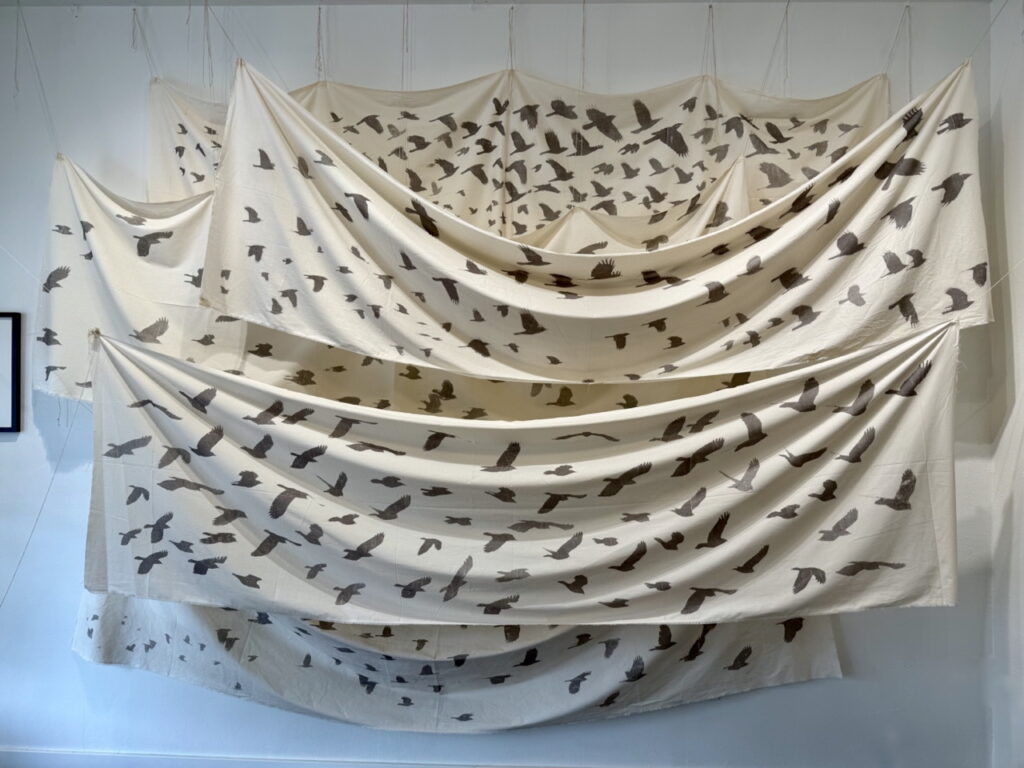
Image Credit: Gwendolyn Emminger, Route to Roost
Gwen Emminger
graduated 2022
interview by Lisa Ahlberg, grad. 2005
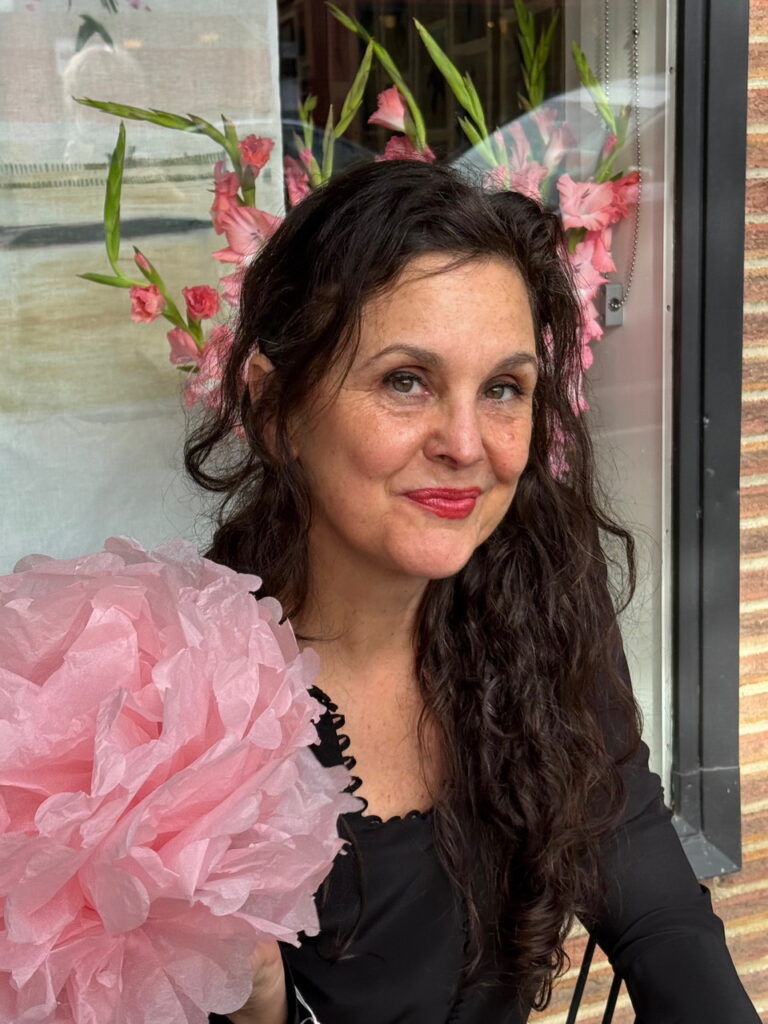
Gwen Emminger is a lens-based artist and storyteller living in Seattle, the only place she has ever called home. She is passionate about experimentation and challenging her sense of adventure while creating allegorical narratives with a nonlinear approach. Installations, videos, projections, and performance are all key aspects of her work, often using the natural environment as a central theme.
Image Credit: Kristan Parks, Gwendolyn Emminger at Seattle Light Room Exhibition Opening
Gwen, you have a fantastic exhibit at The Seattle Light Room, Good Neighbor. Tell us about the work. What’s with all the crows?
Thank you for asking. Putting this show together from the beginning has been a lot of fun. Conceptually, I wanted to consider what it means to be a good neighbor to address the deeper meaning of citizenship. I wanted to emphasize the nuances of living alongside others and how it extends beyond the typical boundaries of neighborhood and community, not just across fences or streets but in the broader sense of coexistence with all living creatures. Crows, with their complex social structure, let me notice rhythms and patterns in daily routines.
After choosing to use crows as the protagonist, I began observing them and learning more about them; admittedly, I am no crow expert.
It was easy to watch and recognize the crows’ social routines; they protect their neighbors, comfort each other, show affection, and express frustration. They also spend much time dealing with their food and feeding their family. During the winter, they roost together by the hundreds, if not thousands, to protect and offer warmth for each other. I did read while having this nightly slumber party, the younger or weaker ones sleep on the bottom, and inevitably are pooped on. I’ve often spotted them on my morning walks, washing away the white in Lake Washington. I must admit I like respecting the elders and giving them the top of the tree.
Recently I was pooped on. It happened when I was photographing the crows in an air dance. At first, I thought I was watching them hang in the thermals, but they were courting each other, and I was mesmerized by the dancing in flight, mainly with my camera and long lens. I took the lens away to watch, and one just plopped a big ole lucky white liquid that covered my right eye. Thank goodness I was wearing glasses. I most likely deserved it; after all, I completely interrupted them.
A few months of photographing the crows brought a new awareness to their sounds and way of communicating. It was late March, and the daily migration of south-end crows heading somewhere towards Ikea was done for the season. I heard a curious loud constant cawing in my backyard, within minutes, a thunder of caws that was more like screaming. I went outside to investigate all the noise. About 20 crows were bombing the cherry tree and going after it with a vengeance, with more flying in and landing on the phone pole to chat with others before taking turns diving, swooping, and screaming at the tree. Upon further investigation, I noticed the baby raccoon slowly creeping down the trunk. Perhaps it was too close to a new nest, for whatever reason, the neighborhood crows did not like it being there and they let it know. They mobbed that raccoon and didn’t let it get close to the top of the tree; it was an impressive sight of community support. I thought of the anti-ICE posters around town that say, “We protect our neighbors”. It caused me to realize these birds, often considered nuisances, share space and live interconnected lives.
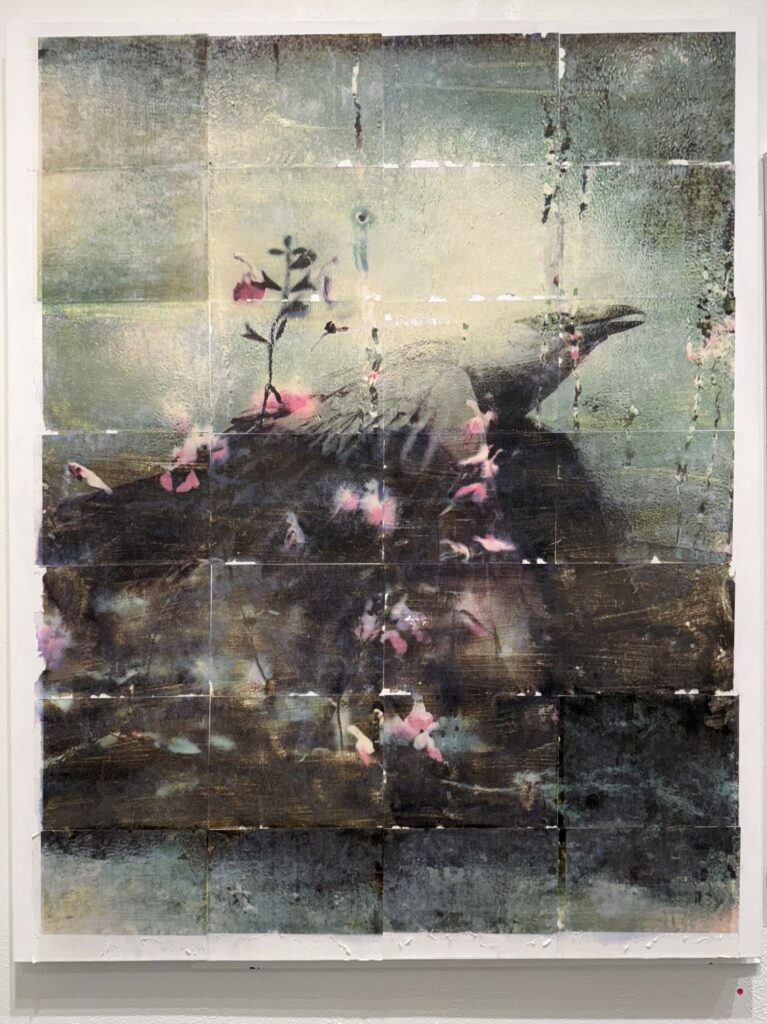
Image Credit: Gwendolyn Emminger, Crying Crow
How did this work develop? Did you end where you thought you would?
That’s a great question. The work developed quickly conceptually. My real challenge was the time needed to make it and the specifics of the space, with its limitations. I wanted to create an immersive experience and work in alternative process. After I had five thousand images of crows to work with, I began putting together the final pieces. That’s where the experimenting began. I tested ten different textiles with several other photo transfer processes. Once I decided on the techniques, I isolated the crows, merged images, and transferred them onto material. All to create movement as a key element to the overall immersive experience I was looking for. The overarching goal was to overwhelm the visual space with an abundance of crows. Allowing wind to blow and move the textiles at eye level for the viewer instead of up in the sky with quick wing movement that becomes blurred. Isolating the flight patterns accurately, displaying the created abstractions, and using repetition are all principles to draw attention to the individual crow.
Yes, it did end exactly how I visualized from the beginning, with the shadows and space working together; in fact, it became emotional as it was all in the gallery. Something pretty. Although pieces evolved, for example, the two large crows were not originally planned to be on stretched canvas. The room needed to be balanced, so the color and the stationary positioned pieces were introduced. I would have done more if the space were larger, such as creating a labyrinth to walk through with text and messages on the back sides of the work. There wasn’t enough room; I’ll save that for another time.
Would you consider the photograph as a starting point for you? The work I’ve seen you do is not usually a straight print.
Interesting question and a little challenging to answer. It depends on what the work is. A portrait shoot or a theater shoot is, I guess, what you call straight, but it doesn’t have to be. It just depends on the project. As a storyteller, the work can often take on a direction that helps with the narration, and for me, that gives me access to the variety of techniques or tools I have in my imaginary toolbox.
How does a photograph change when it’s altered? What other ways have you worked to transform an image?
Using different genres and textures, my work experiments with materials to engage the viewer and make them feel as they view the work. For example, photographs become paintings, or pictures become projections abstracted by the aspects of the location and its materiality. You may remember a zine I did a couple of years ago. When I looked at the printed page, I was frustrated by the one dimensional aspect and was disappointed with the work. I added layers, including velum, text, tape, and cut-out windows. Ultimately, each zine became an original piece of art that was true to the storytelling.
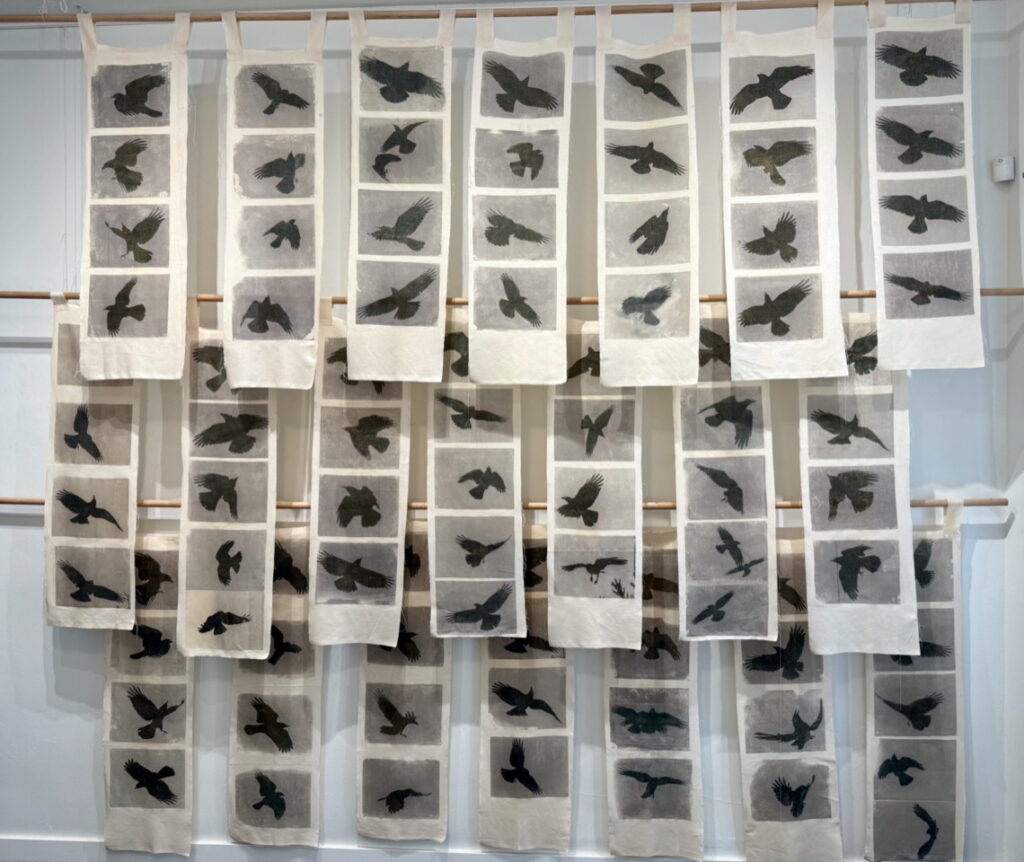
Image Credit: Gwendolyn Emminger, First Date, photo transfer on Japanese Canvas
How does your art connect to politics and how you see the world changing today?
Isn’t everything political these days? I realize not everyone will see my work through the same lens or overall perspective, and they should have their ideas of what they see. I want people to look at my work and take on their own story; that is a huge compliment. I hope I am creating something that will move the viewers and inspire hope for a brighter future for everyone.
You are the current chairperson of the PCNW Alumni Association Steering Committee. Thank you for taking that on! Why is the work we do important to you? What’s the favorite thing we do?
I’m grateful to be available because volunteerism and community involvement are essential to me. I enjoy building community and bringing members and alumni together to participate and enjoy art.
The Salon is my favorite alumni event, and I’m proud to be a part of it. It is a perfect example of community-building in a non-competitive environment. It brings photographers together, spotlights individual photos, and provides an opportunity to chat about them. It also offers an opportunity for folks who have never shown before to hang their work on the wall as a first-time experience.
What are you up to next?
Oh geez, big question. I’m looking forward to making more art.
Can you identify a common theme or thread in your work?
I love all genres of art and will take photographs of anything, but when it comes time to make work for a show, it becomes conceptual, and there needs to be a theme that makes me feel something. That inspires me, and once I grab onto that, I can just open up and let the artwork happen. Making time is hard, I feel ambitious and want to do big things. It isn’t about showing off, because I’m very private, which always confuses people as they hear my loud laugh. My laugh can honestly be a hard act to follow, but trust me, it’s beyond my control.
What inspires your photography?
Everything inspires me, but most of all, I want to feel something when I’m making art, and the same for others when viewing my art, I want them to feel and be present. I don’t just want to make beautiful things; I want to see my fingerprints and what it takes to make them. I want to turn mistakes into happy accidents and define who I am and what I am. I’m not perfect, and neither is my work. Being open to the process allows me to be present and live Life presently. When I was a teenager, I attended several Ram Dass meditation seminars. His book Be Here Now resonates with me, still to this day. Honestly, taking photos is my best meditation practice. It allows everything around me to be quiet and opens me to the presence. That is why I love photography and making art.
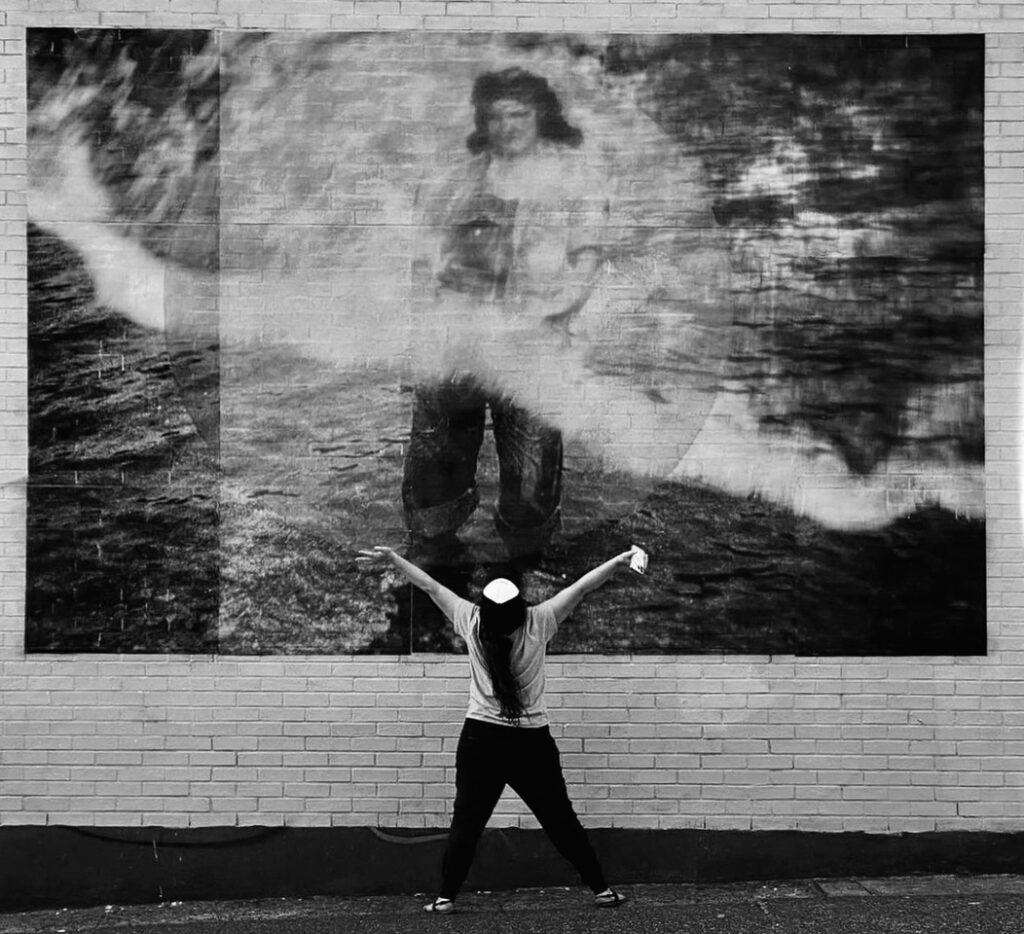
Image Credit: Gwendolyn Emminger, Grandma Moon and Me, Wheat Paste on PCNW, Self-portrait
How do you choose the subjects for your work?
Good question. It’s more like they chose me. I take many photos and then use them as fodder for collaging or projecting, combining them to be more. It allows me to continue playing and finding new ways to look at something. I don’t follow any traditional patterns or methods. Sometimes the photo is enough, but other times it needs to be more. For example, a portrait shoot is usually just about editing and finding the right light for the look. But on a walk, I may photograph a sofa sitting on the corner and then the daily migration patterns of the crows. Later, recognizing the parallels to the current politics of removing young men from their homes and accusing them of being gangsters, because of their tattoos. Wow, in my lifetime. Honestly, I can’t stop thinking about how it ends. My great-grandfather was told his name would be Nelson Ford, and his birthday was January 1, 1900. Never mind; he was a toddler. My ancestors were moved and isolated in reservations, and it stirs me, but it makes me want to reflect and be better. I don’t want to get lost in the hate and disagree with the other opinions; instead, it makes me want to mob the streets and stop history from repeating itself.
What will you be doing for Chase the Light?
I have a few ideas, but I’d like to explore with some of my favorite photographers and do something unusual.
What are you excited about?
Oh, I love this question the most and have a double answer. Both my kids have recently flown the coop and moved to Los Angeles. I’m excited to watch them grow into adults and see how Max, my husband, and I will take on this next stage of life. I’m open to change, as long as it includes being close to my kids. The irony of photographing the birds and their daily migration is not lost in how it correlates to me becoming an empty nester. That was an unconscious motivation for my current crow/good neighbor show.
I’m also looking forward to teaching again and sharing techniques similar to what I produce. I love the sharing and continued learning that happens in a classroom, but it has been a while since I have been at the front of a class, so that should be interesting.
For more about Gwen Emminger:
Instagram @gwen_emminger
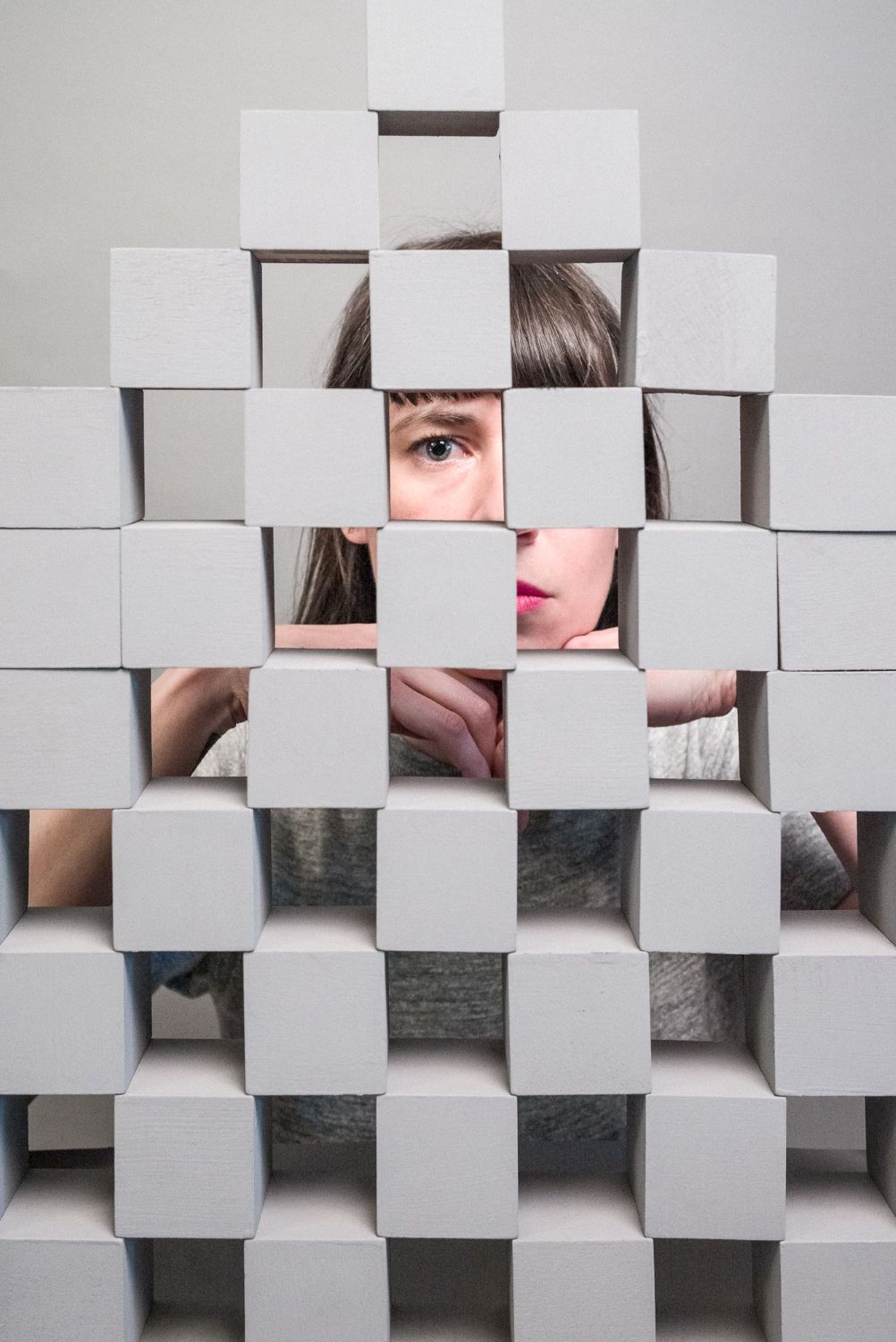
Image Credit: Rachel Demy
Rachel Demy
graduated 2022
interview by Jenn Reidel, grad. 2000
I see you have been very busy since you earned your Certificate in Fine Art Photography at PCNW. Having gone through the program, I know how much work it is. I remember the night of my thesis opening in the gallery, I said to the audience, ‘There it is, but I still don’t see it.’ Choosing a theme for a thesis is an interesting process. What did you discover about yourself in your thesis show, HOUSE RIDDLED? What do you see now, or is it more important to you about what the viewer sees?
I discovered so much about myself during the thesis process, and I’m not sure I have enough room in this interview to enumerate even half of said discoveries. One of the most important things I learned about myself is that I definitely don’t shy away from difficult subject matter. And another thing I learned is that there’s no controlling what happens when you open up a troubled past to mine for photographic material.
I created HOUSE RIDDLED by revisiting the places my family lived before and after the tragic death of my father. Right after that, I finished my book (Between, Everywhere) and began the work that would become Revocable Living. A year-and-a-half later, I was sent to treatment due to having re-traumatized myself in the making of my thesis work and for a troubling dependency on amphetamines—a medication I had been prescribed for ADHD and is, incidentally, in the same class of chemicals that contributed to my father’s untimely death. I unwittingly cultivated and came face to face with the conditions that ended my father’s life, and nearly ended mine. Photography was both my undoing and the very thing that brought me back from the precipice. WILD. You truly can’t write this shit. So yeah, it’s safe to say I have been very busy since I got my CFA at PCNW!
Now that I am back in my right mind and in good health, I can see all of this work in its beautiful complexity: the site of a massive creative growth spurt, the ground zero of my core wounds, the ever-tightening spiral of family trauma, and the excavation of my own visual language. While I care about what the viewer sees insomuch as it creates an opportunity for connection amidst life’s harder subject matter, I have zero interest in trying to control anyone’s receptivity or ability to relate to what I’ve made. At the end of the day, I have to process the trials and conditions I am meant to experience during my short time on this planet, and others have to do the same. Photography is one way I process and fortunately, or maybe unfortunately, I am compelled to do so regardless of who, if anyone, is paying attention.
Frankly, it also frees up a lot of mental, emotional, and creative space when you give fewer f*cks.
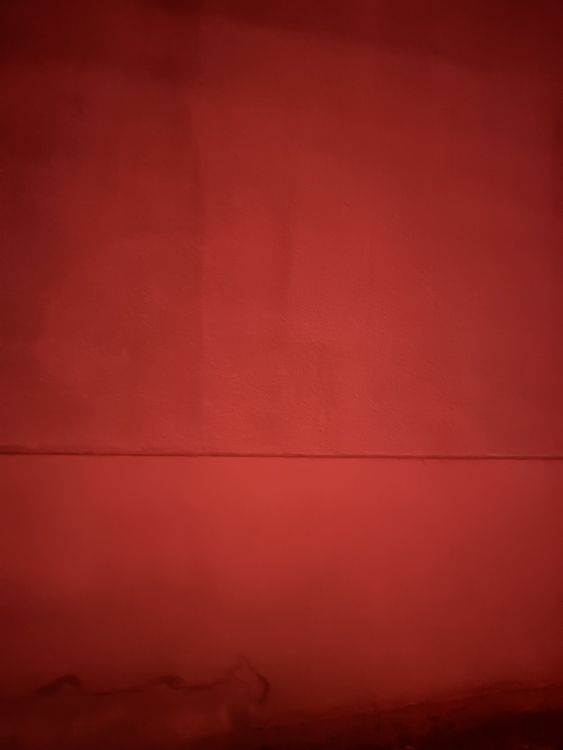
Image Credit: Rachel Demy, this is what you would find at the end, 2023
Sometimes I’ve been so deep into a photo project that once I’ve finished it and had a show, I often wonder where I’ve been. It is a feeling similar to what I experience when I look at your night walking work featured in Two Silent and CERTAIN GRASPING. What was it about the night that inspired you to go out in the dark to photograph? Where would you go? What is your process? Do you shoot film? Develop your photos? Print your photos?
It’s funny. When I look at that work, I, too, wonder where I have been, which is very much the nature of this project. CERTAIN GRASPING and Two Silent are the first two parts of a four-part series, Revocable Living, created while I was unknowingly struggling with an amphetamine addiction. Nighttime at that point felt both magical and terrifying, and I’ll admit I embraced it more due to how dark my mental state and my life had become at that point. The night doesn’t call to me the same way anymore, thank goodness. But I do believe working at night in that state has fundamentally changed how I see, not just in shadow but also in broad daylight. For that, I am grateful.
Most of those photographs were made on Capitol Hill and the Central District, a sort of Bermuda Triangle between where I lived, taught, socialized, and maintained a photo studio. Seventy-five percent of the work was shot on an iPhone, which gave me a new appreciation for embracing the idiosyncrasies and imperfections of every camera I own. I don’t think this project would have been more impactful if I had used my ‘real camera,’ a Fuji GFX100. The limitations of the iPhone shot at night better enhanced the emotional and psychological reality I was trying to capture—the disorientation, isolation, and utter strangeness of addiction. Now, would I have preferred a Fuji GFX file over an iPhone file when I went to print this work for my exhibition? Absolutely! It would have made things much easier. But I also think I would have lost the emotional and visual core of this project in the name of a more perfect print, and perfection is wholly at odds with what Revocable Living is all about.
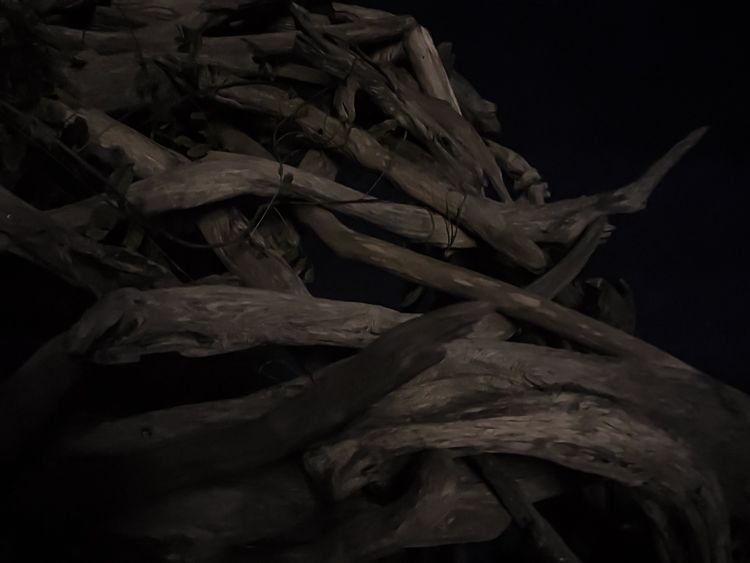
Image Credit: Rachel Demy, miasmata, 2023
How has the work Revocable Living, featured last month at Spectrum Fine Art Gallery, helped you in your recovery?
There has been nothing more miraculous this last few years of recovery than the reclamation of my own voice. For the three years I was in addiction, I felt incapable of speaking to what I was going through, mostly because I was terrified, high out of my mind, and unable to figure out what was causing all of the upheaval. The more I became isolated in fear, the more the silence threatened to drown me. Furthermore, there were a number of people in my community who felt empowered to tell my story without my input or consent. I was being spoken for and there was little I could do about it while in the throes of addiction.
This exhibition was the first time I was able to share my story publicly, with full agency, and in a way that honored every single one of the shadow creatures that makes up who I am. To be able to show others the complexity of addiction—its beauty, pain, banality, all of it—was as much a gift as being able to create a space for people to feel something, even if they didn’t know exactly what the exhibition was about. Seeing my addiction on the walls in the form of visual art has given me so much more compassion for myself, an abundance of humility, as well as sheer awe of the forces by which life exerts her lessons. They say the opposite of addiction isn’t sobriety; it’s connection. Being able to share my story using my visual, spoken, and written languages is fundamental in reconnecting with life.
Being in the music business gave you an intimate entry into the dynamic world of some successful indie bands. Congratulations on your book Between, Everywhere, which documents life on tour with the band Death Cab for Cutie. What challenges did you have putting together this book?
Thank you for the congratulations. Almost three years on, I am still incredibly proud of the photographs and the book itself. There are so many challenges to finishing a body of work and wrangling it into book form. However, my biggest challenge—or maybe, growth edge—was learning to embrace that my book is actually about me, and the wealth of experience I have as both a professional tour manager and photographer. My publisher, the lovely Michelle Dunn Marsh, wouldn’t for even a second let me hide behind Death Cab’s incredible legacy. She told me she didn’t want to just put out a band book, and it was imperative that I be willing to own and shine a light on my unique credentials in this particular musical ecosystem. This is also why she wouldn’t let me hire someone to do the writing for the book. She wanted both my photographs and my words to exist together. Proudly. It was a struggle for me. It was also an incredible boost to my confidence as an artist to take up space in my own work. Because Michelle helped me grow in this important way, it has now become my duty as an instructor to encourage my students to do the same when I see them hiding behind their cameras the way I used to.
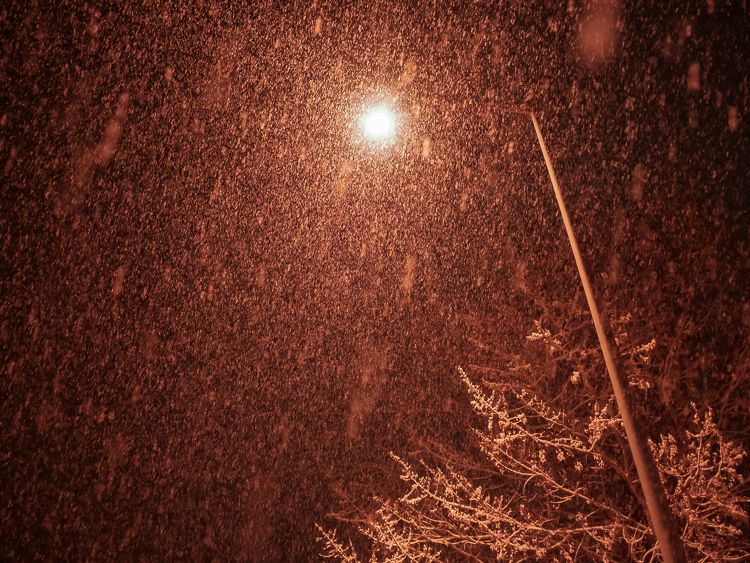
Image Credit: Rachel Demy, you, a void, 2023
You are currently on the PCNW faculty. Why do you love teaching, and what photo subjects inspire you the most?
I love teaching, first and foremost, because teachers played an important role in my childhood. My dad died when I was five and my mom had to work full time, put herself through school, and take care of two kids after being widowed at 25. I attached myself to any authority figure that felt safe, and teachers were instrumental in developing my emotional security at that time, thanks to their guidance and encouragement. I still have all the sweet notes, cards, and gifts they gave me, dating all the way back to Kindergarten.
Obviously, teaching adults is a very different thing. But at the core of it, I believe in extending artists the same kind of guidance and encouragement I received throughout my life. I believe very deeply in the importance of mentorship, knowledge sharing, and collaboration. I learn a ton from my students, and it’s important for my own photographic practice to stay engaged with community rooted in curiosity and mutual vulnerability. There are few things more vulnerable than admitting when you don’t know how to do something, and I love exploring what’s possible when a group of people reach the edge of what they think they know, and then choose to push past it.
As for inspiring photo subjects, I’m not sure I can identify anything specifically. I realize I have become less concerned with the power of a single photograph (the heroic image, so to speak), and more inspired by the narrative potential of combining multiple photographs into a cohesive ‘language.’ I’m fascinated not so much by WHAT someone says, but HOW they say it.
You have published a few zines. Tell us about them and do you have any more in the works?
My two zines, CERTAIN GRASPING and Two Silent, are (as stated previously) two parts of a four-part series about my addiction, told through taking photographs during anxiety-fueled night walks.
CERTAIN GRASPING is essentially about a love affair with a chemical—the high, if you will. Two Silent is about the disintegration of my psyche, and that tipping point right before my inevitable downward trajectory.
The final two zines will be arriving this summer. The third in the series, Revocable Living, is about the dissolution of my marriage and home. And the fourth and final zine, You, A Void, is a collection of work I made while I was in treatment in Colorado. It’s essentially about the necessary and painful work of returning to daylight.
If my application is accepted, the series in its entirety will be debuted at this year’s PCNW Photo Zine & Book Fair. Fingers crossed!
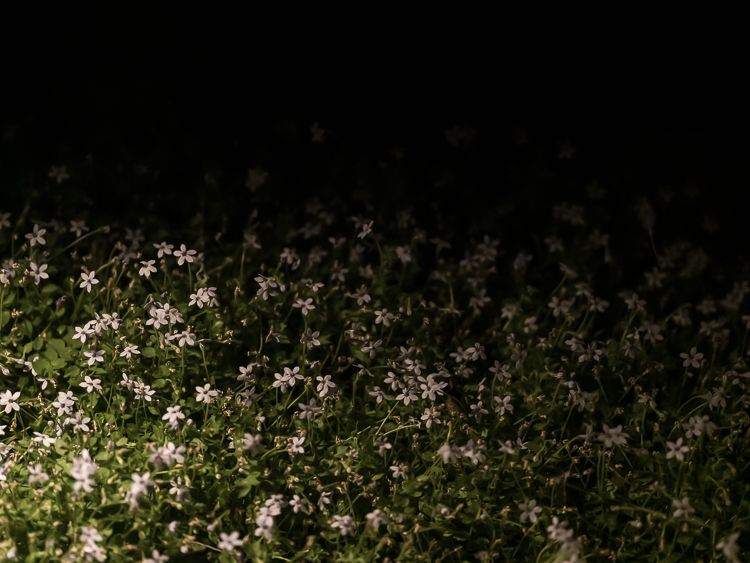
Image Credit: Rachel Demy, community ended, 2023
What is next for you?
Well, I just took down my solo exhibition, Revocable Living, and am now trying to find another home for this project—hopefully, in a new iteration that focuses more on the quantity of images produced during those fraught few years. I am currently fleshing out an idea for a more immersive installation that incorporates sound, video, and hundreds of night walking photographs.
Currently, I have a piece in a group exhibition at the Leica Gallery in Bellevue for their 10-year anniversary festivities. I will also be contributing a piece to an upcoming group exhibition at Spectrum Fine Art in June. And of course, finishing the last two zines in the Revocable Living series. So, that should keep me pretty busy for the next five months. After that, who knows what other opportunities might be coming my way? I’m excited to find out.
For more about Rachel Demy:
www.racheldemy.com
Instagram @racheldemy
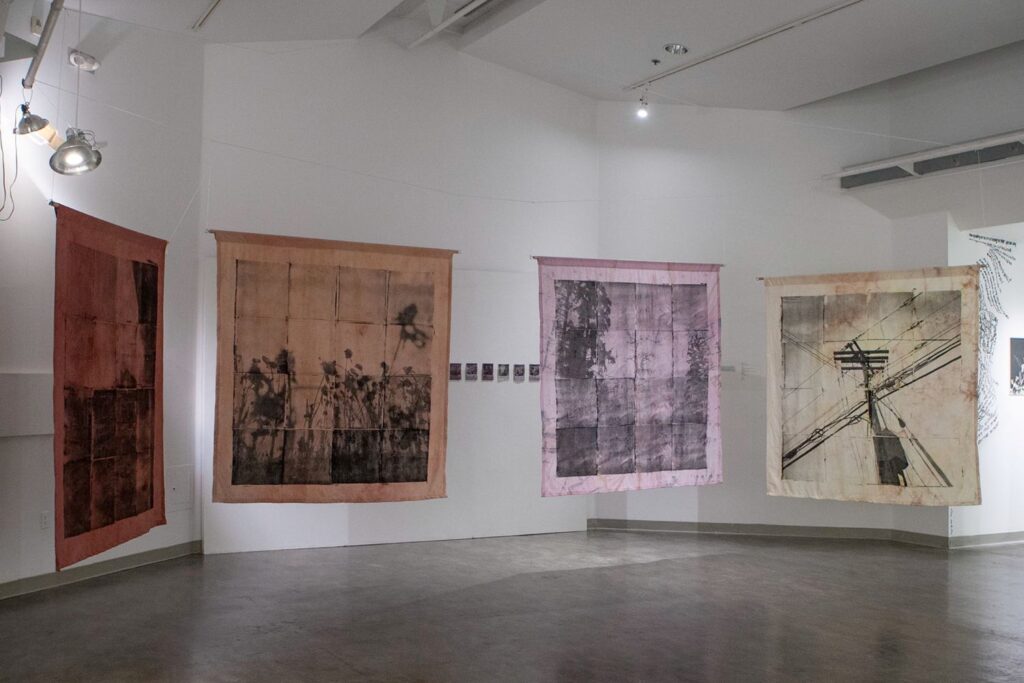
Image Credit: Annie Reierson, Earth Alchemy, Photographs screen printed onto organically dyed fabric
Annie Reierson
graduated Seattle University 2023 (through SU partnership with PCNW)
interviewed by Lisa Ahlberg, grad. 2005
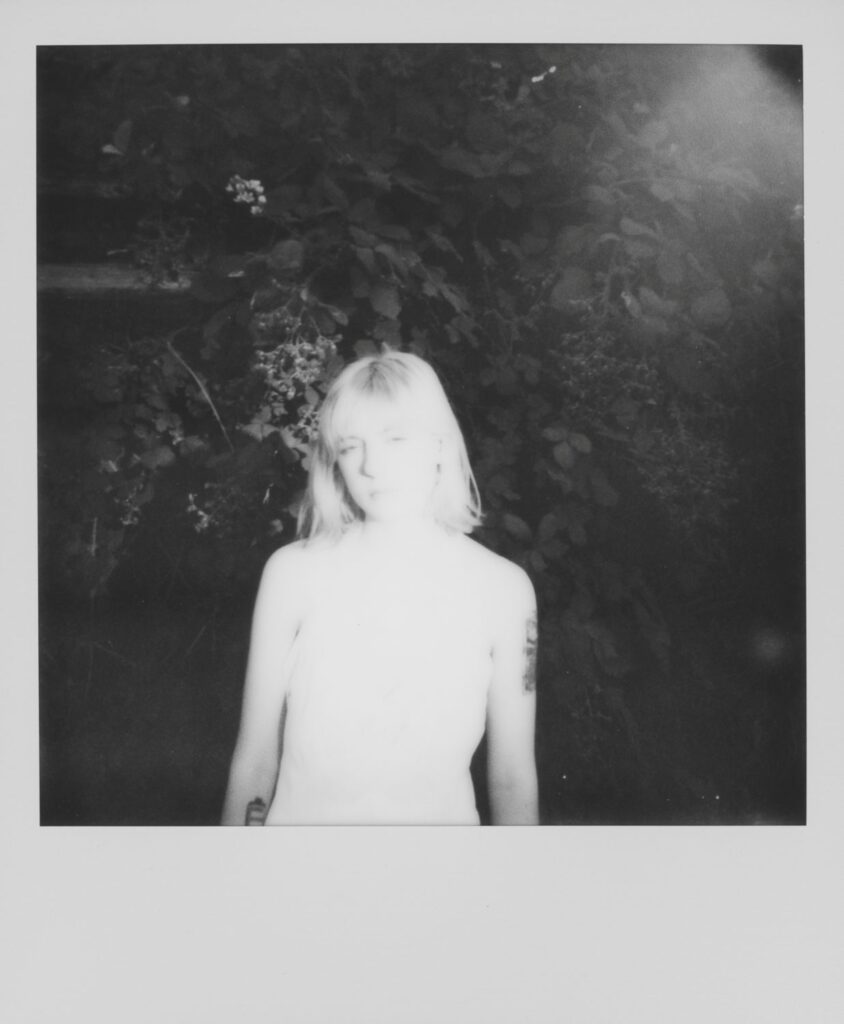
Annie Reierson is a Seattle-based visual artist. Reierson graduated in 2023 from Seattle University with a BFA in Photography and a minor in Studio Art. She is primarily a lens-based artist who utilizes a variety of techniques, including but not limited to mixed media, installation, and experimental analog methods.
Image Credit: Annie Reierson, In Light, 2023 Self-Portrait on Polaroid SX70 Film
Annie, I’ve seen your work in the exhibit recently in Seattle at Solas Gallery for Rite: This Instant. Can you tell us about the work?
In the recent exhibition Rite: This Instant at Solas Gallery, I exhibited work from my Series Ubiety. The work consists of a projection displaying 10 Polaroid animated motion sequences, shown alongside the Polaroids featured in the video, framed in sets of 8. Ubiety is a counterweight to the experience of alienation to the passage of time. The animations make time tangible through their replayability and connection to the physicality of the Polaroid as a time object, working to ground and instill an emotional connection to the moment captured, heightening one’s awareness to the passage of time.
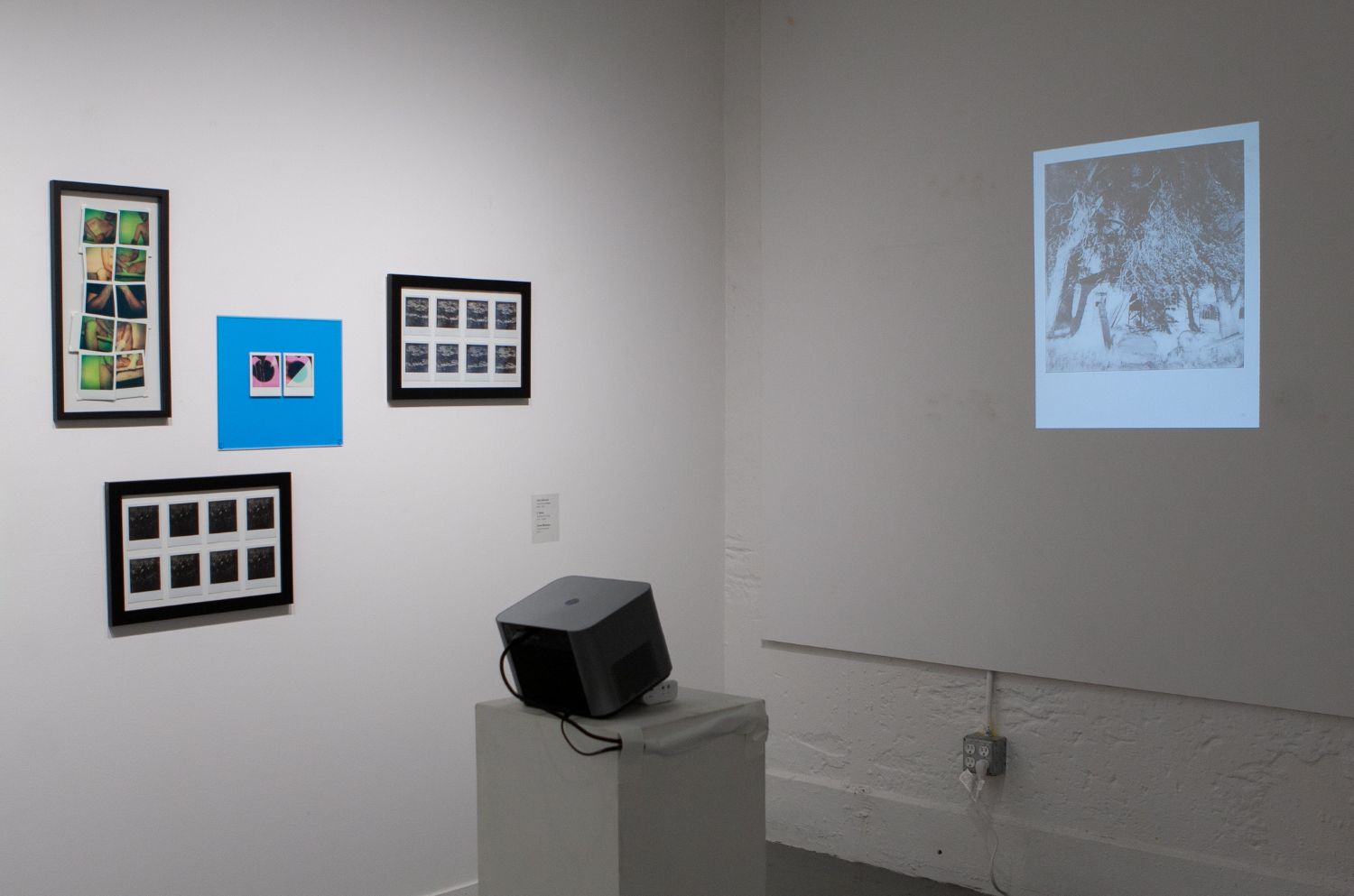
Image Credit: Annie Reierson, Rite: This Instant Installation, 2025
I also saw your Polaroid quilt hanging in the window of Jet City Labs at Shutter & Light Collective’s frame x frame exhibit. I loved it! What is it that you like about using Polaroid cameras?
Thank you so much! The Polaroid quilt “Remembrance: Quilt for Idaho” holds a sentimental place in my heart, and I was beyond excited to share it in Shutter and Light Collective’s frame x frame Show.
What I love about Polaroid is its physicality and its conceptual associations. A Polaroid itself is simultaneously an image and an object, inviting tactile interaction with the image. This tactile nature inspires me to be very hands-on with experimentation, driving me to push its materiality and to transform the image. I also find the conceptual associations of the Polaroid picture equally exciting to its materiality. My work often explores the interplay of environments, memory, and materiality. The legacy of Polaroid is one of capturing an instant and transforming it into a keepsake. The Polaroid image is symbolic to me of how one interacts with their world and how that intersects with memory and physicality.
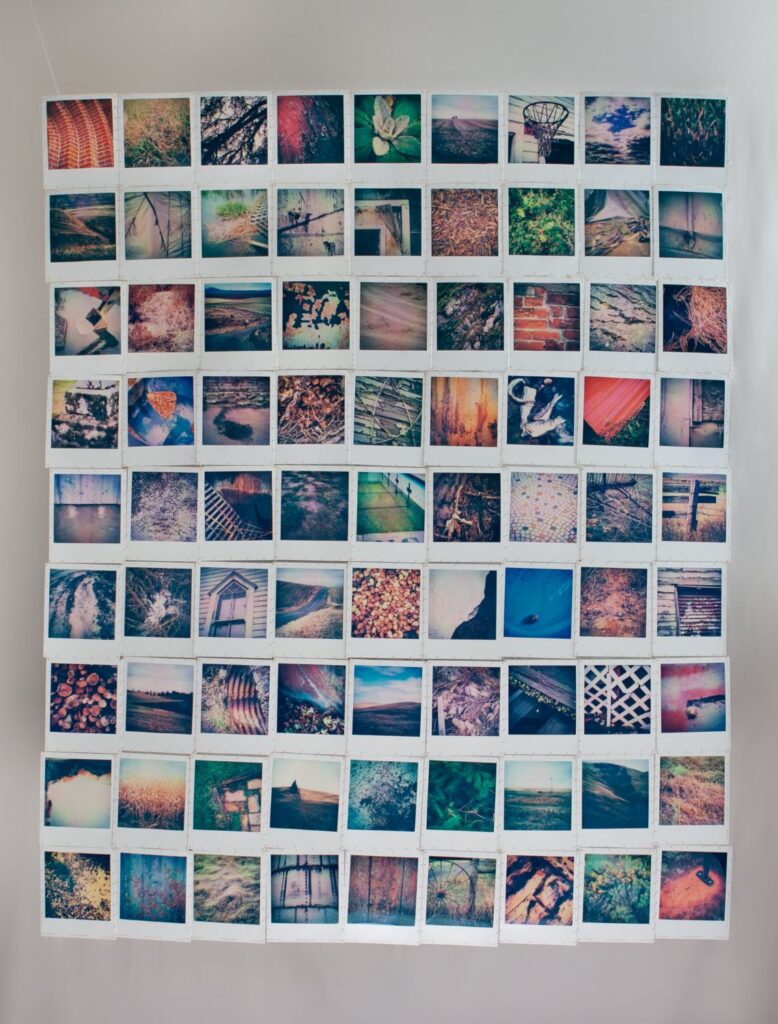
Image Credit: Annie Reierson, Remembrance: Quilt for Idaho, 2023, Polaroid film and thread
Shutter & Light Collective also just chose your ceramic tiles for a recent group exhibit. Can you share your process?
I recently displayed work from an ongoing new project with Shutter & Light Collective. It is a series of self-portraits on porcelain tiles. The process starts by rolling out slabs of porcelain and measuring and shaping them into individual tiles, and leaving them to dry. This part of the process requires a delicate touch as porcelain (while known for being strong in its ceramic stage) is a highly sensitive clay that can be warped and cracked easily. Afterwards, they go through two firings (Bisque and Glaze). Then, I take the Polaroid picture and remove the emulsion from the frame in a process called emulsion lift. I then carefully spread the image onto the tile with water and a paintbrush.
After it’s dried, I apply an archival varnish and tie on a ribbon for it to hang from.
Are you part of any groups that shoot or exhibit together here in Seattle?
It is important to me to be active in the local photography community here in Seattle, as community events build support, solidarity, and connection between artists. I have exhibited with Shutter & Light Collective on multiple occasions (I love the community-building work they do!) and my favorite local photo-walk groups to attend are Seattle Toy Camera Club and Chingonas with Cameras. I also love attending Blue Cone Studios’ monthly event, Finish Your Book, where many photographers and artists share and discuss their art books and projects.
You like to work in mixed media, installation, and experimental analog methods. Why? What draws you to experimental analog methods in particular?
I am drawn to experimental analog methods because I seek to further the conceptual ideas that exist within the content of my images by manipulating the materiality of them. I love to find parallels between the connotations and symbolism of the material nature of a photograph and what I am trying to express within the image, fusing material and image into something new.
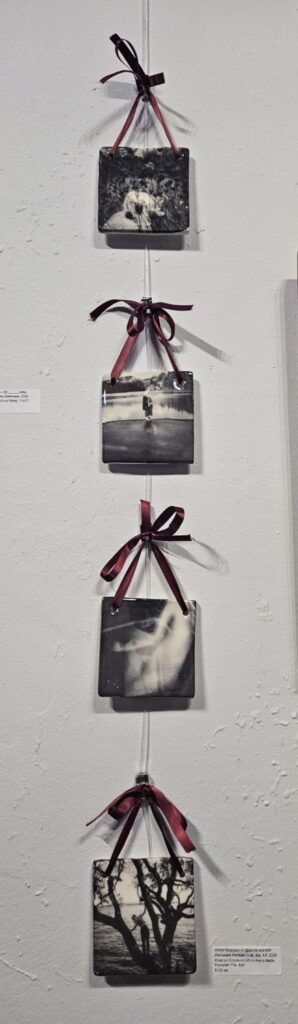
Image Credit: Annie Reierson, Porcelain portraits 01-04, 2025, Polaroid emulsion lifts on handmade porcelain tiles

Image Credit: Annie Reierson, Ubiety-08, 2024, Polaroid animation
You graduated with a BFA in Photography from Seattle University in 2023. PCNW Alumni News will be expanding the graduates we highlight to include some Seattle University alumni. You took classes at PCNW as part of your curriculum. Can you tell us about that relationship?
The BFA photography program at Seattle University is offered in collaboration with Photographic Center Northwest. Due to the partnership, as a student in the BFA photography program at SU, you take the vast majority of the credits required for your major at Photographic Center Northwest (PCNW). This means working alongside the students and community members at PCNW, providing an educational experience comparable to that of a student in the PCNW Certificate in Fine Art Photography program.
What are you up to now?
Currently, I am focused on making new work! Including working on the ongoing series of self-portraits on porcelain tiles and expanding my “Earth Alchemy” series. I am also in the early stages of co-curating a group exhibition with my fellow SU BFA photography alumni, Ashley Miyagishima. You can also find me regularly volunteering and working in the PCNW darkroom.
What’s next? What are you excited about?
I am excited to lead a Polaroid Photo Walk this year for Photographic Center Northwest’s summer benefit: Chase The Light. The photo walk will be on June 15th between 4-6 pm and is free for registered Chase The Light participants. I am looking forward to sharing my love for Polaroid film with others while celebrating Chase The Light this year!
For more about Annie Reierson:
www.anniereierson.com
Instagram @annie.reierson
Alumni Updates / News / Exhibitions
CURRENT EXHIBITIONS
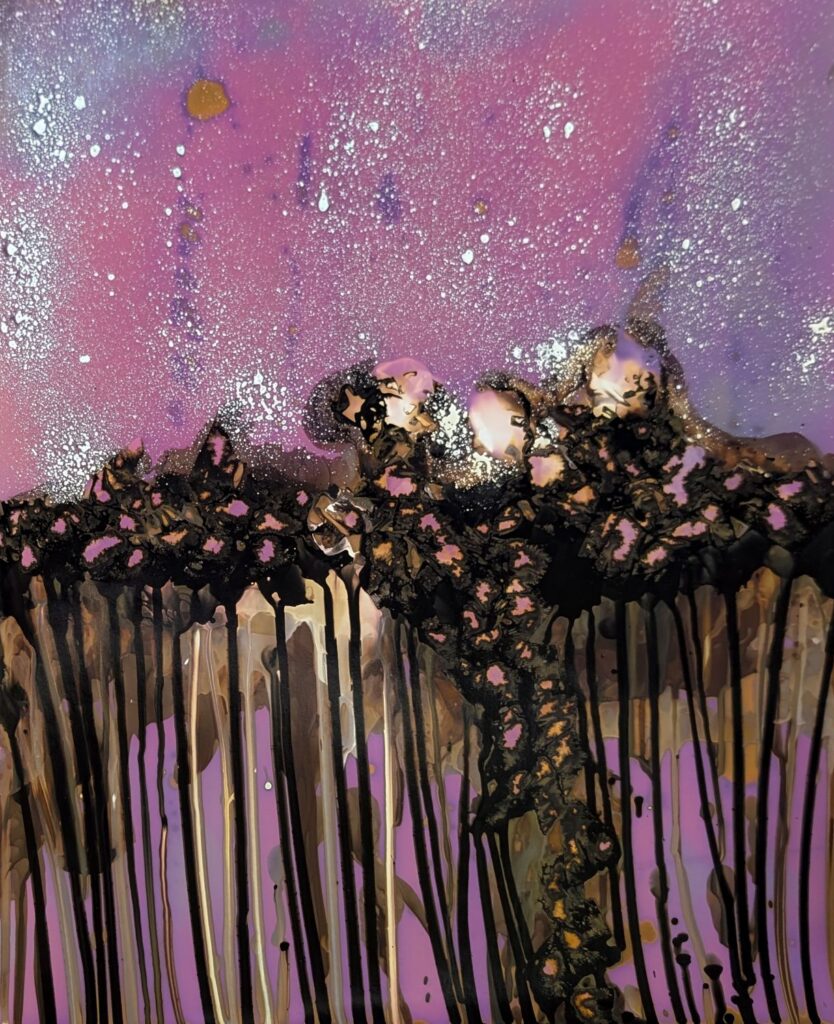
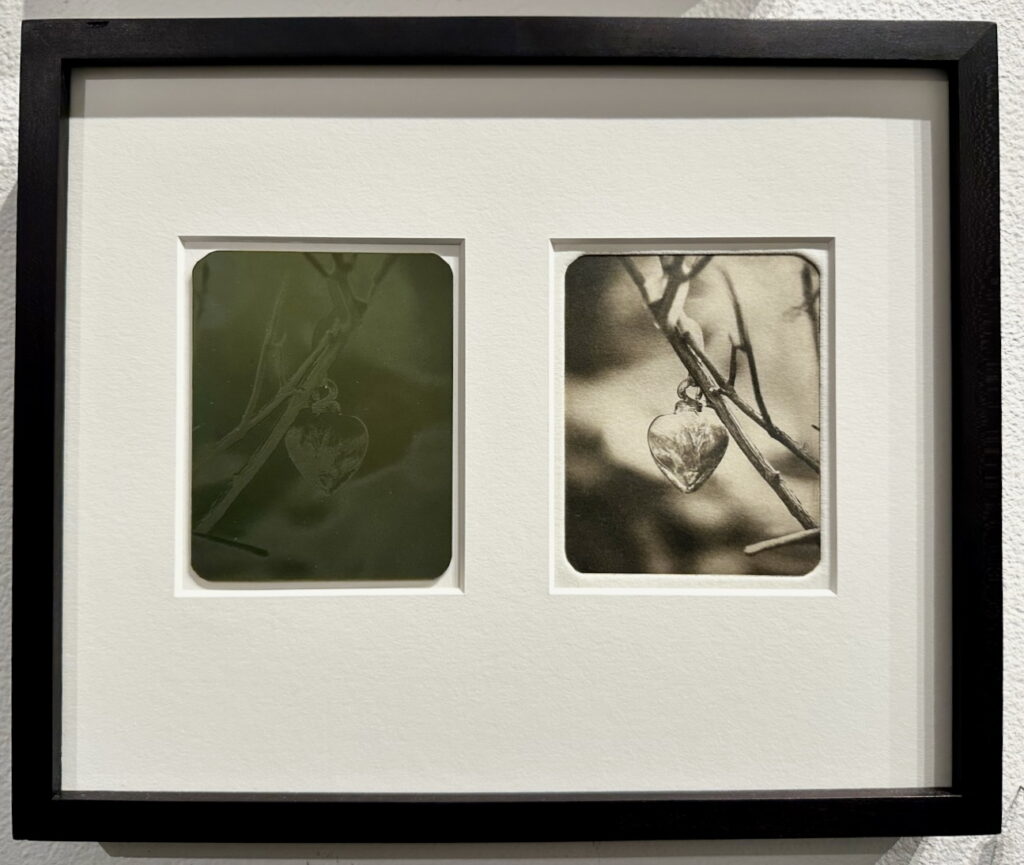
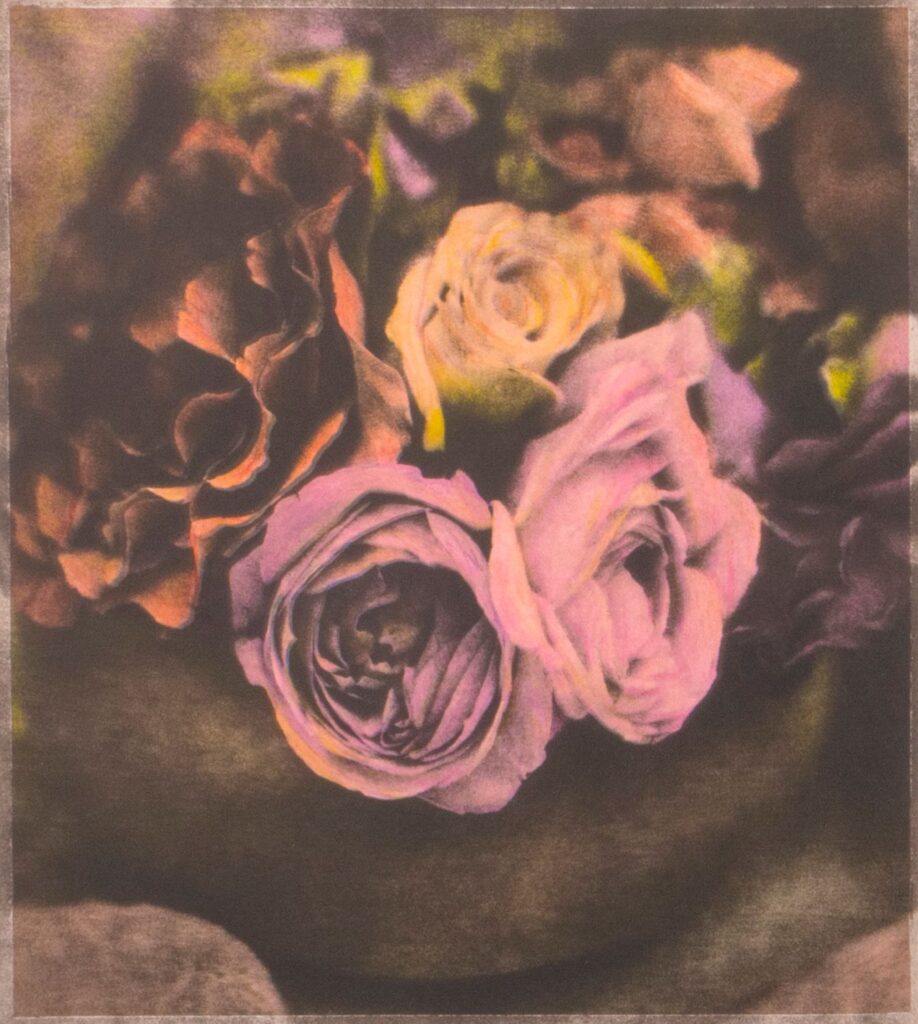
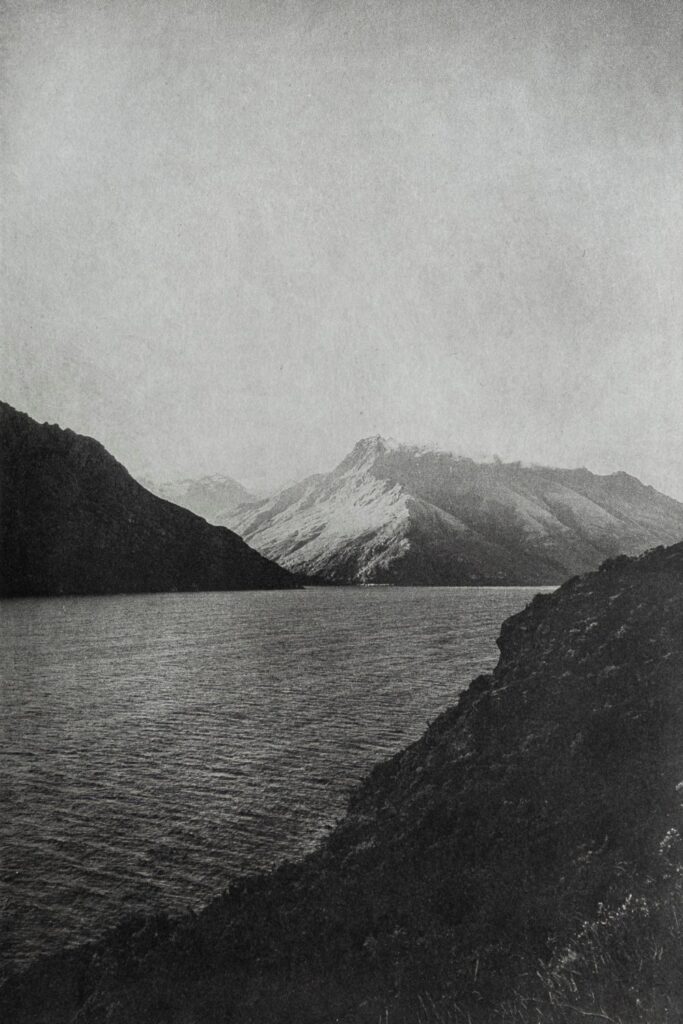
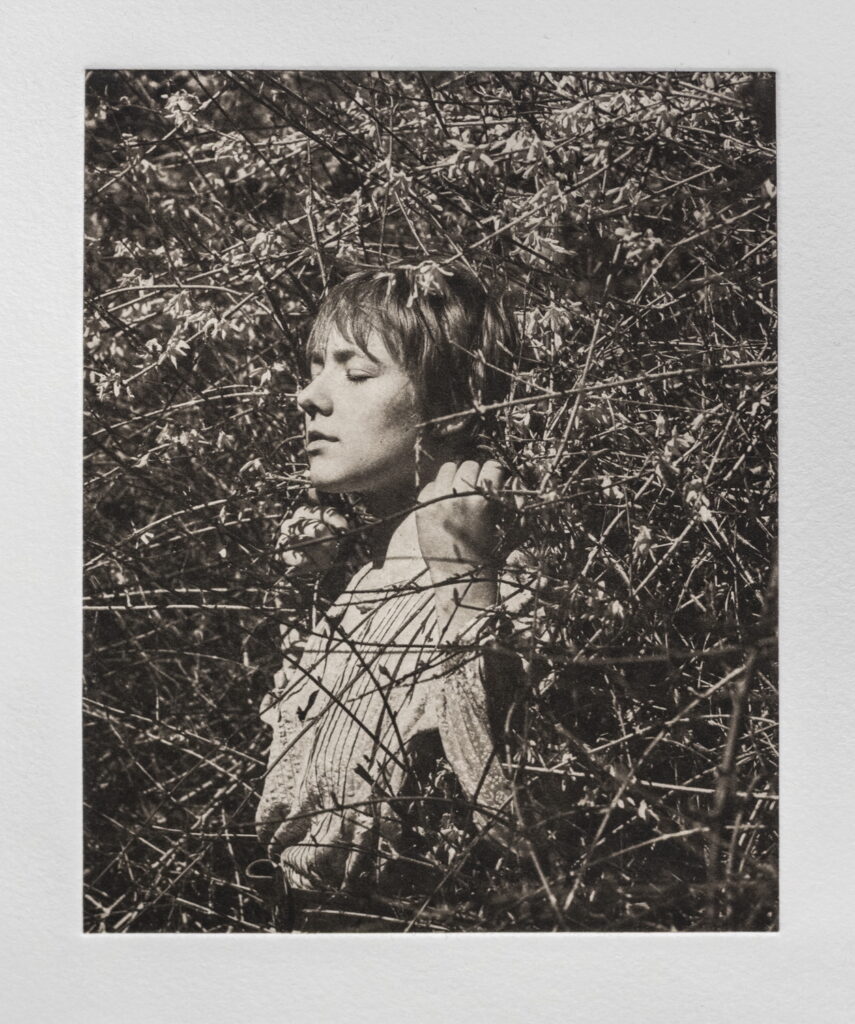
Image Credits (Counter-Clockwise): Jenny Hansen Das, Cheryl Hanna-Truscott, Marianne McCoy, Anna Ream, and Cian Hayes
PCNW Gallery
Several PCNW Alums are represented in current exhibitions at PCNW, on view through June 12th:
Jenny Hansen Das is included in a fantastic exhibit, Fringe Practice: Alternative Methods in Photography
Alums Cheryl Hanna-Truscott, Cian Hayes, Marianne McCoy, and Anna Ream each have in image in the companion exhibit PCNW Student Study Series — Photogravure
Gwen Emminger at The Seattle Light Room
Good Neighbor on view through June 14, 2025 at The Seattle Light Room, Seattle, WA
In Good Neighbor mixed media artist and photographer Gwen Emminger examines the complexities of shared space through photographic portraits of crows, using an alternative photo transfer process to print images on fabric. Viewers are invited to pause and reflect on the often-overlooked relationships between humans and crows, offering a meditation on coexistence. Through the crows’ daily lives, Gwen explores the deeper meaning of citizenship, emphasizing the nuances of living alongside others. Each image, framed within a non- linear narrative, prompts reflection on unity, while Gwen’s use of repetition encourages an immersive experience, inviting viewers to reconsider what it means to be a good neighbor.
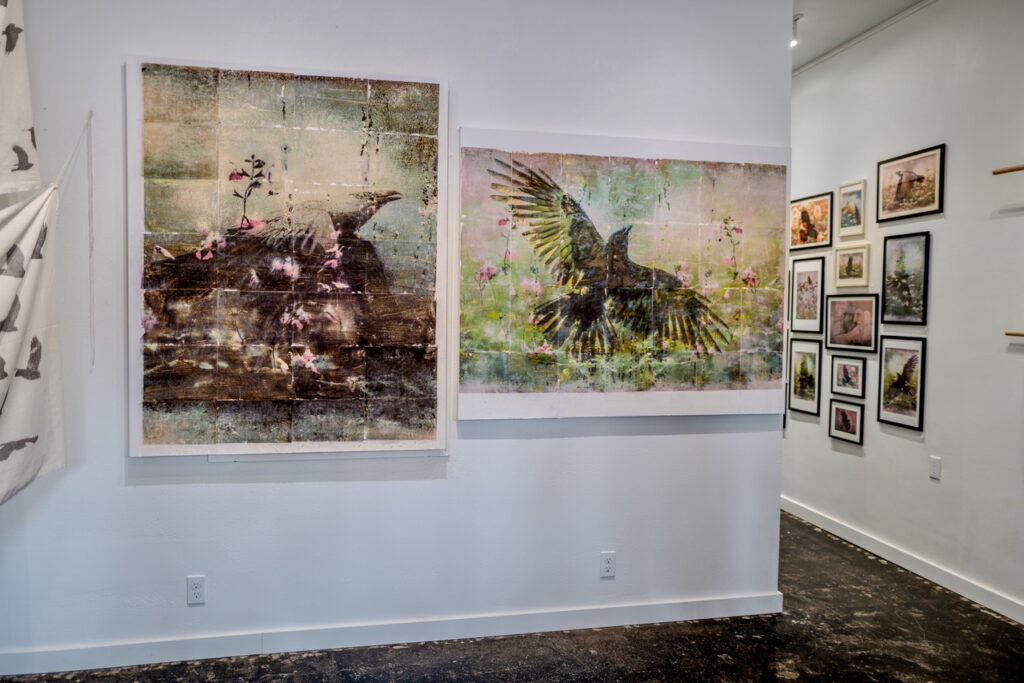
Image Credit: Constance Brinkley, Installation view of Gwen Emminger’s series Good Neighbor at The Seattle Light Room
UPCOMING EXHIBITIONS
2025 Thesis Exhibition at PCNW
The 2025 Thesis Exhibition will be on view at PCNW from June 23 – August 17, 2025
Welcome new graduates: Martin Dorn, Keylor Eng, Victoria Hunter, and Holly Pendragon!
Graduation & Reception: June 28, 2025 | Saturday 3-5pm | RSVP
Artist Talk: July 17, 2025 | Thursday 6-8pm | FREE with RSVP

Image Details: Martin Dorn, Keylor Eng, Victoria Hunter, and Holly Pendragon

Zine Fair graphic by Paper Press Punch
Alumn at PCNW’s Photo Zine & Book Fair
Mark your calendar for Sunday, August 17 from 12-5pm to join us for PCNW’s 4th Annual Photo Zine & Book Fair!
Many alums are hoping to exhibit including Gwen Emminger, Rachel Demy, Lisa Ahlberg, Matt Ragen, Cheryl Hanna-Truscott, Joan Dinkelspiel, Jenn Reidel, and Sarah Dawn King.
It’s a wonderful exchange of creative zines and books. If you’re a PCNW Alum, let us know if you have a new book or zine and want to join us at an alumni table. Email: alumni@pcnw.org
Hope to see you there!
OTHER NEWS
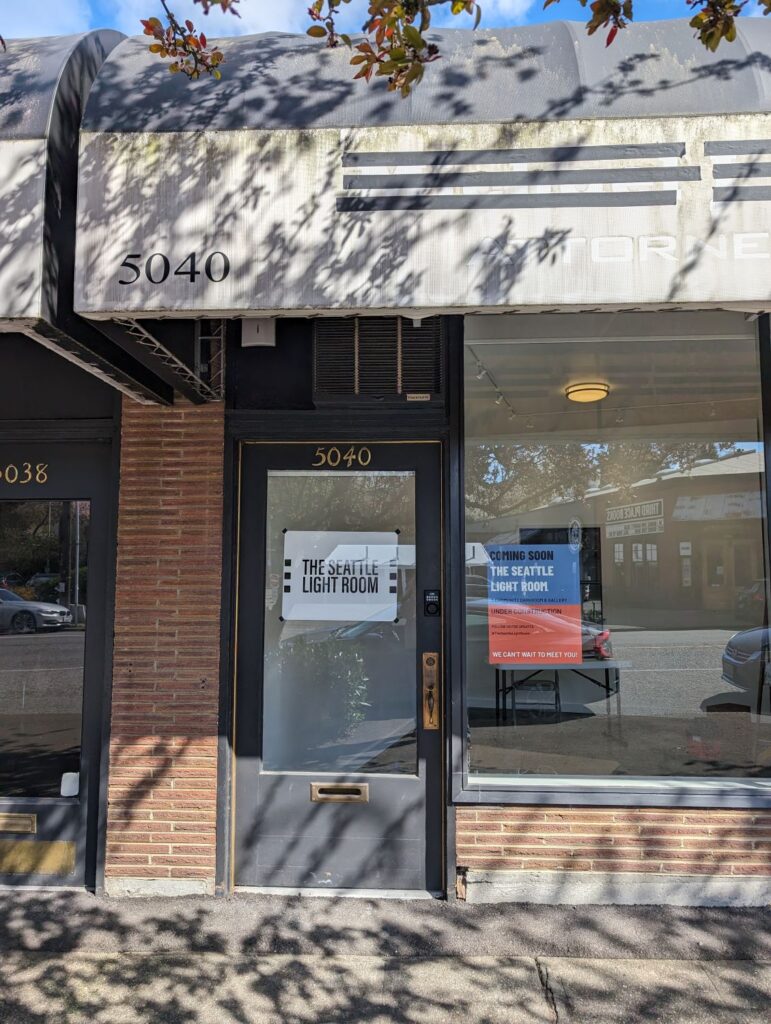
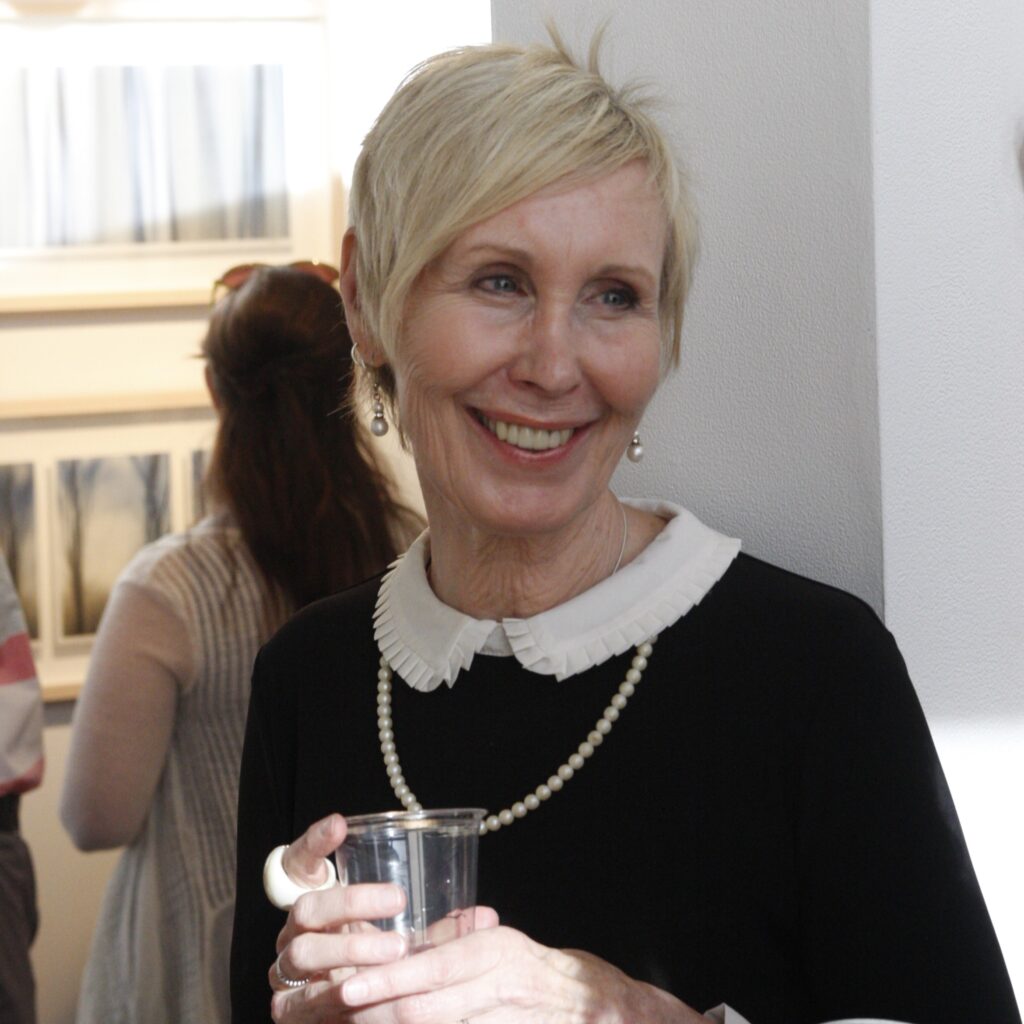
The Seattle Light Room Turns One!
We’re celebrating one full year of light, creativity, and community at The Seattle Light Room – a community photographic gallery and darkroom! What began as a vision for a shared creative space has blossomed into a vibrant hub for artists, photographers, and makers of all kinds. Thank you for being part of our journey — here’s to another year of inspiration and collaboration! Thank you to PCNW and the wonderful community there — your support has meant everything.
– Jenny Hansen Das
The Seattle Lightroom
5040 Wilson Ave S, Seattle, WA 98118
Celebrating Accomplishments
Marianne McCoy (grad. 2001) has received several International and National Awards recently, including:
*Soho Gallery, NY – “Krappy Kamera”- Bronze Award
*PX3, The Prix de la Photographie Paris – Bronze Award and 2 Honorable Mentions
*Larson Gallery, Yakima – “42nd Annual Juried Show”- Best In Show
*IPA-International Photography Awards – Bronze Award, Honorable Mention and 8 Official Selections
*Center For Photographic Arts, Carmel, CA – Honorable Mention
*PhotoArtfolio – “La Femme! Framing the Feminine ”Honorable Mention”
*Analog Sparks – “International Film Photography Awards”- Bronze and Honorable Mention
Alumni Critique Groups
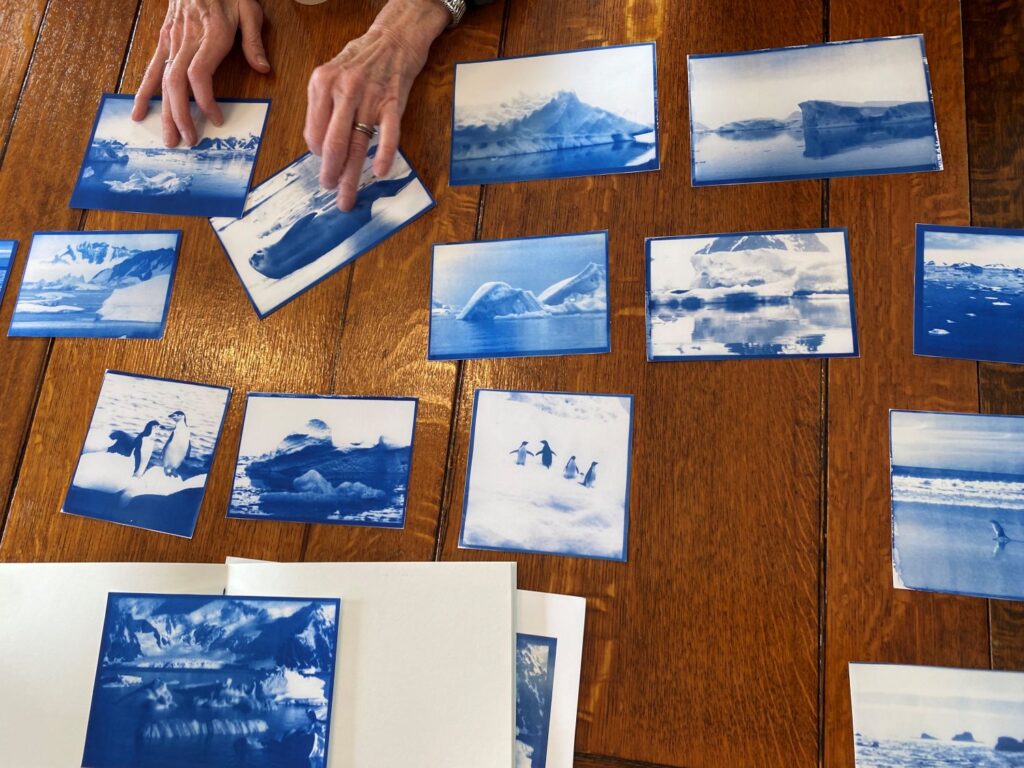
Image: Alumni Critique Group – Cyanotype prints by Karen Howard
Are you a graduate or current student of PCNW’s Certificate in Fine Art Photography? You’re invited to join us at one of our Alumni Critique Groups!
Feel free to join in at any time to either group and bring new work to share.
WEST SEATTLE
Meets Second Wednesday of every month @11 – 1 am
Where: West Seattle Uptown Espresso / 4301 SW Edmunds St., Seattle , WA
More info: Al Varady at alvarady@gmail.com
SEWARD PARK (on hiatus for Summer)
The Seward Park First Wednesday Alumni Critique Group will take a hiatus over the summer. Check the next quarterly newsletter for details about when it will start up again.
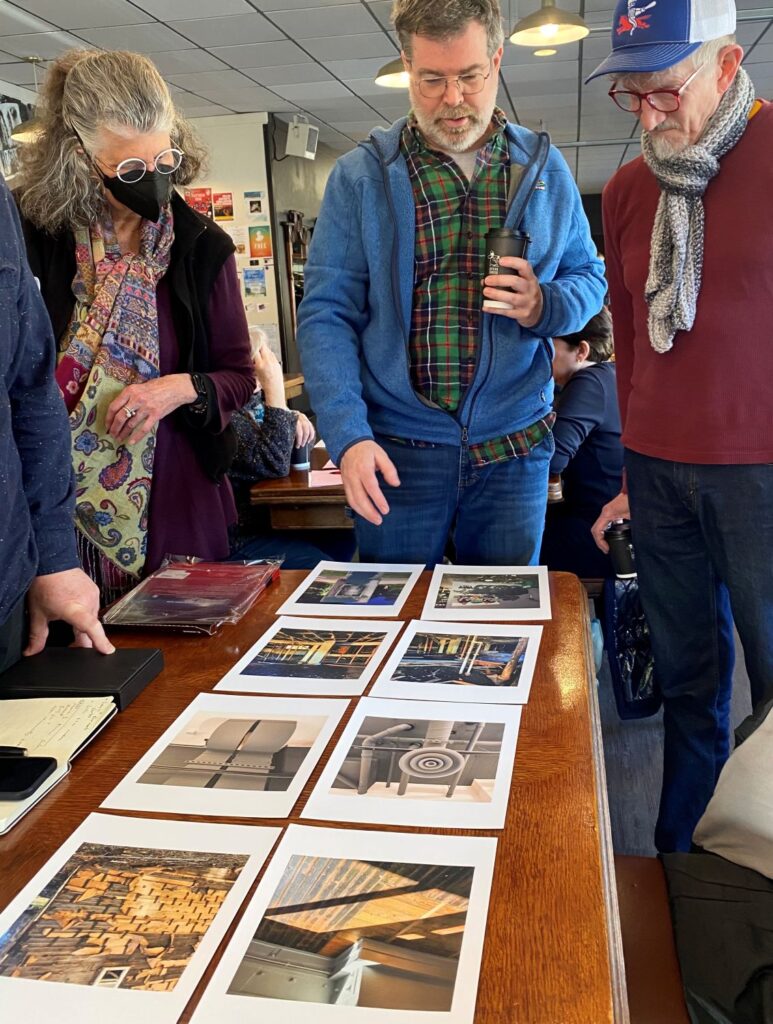
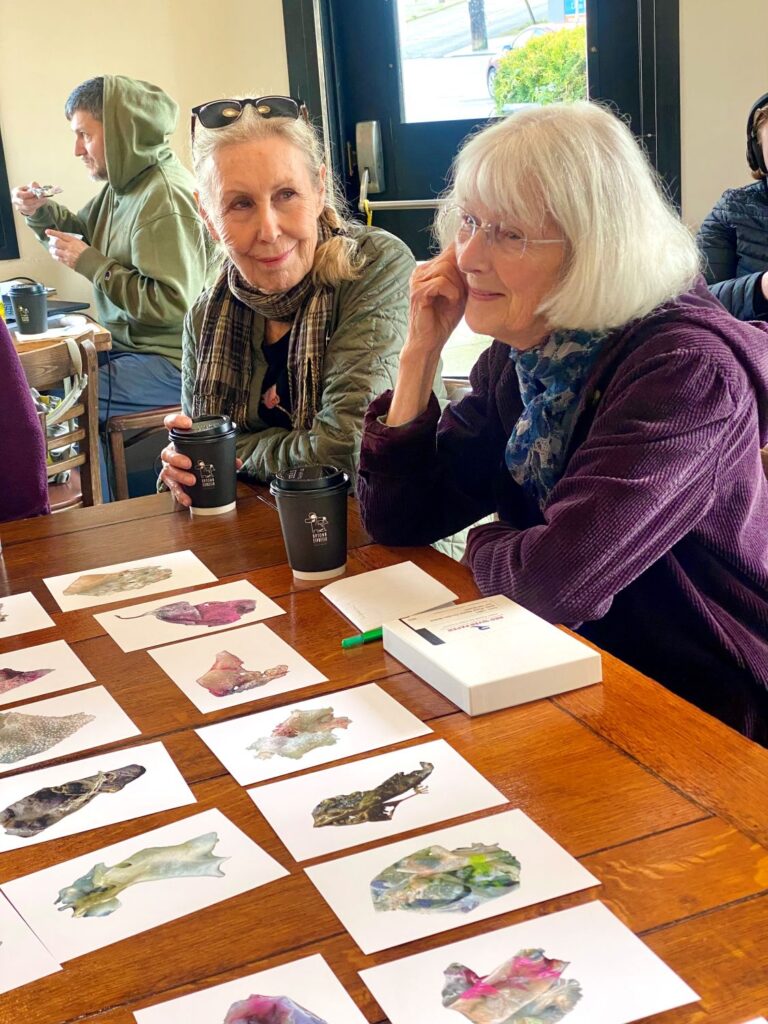
Image (L): Alumni Critique Group – Joan Dinkelspiel, Al Varady, and John Wilmot with John’s prints
Image (R): Alumni Critique Group – Marianne McCoy and Eva Skold Westerlind reviewing Eva’s work
Alumni Association Update
What is the Alumni Association and who is a member? The PCNW Alumni Association includes and is for all graduates of the Certificate in Fine Art Photography. We have a volunteer leadership committee that seeks to deepen the connection between Alumni, current Certificate Students, and PCNW, and explore ways in which we can further support, elevate, and celebrate one another.
Are you a graduate who is interested in getting more involved? We intend to renew the committee on a regular basis, with new members, and think this group can lead some great initiatives. Reach out to us at alumni@pcnw.org if you’re interested in joining the leadership committee, have ideas to help foster connection and professional development, or if you’d like to support upcoming initiatives.
Are you an alum with an upcoming exhibition, book launch, lecture, portfolio review, or other
event that you’d like us to feature in a future Alumni Newsletter and/or on the PCNW Alumni
page? Tell us about what you’re up to by completing the Alumni Survey Form or e-mail us at alumni@pcnw.org.
Posting on Instagram? Add another hashtag to your work: #pcnwalumni
Thank you to our current volunteer leadership committee members: Lisa Ahlberg, Gwen Emminger, Jenny Hansen Das, Andy Holton, Janet Politte, Matt Ragen, Anna Ream, and Al Varady. Our Chairperson is Gwen Emminger.
Additional thanks to the alumni who contributed to making this issue of the newsletter happen, especially: Lisa Ahlberg, Jennifer Brendicke, and Jenn Reidel.